

Sardines fish is a small, silvery, nutrient dense fish that belongs to the herring family, Clupeidae. It is one of the richest natural sources of omega 3 fatty acids, protein, calcium, and vitamin D, which is why nutritionists frequently recommend it as a heart healthy, budget friendly seafood choice. This guide covers everything you need to know about sardines fish benefits, nutrition facts, possible risks, cooking methods, and how sardines compare with other edible fish that offer similar nutritional value.
Sardines fish (scientific name Sardina pilchardus, and closely related species across the Clupeidae family) is a small, oily, saltwater fish typically measuring between 15 and 20 centimeters. Sardines are forage fish, meaning they swim in large schools near the surface and feed mainly on plankton. They are found in the Atlantic Ocean, Pacific Ocean, Mediterranean Sea, and Indian Ocean, and are one of the most widely eaten small fish varieties in the world. For a broader look at how sardines fit among other species, see this complete guide to types of fish.
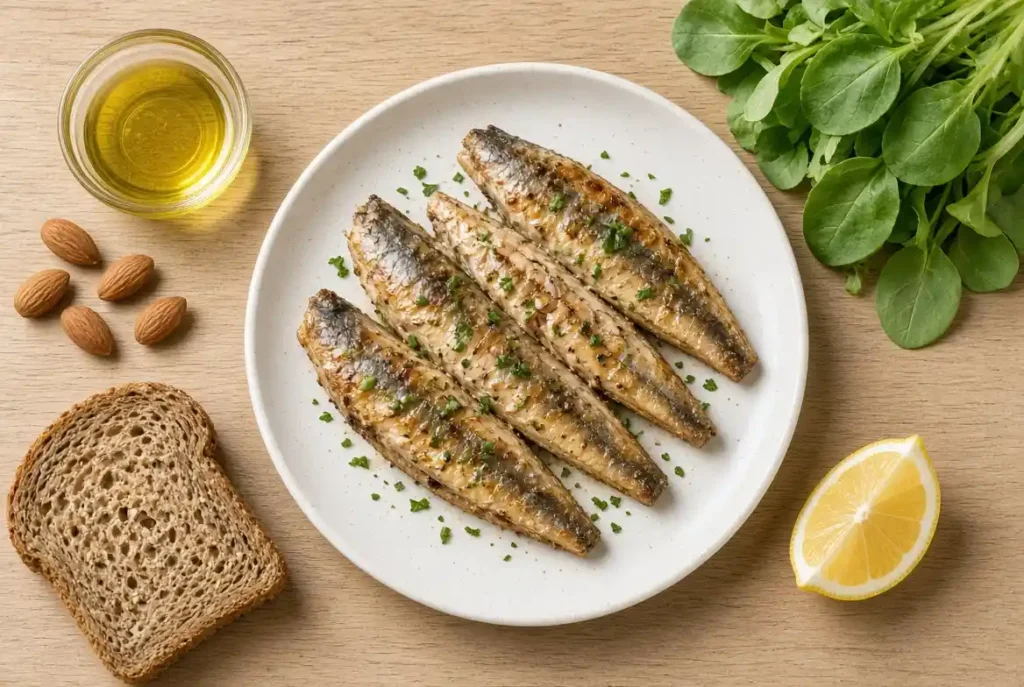
Sardines fish nutrition is dense in protein, healthy fats, and bone building minerals. Below is a breakdown of fresh, canned in oil sardines per 100 gram serving.
Nutrient | Amount | % Daily Value (approx.) |
Calories | 208 kcal | 10% |
Protein | 24.6 g | 49% |
Total Fat | 11.5 g | 15% |
Omega 3 (EPA + DHA) | ~1,480 mg | — |
Calcium | 382 mg | 29% |
Vitamin D | 272 IU | 34% |
Vitamin B12 | 8.9 mcg | 371% |
Phosphorus | 490 mg | 39% |
Selenium | 52.7 mcg | 96% |
Sodium | 307 mg (varies by canning) | 13% |
Cholesterol | 142 mg | 47% |
Values are approximate averages for canned sardines fish in oil, drained, and can vary by species, region, and preparation method.
Sardines fish benefits stem largely from their unusually rich combination of omega 3 fatty acids, complete protein, and bioavailable calcium (thanks to their edible soft bones). Here are the key sardines fish health benefits supported by nutrition research.
Heart Health
The omega 3 fatty acids EPA and DHA in sardines fish help lower triglycerides, reduce inflammation, and support healthy blood pressure. The American Heart Association recommends eating fatty fish like sardines at least twice a week to support cardiovascular health.
Bone and Teeth Strength
Sardines fish, especially canned varieties with edible bones, are an excellent source of calcium and phosphorus. Combined with their natural vitamin D content, this pairing improves calcium absorption, making sardines a strong ally against osteoporosis and bone density loss.
Brain and Nerve Function
DHA, one of the primary omega 3 fats in sardines, is a major structural component of brain tissue. Sardines fish is also exceptionally high in vitamin B12, which supports nerve signaling and helps prevent B12 deficiency related cognitive decline.
Muscle Growth and Repair
With close to 25 grams of complete protein per 100 grams, sardines fish supports muscle repair, growth, and maintenance, making it a practical protein source for active individuals and older adults working to preserve muscle mass.
Eye Health
Omega 3 fatty acids in sardines fish contribute to retinal health and may help reduce the risk of age related macular degeneration when eaten as part of a balanced diet.
Yes, sardines fish is classified as an oily fish, also called a fatty fish. This does not mean unhealthy fat. The fat in sardines is predominantly unsaturated, rich in omega 3s, and is precisely what makes sardines fish benefits so significant for heart and brain health. Other oily fish in this category include mackerel, salmon, and herring.
While sardines fish is broadly considered safe and healthy, a few groups should be mindful of intake:

Sardines are often confused with, or compared to, other small oily fish. Here is how they stack up.
Comparison | Answer |
Are pilchards and sardines the same fish? | Largely yes. “Pilchard” is commonly used for larger, more mature sardines, and the terms are often used interchangeably depending on the region. |
Sardines vs Mackerel | Both are oily, omega 3 rich fish. Mackerel is generally larger with a stronger flavor, while sardines are smaller and milder. |
Sardines vs Anchovies | Anchovies are smaller and more intensely flavored, often used as a seasoning fish, while sardines are typically eaten as a standalone protein source. |
Sardines vs Herring | Herring and sardines belong to the same fish family and share a similar nutrient profile, though herring tends to be slightly larger. |
For a deeper look at another popular oily fish, see our complete guide on mackerel fish nutrition and benefits, or explore salmon fish benefits and nutrition for a comparison against another omega 3 rich favorite.
Both fresh and canned sardines fish are nutritious, but there are practical differences. Canned sardines fish, whether in tin, oil, or brine, are convenient, shelf stable, and often include the edible bones that boost calcium content. Fresh sardines have a milder sodium footprint and a more delicate texture, but they spoil quickly and are less widely available outside coastal regions.
Sardine fillets and sardine fish oil supplements are also common formats for people who prefer a milder taste or want a concentrated omega 3 dose without eating whole fish. Unlike lean white fish such as cod, which contains far less natural fat, sardines deliver most of their benefits precisely because of their fat content. If you regularly eat canned fish, it is also worth comparing sardines with tuna, another popular canned seafood option.

Fresh sardines are simple to prepare at home. Here is a basic method:
Sardines are generally considered one of the more sustainable seafood choices. Because they are short lived, fast reproducing, and low on the food chain, well managed sardine fisheries recover quickly compared to larger predatory fish. Look for a Marine Stewardship Council (MSC) certification label on canned sardines fish to choose sustainably sourced options and support responsible fishing practices.
Sardines are a staple in South Asian and Southeast Asian coastal cuisine, and are known by many regional names. This table can help you identify sardines fish across different languages.
Language | Common Name for Sardines Fish |
Tamil | Mathi / Chaala |
Telugu | Bolinga / Tarli |
Marathi | Tarli / Vaam |
Hindi | Sardine machli / Tarli |
Malayalam | Mathi / Chaala |
Kannada | Bootai / Tarle |
Bengali | Sardine mach |
Urdu | Sardine machli |
Odia | Khainga |
Konkani | Tarle |
Tagalog (Philippines) | Tamban / Tunsoy |
Regional names can vary by exact species and coastal region, so local fish markets may use slightly different terms.
Most nutrition guidelines, including recommendations echoed by the American Heart Association, suggest eating fatty fish like sardines two to three times per week, roughly 100 to 150 grams per serving. This frequency delivers meaningful omega 3 intake while keeping sodium and purine intake in a reasonable range for most healthy adults. Rotating sardines with other affordable proteins can help maintain variety in your weekly meal plan and prevent overreliance on any single seafood source.
Sardines fish benefits go well beyond a basic protein source. From heart health and bone strength to brain function, sardines pack an outsized nutritional punch in a small, affordable, and sustainable package. Understanding both the benefits and the risks, mercury, sodium, and purine intake in particular, allows you to enjoy sardines fish safely and consistently as part of a balanced diet. To explore more nutritious seafood options, check out our complete guide to freshwater fish types and edible fish.
What is sardines fish?
Sardines fish is a small, oily saltwater fish from the herring family, known for being rich in omega 3 fatty acids, protein, and calcium.
Are sardines good for you every day?
Sardines are healthy, but eating them daily may raise sodium and purine intake too high for some people. Two to three servings a week is a commonly recommended range.
Are pilchards and sardines the same fish?
They are closely related and often used interchangeably, with “pilchard” typically referring to larger, more mature sardines.
Do sardines contain a lot of mercury?
No. Sardines are considered a low mercury fish because of their short lifespan and plankton based diet.
Can you eat the bones in sardines?
Yes, the soft edible bones in canned sardines are safe to eat and are a major source of their calcium content.
Are sardines a fatty or oily fish?
Yes, sardines are classified as an oily fish, with fat that is mostly heart healthy unsaturated omega 3 fat.
What is the best way to cook fresh sardines?
Grilling or pan frying with olive oil, salt, and lemon for two to three minutes per side is a simple, popular method.
Are canned sardines as healthy as fresh sardines?
Yes, canned sardines fish retain most of their nutrients and often contain more calcium due to the edible bones, though sodium can be higher.
What fish is closest to sardines in taste and nutrition?
Mackerel, herring, and anchovies are the closest in both flavor profile and omega 3 nutrient content.
Is sardines fish considered sustainable seafood?
Yes, sardines are generally regarded as a sustainable choice, especially when certified by the Marine Stewardship Council.

Fish Info Guide helps you explore edible, freshwater, saltwater, and aquarium fish – with simple guides on nutrition, care, and species identification for beginners and enthusiasts alike.
Imortant Links
Quick Links
Subscribe Our Newsletter
Get the latest fish care tips, species guides, and nutrition insights delivered straight to your inbox.