

Bringing home an angelfish only to watch it struggle, hide, or fall sick within weeks is more common than most new fishkeepers realize. The good news is that with the right setup, angelfish can live for over a decade and become the calm, graceful centerpiece of your tank. This angelfish care guide covers everything you need, from choosing the right type and tank size to feeding, breeding, and spotting health problems early. Angelfish (Pterophyllum scalare) are freshwater fish native to the slow moving rivers of the Amazon basin, prized for their tall triangular bodies and flowing fins. They are peaceful but territorial, especially when breeding, and thrive best in warm, slightly acidic water with tall tanks that suit their fin shape. Whether you are a first time owner or looking to breed angelfish successfully, this guide gives you clear, practical answers at every stage
Angelfish belong to the species Pterophyllum scalare, a member of the cichlid family found throughout the Amazon River basin in South America. In the wild, they live in quiet, slow moving waters shaded by overhanging trees and fallen branches, which explains why they prefer dim lighting and plenty of vertical hiding spots in a home aquarium.
Two other species occasionally appear in the hobby. Pterophyllum altum, often called the altum angelfish, is taller and more delicate, native to the Orinoco basin. Pterophyllum leopoldi is the smallest and most aggressive of the three and is rarely sold commercially.
What makes angelfish instantly recognizable is their laterally compressed, triangular body shape combined with long, trailing dorsal and anal fins. Wild angelfish are silver with dark vertical stripes, a pattern still visible in many captive bred varieties today. Decades of selective breeding have since produced dozens of color and fin variations, which is why so many people search for angelfish names and types when choosing their first fish.
Angelfish typically reach 10 to 15 centimeters in body length, with their fins extending the visual height even further, so tank height matters as much as tank width when planning their home.
One of the most common points of confusion for new hobbyists is whether angelfish are freshwater or saltwater fish. The honest answer is both, but they are not related to each other and belong to entirely different families.
The angelfish most people picture, Pterophyllum scalare, is a freshwater fish from the cichlid family. It has a triangular body, lives in rivers, and is the type sold at nearly every pet store under the simple name “angelfish.”
Saltwater angelfish belong to a completely different family, Pomacanthidae, and live on coral reefs across the Indo Pacific, Caribbean, and Red Sea. They have a more oval body shape, extremely vibrant colors, and require stable marine conditions that are far less forgiving than a freshwater setup.
Feature | Freshwater Angelfish | Saltwater Angelfish |
Family | Cichlidae | Pomacanthidae |
Native habitat | Amazon river basin | Coral reefs, Indo Pacific and Caribbean |
Body shape | Triangular | Oval |
Typical tank size | 29 to 55 gallons | 100 gallons or more for large species |
Care difficulty | Beginner to intermediate | Intermediate to expert |
Common examples | Koi, marble, black, zebra angelfish | Emperor, queen, regal, blueface angelfish |
If you are just starting out, freshwater angelfish are almost always the better choice since they are hardier, more affordable, and easier to source. Saltwater angelfish are better suited to hobbyists who already have marine aquarium experience.
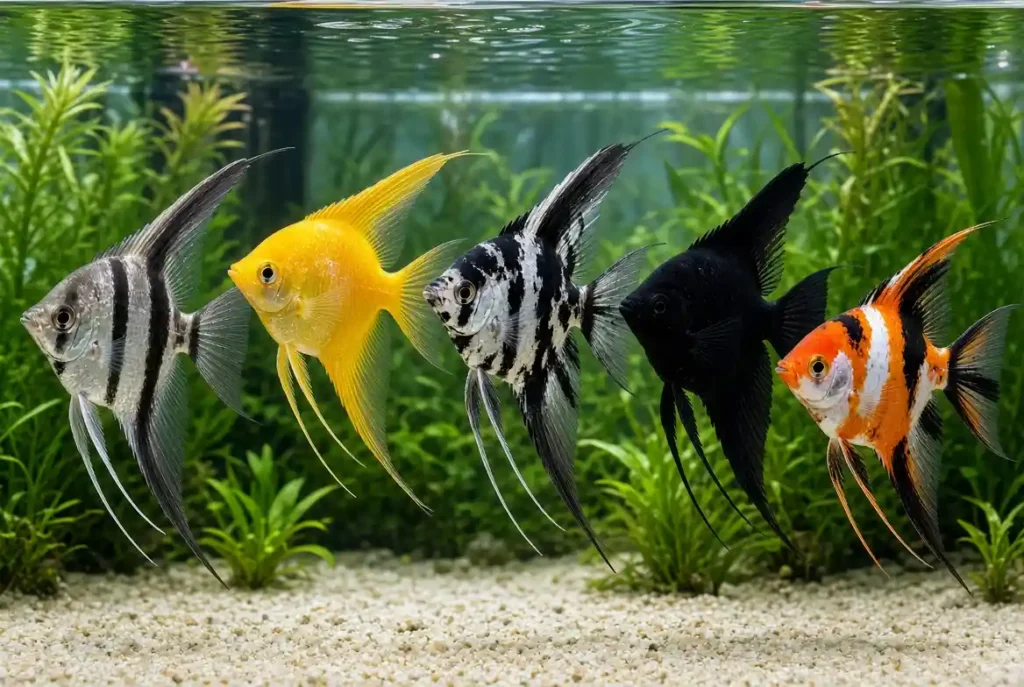
Angelfish come in a striking range of names and varieties, which is why “angelfish names” and “angelfish types” are some of the most searched terms among hobbyists. These varieties fall into three broad groups: freshwater varieties bred from Pterophyllum scalare, saltwater or marine angelfish species, and dwarf angelfish suited to smaller reef tanks.
Freshwater Angelfish Varieties
All freshwater varieties descend from the same wild species, but selective breeding has produced dramatically different colors and fin shapes.
Saltwater and Marine Angelfish Species
Marine angelfish species are prized for their intense color patterns and are typically sold individually rather than as a generic type.
Dwarf Angelfish
Dwarf angelfish stay small, are reef safe in most cases, and suit hobbyists without a large marine tank.
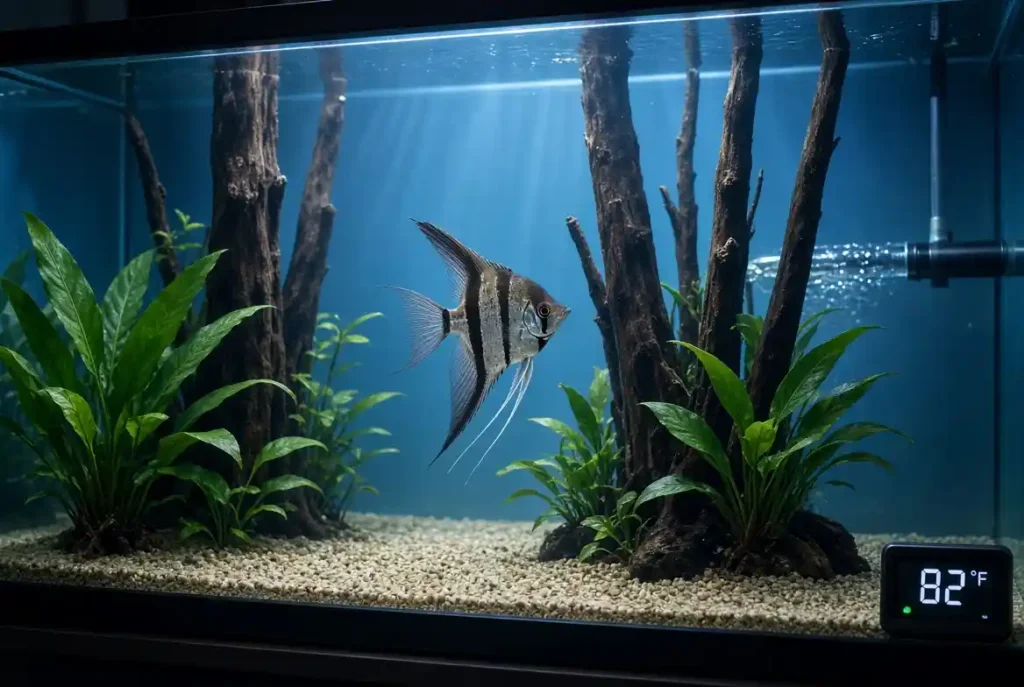
Getting the tank setup right is the single biggest factor in how well your angelfish thrives, since they are tall bodied fish that need vertical swimming space more than horizontal length.
Tank Size Guide
A single angelfish can survive short term in a 20 gallon tank, but this is not recommended long term. For a healthy pair, a 29 gallon tank with at least 18 inches of height is the practical minimum. If you plan to keep angelfish in a small group or alongside tank mates, a 55 gallon angelfish tank gives them enough vertical and swimming room to establish territory without constant conflict. As a general rule, taller tanks always outperform wider ones for this species.
Water Parameters
Angelfish are fairly adaptable but do best within a specific range:
Sudden swings in any of these values stress angelfish far more than being slightly outside the ideal range consistently.
Filtration and Decor
Use a filter rated for at least 1.5 times your tank volume, since angelfish produce more waste than smaller community fish. Add tall, broadleaf plants and driftwood arranged vertically to mimic their natural riverbank habitat, along with a smooth, fine gravel substrate for foraging.
Angelfish are omnivores, which means a varied diet keeps them healthiest and brings out their best colors. In the wild, they forage along riverbanks for small crustaceans, insect larvae, and plant matter, and replicating that variety in captivity matters more than most new owners expect.
Daily Diet
Feeding Frequency
Feed adult angelfish small portions two to three times a day, offering only what they can finish in two to three minutes. Overfeeding is one of the most common mistakes, since leftover food breaks down quickly and degrades water quality.
Feeding Angelfish Fry
Newly hatched angelfish fry cannot eat flake food. For the first few days they feed on their yolk sac, then need infusoria or liquid fry food, before graduating to baby brine shrimp within about a week. Feeding fry small amounts four to five times a day supports faster, healthier growth.
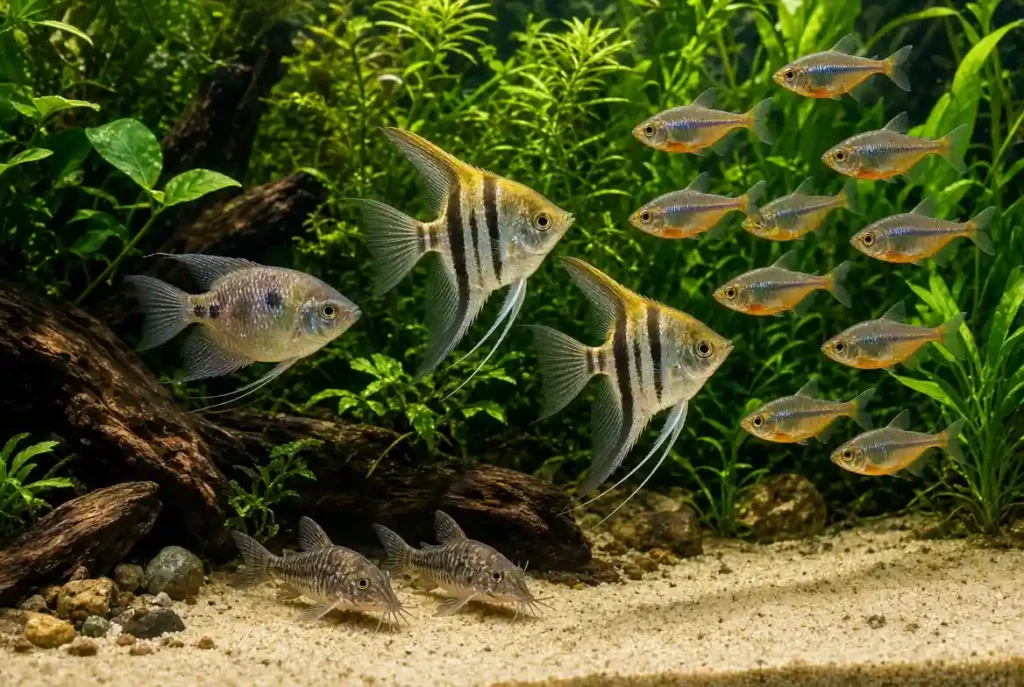
Choosing tank mates for angelfish means balancing their peaceful reputation against the fact that they are cichlids, which means they will eat anything small enough to fit in their mouth and can turn territorial during breeding.
Good Angelfish Tank Mates
Tank Mates to Avoid
Building a Community Tank
Angelfish occupy the middle to upper water column, so pairing them with bottom dwellers and fast open water swimmers reduces competition and stress. Always add angelfish as juveniles alongside their tank mates rather than introducing them to an already established, differently sized community, since size mismatches are the most common cause of aggression.
Breeding angelfish is one of the more rewarding parts of keeping this species, though telling males and females apart takes a trained eye since they show almost no visible difference outside of breeding season.
How to Tell Male and Female Angelfish Apart
Angelfish do not have obvious external gender markers for most of their lives. The most reliable method is watching their breeding tube just before spawning: females develop a wider, blunter tube for laying eggs, while males have a narrower, pointed tube for fertilizing them. Outside of breeding, subtle clues like a slightly steeper forehead in mature males can help, but even experienced breeders often confirm gender only once a pair has formed and started spawning.
Breeding Process and Egg Laying Frequency
Angelfish are monogamous and form pairs that will spawn repeatedly once bonded. A healthy, mature pair can lay eggs every one to two weeks under the right conditions. Before spawning, the pair cleans a flat vertical surface, such as a broad leaf or piece of slate, where the female lays rows of eggs that the male then fertilizes. Soft, slightly acidic water and a temperature near the higher end of their range tend to encourage spawning.
Caring for Angelfish Fry
Parent angelfish fan the eggs with their fins to keep them oxygenated and free of fungus. Unfortunately, many captive bred pairs eat their own eggs or fry, especially on their first few attempts. Breeders who want to raise fry reliably often move the eggs, still attached to their slate, into a separate hatching tank with a gentle air stone and no other fish present.
Angelfish live an average of 8 to 12 years in captivity when kept in stable, well maintained conditions, though some owners report angelfish living well past 12 years with excellent water quality and diet. Saltwater angelfish species can live even longer, with some reaching 15 years or more in a healthy reef tank.
How Big Do Angelfish Get
Adult freshwater angelfish typically reach 10 to 15 centimeters, or roughly 4 to 6 inches, in body length. Their fins extend well beyond that, often adding another 15 centimeters of visual height, which is why tank height matters so much when planning their home. Growth is fastest in the first year, with most angelfish reaching full adult size between 12 and 18 months.
Factors That Affect Lifespan and Growth
Angelfish that reach adulthood in a stable, spacious tank with consistent care are the ones most likely to live at the higher end of their lifespan range.
Most angelfish health problems trace back to water quality, so catching early symptoms and understanding a few common conditions can prevent minor issues from becoming fatal ones.
Fin Rot
Fin rot appears as ragged, discolored, or disintegrating fin edges and is usually caused by bacterial infection following stress, poor water quality, or fin nipping from tank mates. Mild cases often improve with clean water and regular water changes alone. More advanced cases need an aquarium safe antibacterial treatment along with isolating the affected fish to prevent spread.
Hole in the Head Disease
Angelfish hole in the head disease shows up as small pits or lesions around the head and lateral line. It is commonly linked to poor water quality, nutritional deficiencies, or an internal parasite called Hexamita. Improving diet with vitamin rich foods, maintaining pristine water, and treating with an appropriate anti parasitic medication typically resolves mild cases.
Ich
Ich, or white spot disease, covers the body and fins in tiny white dots and is one of the most common freshwater fish diseases overall. It spreads quickly in stressed or crowded tanks and is treated with heat combined with an ich specific medication.
Prevention
The most effective health strategy for angelfish is prevention rather than treatment. Quarantine new fish for two to three weeks before adding them to your main tank, test water parameters weekly, and avoid overcrowding, since most angelfish illnesses are secondary to environmental stress rather than random infection.
Angelfish prices vary widely depending on whether you are buying a common freshwater variety or a rare marine species, so it helps to know what drives the price before you shop.
Freshwater Angelfish Prices
Common assorted freshwater angelfish typically cost between $6 and $15 each at most pet stores. Specialty varieties like platinum, marble, or seal point angelfish often run $20 to $40, while rarer patterns or wild caught altum angelfish can cost $50 or more.
Saltwater Angelfish Prices
Saltwater angelfish sit in a completely different price range due to the difficulty of collection and care. Smaller dwarf species like the coral beauty or flame angelfish typically cost $40 to $80. Larger species such as the emperor or regal angelfish often range from $130 to $250, and rarer species can exceed $500.
What to Check Before Buying
Buying from a specialty aquarium store or a known breeder rather than a general retailer usually means healthier stock and a better chance the fish survives the first few weeks in a new tank.
Despite the similar sounding name, angelfish and anglerfish are completely unrelated species, and confusing the two is one of the most common mistakes among new fish enthusiasts, often triggered by the deep sea anglerfish scene in Finding Nemo.
Feature | Angelfish | Anglerfish |
Habitat | Rivers or coral reefs | Deep ocean |
Appearance | Colorful, triangular or oval body | Dark, bulbous body with a glowing lure |
Diet | Omnivore, flakes and small crustaceans | Carnivore, ambush predator |
Aquarium suitability | Popular home aquarium fish | Not kept in home aquariums |
Behavior | Peaceful, occasionally territorial | Solitary deep sea predator |
If you searched for angelfish expecting a glowing deep sea predator, you are actually thinking of the anglerfish, a completely different order of fish found thousands of feet below the surface. Angelfish, by contrast, are the graceful, colorful fish sold at nearly every aquarium store and kept safely in home tanks.
Keeping angelfish successfully comes down to a few core habits: choosing the right variety for your experience level, setting up a tall tank with stable water parameters, feeding a varied diet, and watching closely for early signs of stress or illness. This angelfish care guide has covered everything from tank size and water chemistry to breeding, tank mates, and common health problems, giving you a complete foundation whether you are raising your first freshwater angelfish or considering a marine species down the line. With consistent care, angelfish reward you with years of graceful movement and striking color in your aquarium. As more fishkeepers turn to online research before buying, having accurate, well organized information like this helps you avoid common mistakes and give your angelfish the healthiest possible start.
How long do angelfish live?
Angelfish typically live 8 to 12 years in captivity with stable water quality and a varied diet. Saltwater angelfish species can live even longer, sometimes reaching 15 years in a well maintained reef tank.
What is the ideal tank size for angelfish?
A single angelfish can survive in a 20 gallon tank, but a 29 gallon tank is the practical minimum for a pair. For a small group or community setup, a 55 gallon tank with at least 18 inches of height works best.
Can angelfish live with guppies?
Not safely long term. Adult angelfish see guppies as food and will eat them once they grow large enough. Guppies are better suited to a separate community tank without angelfish.
How can you tell if an angelfish is male or female?
The most reliable way is checking the breeding tube just before spawning: females have a wider, blunter tube, while males have a narrower, pointed one. Outside breeding season, gender is very difficult to determine visually.
What do angelfish eat?
Angelfish are omnivores that eat high quality flakes or pellets daily, supplemented two to three times a week with live or frozen foods like brine shrimp and bloodworms, plus occasional vegetable matter.
Are angelfish freshwater or saltwater fish?
Both exist. The common angelfish sold in most pet stores, Pterophyllum scalare, is freshwater. Saltwater angelfish belong to a different family, Pomacanthidae, and live on coral reefs.
How often do angelfish lay eggs?
A healthy, bonded pair can lay eggs every one to two weeks under the right water conditions and diet, though many captive pairs eat their own eggs before they hatch.
What is angelfish hole in the head disease?
It is a condition causing small pits around the head and lateral line, usually linked to poor water quality, nutritional gaps, or an internal parasite called Hexamita. It is treatable with better diet, clean water, and anti parasitic medication.
How much do angelfish typically cost?
Common freshwater angelfish cost $6 to $15, while specialty varieties run $20 to $40 or more. Saltwater angelfish range from $40 for dwarf species to $250 or more for larger species like the emperor angelfish.
How big do angelfish get?
Adult freshwater angelfish typically reach 10 to 15 centimeters in body length, with their fins extending well beyond that, adding significant visual height in the tank.

Fish Info Guide helps you explore edible, freshwater, saltwater, and aquarium fish – with simple guides on nutrition, care, and species identification for beginners and enthusiasts alike.
Imortant Links
Quick Links
Subscribe Our Newsletter
Get the latest fish care tips, species guides, and nutrition insights delivered straight to your inbox.