

Bringing home a betta fish seems simple until the questions start piling up. What size tank do they really need? Why is the water cloudy? Is that fin damage or just normal shedding? Good betta fish care comes down to a few core habits done consistently: the right tank size, stable warm water, a protein rich diet, and close attention to early warning signs of illness. Betta splendens, better known as the Siamese fighting fish, is a small but strikingly colorful freshwater species native to the shallow waters of Southeast Asia. With proper care, a betta can live three to five years, sometimes longer. This guide walks through every stage of ownership, from choosing a tank and setting water parameters to feeding, breeding, and spotting health problems before they become serious.
A betta fish is a small freshwater species scientifically known as Betta splendens, commonly called the Siamese fighting fish because of how territorial the males can be toward one another. Native to the shallow rice paddies, marshes, and slow moving streams of Thailand, Vietnam, Cambodia, and other parts of Southeast Asia, bettas have been kept as ornamental fish for centuries and were first selectively bred over a thousand years ago.
One trait that sets bettas apart from most aquarium fish is their labyrinth organ, a special structure that lets them gulp air directly from the surface. This is why bettas can survive in low oxygen water where other fish would struggle, though it does not mean they thrive in poor conditions.
Quick snapshot for new owners:
Understanding these basics before buying a betta prevents the most common beginner mistakes, like housing one in a small bowl or skipping a heater.
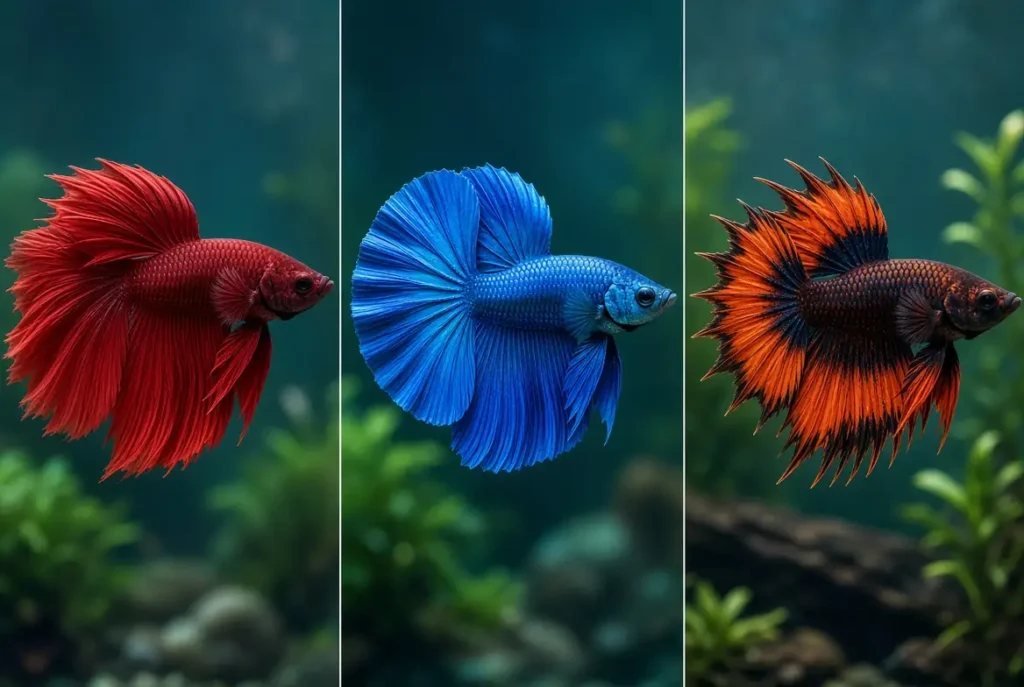
There is no single answer to how many betta fish types exist since breeders have developed dozens of variations, but they generally fall into two categories: tail type and color pattern. Understanding both helps when picking a betta that matches your preferences and experience level.
Common tail types
Common color and pattern types
For a first time owner, a veiltail or plakat is usually the easiest entry point since both are hardy and widely available at pet stores, while halfmoon and crowntail varieties are better suited to owners ready to monitor water quality more closely because of their larger or more delicate fins.
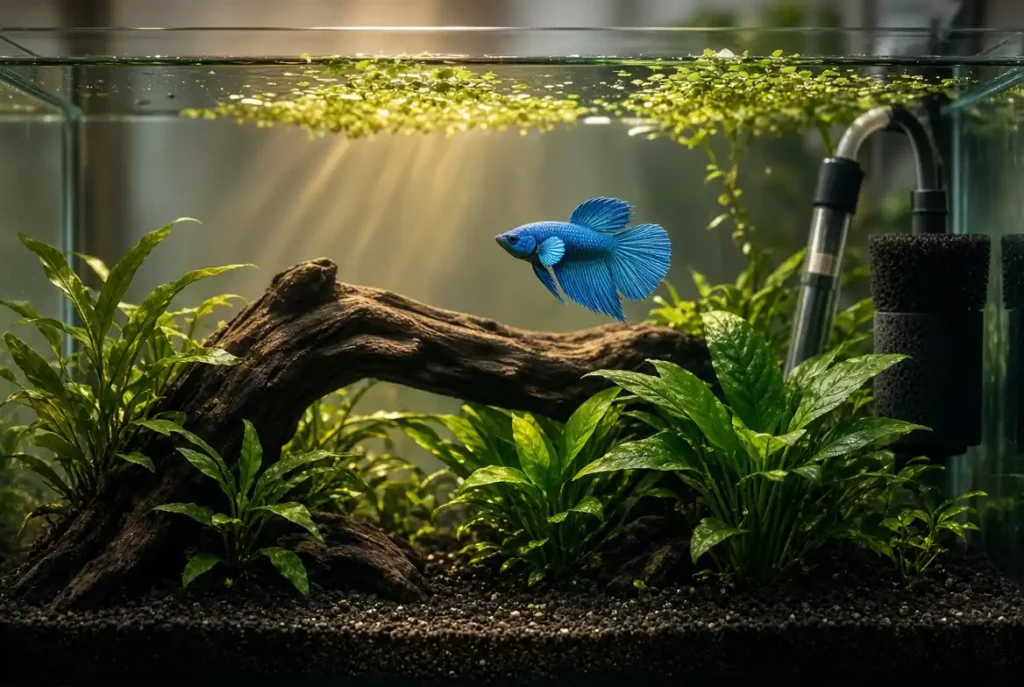
The single biggest mistake new betta owners make is choosing a tank that is too small. A betta fish bowl or anything under a gallon cannot hold a stable temperature or support a functioning filter, which leads to toxic ammonia buildup within days. The rule of thumb is simple: bigger is always safer for a betta’s long term health.
Recommended tank sizes
Beyond size, a proper betta setup needs a few essentials. A gentle filter keeps ammonia and waste under control without creating strong currents that exhaust a betta’s fins. A secure lid matters too, since bettas are known jumpers and can leap out of open top tanks when startled. Live or silk plants, along with smooth decor, give bettas places to rest and reduce stress, while sharp plastic plants can tear delicate fins.
Substrate is optional but gravel or sand at roughly one to one and a half pounds per gallon supports beneficial bacteria that keep the tank cycled. Setting the tank up and letting it cycle for at least 24 to 48 hours before adding the fish gives the water time to reach a stable temperature and reduces shock during introduction.
Bettas are tropical fish, which means stable warm water is not optional. The ideal betta fish water temperature sits between 76°F and 82°F, with 78°F being a safe target for most home setups. Temperatures that swing below 74°F slow a betta’s metabolism and weaken its immune system, while water above 86°F stresses the fish and lowers dissolved oxygen levels.
Core water parameters to maintain
Do betta fish need a heater? Yes, in almost every household. Room temperature water frequently drops below the safe range overnight or in air conditioned homes, so a heater rated for the tank size, roughly 5 watts per gallon, keeps temperature consistent. A basic thermometer confirms the heater is working correctly.
Do betta fish need a filter? Yes, though a gentle sponge or low flow filter works best since bettas struggle to swim against strong currents. A filter processing three to five times the tank volume per hour keeps ammonia from building up between water changes.
Tap water almost always contains chlorine or chloramine, both toxic to fish, so a water conditioner should be added to any new water before it touches the tank. Weekly partial water changes of 25 to 30 percent, paired with a liquid test kit to check parameters, prevent the slow water quality decline that causes most betta health problems.
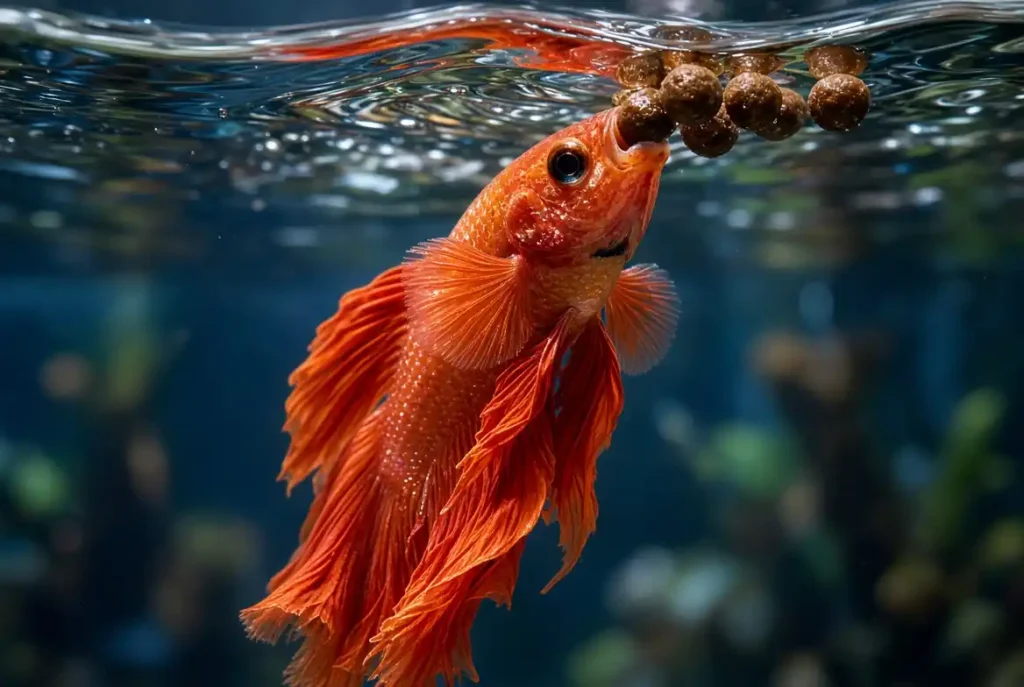
Betta fish are carnivores by nature, built to hunt insects and larvae in the wild rather than graze on plant matter. A diet lacking protein leads to poor coloration, weak fins, and a shortened lifespan, which makes food choice one of the most important parts of betta fish care.
Best food options
Flakes are generally not recommended as a primary food. Many bettas ignore them entirely, and flakes lose nutrients faster once exposed to air and water.
How often do you feed a betta fish? Once or twice daily is standard, offering only what the fish can finish within one to two minutes. A useful portion guide is to feed an amount roughly the size of the betta’s eye per meal. Uneaten food should be removed promptly since it breaks down quickly and pollutes the water, which in turn stresses the fish and can trigger illness.
Overfeeding is more common and more dangerous than underfeeding. A betta can safely go without food for up to two weeks in a pinch, but bloating, swim bladder issues, and ammonia spikes from excess food are far more frequent problems in home aquariums. Many experienced keepers also skip feeding one day a week to support healthy digestion.
Most betta fish live three to five years, though the exact number depends heavily on care quality, genetics, and the age at which the fish was purchased. Some well cared for bettas have reached seven to ten years, while neglected fish in poor water conditions can die within a year.
Pet store bettas are often already six months to a year old by the time they are sold, since breeding and growth take time before they reach a sellable size. This means the lifespan a new owner actually experiences may be shorter than the full biological lifespan of the species, even with excellent care.
Factors that extend a betta’s lifespan
Signs of aging in a betta include slower swimming, duller color, and reduced appetite, which are normal in an older fish and different from the sudden lethargy or clamped fins that signal illness. Genetics also plays a role, since certain long finned varieties like halfmoon tend to have slightly shorter average lifespans than hardier types like plakat, simply because their oversized fins place more strain on the body.
Telling male and female bettas apart matters for more than curiosity, since it directly affects tank setup and compatibility decisions. The two sexes differ in appearance, temperament, and how they can be housed.
Physical differences
Temperament and housing differences
Male bettas are highly territorial and must never be housed with another male, since fights are frequent and often fatal. A single male generally does best alone or with carefully selected non betta tank mates.
Female bettas are less aggressive toward each other and can sometimes be kept together in a group called a sorority, typically three to five females in a tank of 20 gallons or more. Sororities still require careful monitoring, since a hierarchy forms and occasional squabbling is normal, but sustained aggression means the group needs to be separated.
For beginners choosing between the two, a single male in his own tank is usually the simpler and lower risk option, while a female sorority is better suited to owners with some prior aquarium experience.
Most betta fish illnesses trace back to poor water quality, so catching problems early and correcting the water is often the first and most effective treatment. Knowing the common symptoms helps an owner act before a minor issue becomes fatal.
Fin rot: One of the most frequent betta fish diseases, caused by bacteria or fungus attacking damaged or stressed fins. Early signs include ragged, discolored, or shrinking fin edges. Clean water and, if needed, an aquarium safe antibacterial treatment usually resolve mild cases within one to two weeks.
Dropsy: A serious condition where fluid builds up inside the body, causing visible bloating and scales that stick outward, often described as a pinecone appearance. Dropsy is usually a symptom of underlying organ failure rather than a disease itself, and survival rates are low even with treatment, which makes prevention through clean water especially important.
Swim bladder disorder: Affects a betta’s ability to swim normally, causing it to float sideways, sink, or struggle to stay upright. It is commonly linked to overfeeding or constipation and often improves within a few days after a short fasting period and feeding a skinned pea.
Ich (white spot disease): Appears as small white dots across the body and fins, caused by a parasite. It spreads quickly in a tank and typically requires raising the water temperature slightly along with a dedicated ich treatment medication.
General warning signs to watch for
A dedicated quarantine tank is useful for treating a sick betta without exposing tank mates, and consulting a fish literate veterinarian is worthwhile for symptoms that do not improve within a week.
Color is one of the biggest reasons bettas remain so popular in the aquarium hobby, and decades of selective breeding have produced an enormous range of shades and patterns beyond the wild type’s duller reddish brown.
Common solid colors
Common patterns layered on top of base colors
Color intensity can shift slightly with age, stress, and diet quality, so a betta that looks pale after a store purchase often brightens within a few weeks once settled into a stable, well fed home environment. No single color affects hardiness, so choosing by color preference is a safe and enjoyable part of picking a betta.
Not every betta needs to live alone, but compatibility depends heavily on temperament, tank size, and species choice. A cramped tank with the wrong tank mates is one of the fastest ways to trigger stress, fin nipping, or outright aggression.
Good tank mate options
Species to avoid
Can betta fish live with other fish? Yes, but success depends on giving every fish enough space, at least a 10 gallon tank for a community setup, along with hiding spots so the betta can retreat if it feels crowded. Every betta has an individual personality, so even a generally compatible species should be introduced gradually and monitored closely for the first few days, with a backup plan ready to separate fish if aggression appears.
Breeding bettas is rewarding but requires patience, a dedicated setup, and realistic expectations, since not every pairing succeeds and raising fry to adulthood takes ongoing effort for weeks.
Setting up the breeding tank
A separate breeding tank of 5 to 10 gallons works best, kept shallow at around 4 to 6 inches of water with a gentle sponge filter and a heater set to 80°F. Floating plants or a foam square give the male a surface to anchor his bubble nest, and a divider lets the pair see each other safely before being introduced directly.
Conditioning and pairing
Both fish should be conditioned for one to two weeks beforehand with frequent small feedings of live or frozen food to build the energy reserves breeding requires. Once the male builds a bubble nest, a cluster of bubbles at the water’s surface that protects the eggs, the female can be introduced. Spawning itself involves the male wrapping around the female to fertilize eggs as she releases them, after which he collects the eggs in his mouth and places them into the bubble nest.
Egg and fry care
The male should be left alone to guard the nest while the female is removed, since she may eat the eggs otherwise. Eggs typically hatch within 24 to 48 hours, and the male continues tending the fry until they become free swimming after another two to three days, at which point he should also be removed.
Fry need infusoria or liquid fry food for the first week, moving to baby brine shrimp shortly after, with very frequent small water changes to manage the higher waste output relative to tank size. Raising a full spawn to adulthood can take three to four months and produces far more fry than most home setups can support long term, so having a rehoming plan in advance is worth considering before starting.
Betta fish prices vary widely based on tail type, color rarity, and where the fish is purchased, so knowing the general ranges helps set realistic expectations before shopping.
Typical price ranges
Where to buy
What to check before buying
A healthy betta from a reputable source, even at a slightly higher price, tends to settle into a new tank faster and shows fewer health issues in the first few weeks than a stressed, discounted fish from an overcrowded display container.
Good betta fish care comes down to consistency rather than complexity. A tank of at least 5 gallons, stable water between 76 and 82°F, a protein rich diet, and regular partial water changes cover most of what a betta needs to thrive for three to five years or longer. Beyond the basics, understanding fin types, color varieties, and early signs of illness helps owners make better decisions as questions come up along the way, whether that means choosing a compatible tank mate or catching fin rot before it spreads.
Betta fish reward attentive care with vivid color, personality, and an active presence that few other beginner friendly fish can match. Whether this is a first betta or an upgrade to a more spacious setup, applying the fundamentals covered in this guide gives any owner a strong foundation. As aquarium keeping continues evolving alongside better equipment and more accessible information in 2026, there has never been an easier time to give a betta fish the healthy, long term home it deserves.
How long do betta fish live?
Most betta fish live three to five years with proper care, though some reach seven to ten years in ideal conditions. Lifespan depends on water quality, diet, tank size, and genetics, with stable warm water and consistent maintenance being the biggest factors an owner can control.
What is the minimum tank size for a betta fish?
The minimum recommended tank size for a betta fish is 5 gallons. This provides enough water volume to support a heater and filter, keeping temperature and water quality stable. Smaller bowls or containers under a gallon cannot maintain safe conditions long term.
Do betta fish need a heater?
Yes, betta fish need a heater in almost every home setup. They are tropical fish that require water between 76 and 82°F, and room temperature often drops below this range, especially overnight or in air conditioned rooms.
Can betta fish live with other fish?
Yes, bettas can live with peaceful, non fin nipping species like neon tetras, cory catfish, and mystery snails in a tank of at least 10 gallons. Two male bettas should never be housed together, and compatibility always depends on the individual fish’s temperament.
What do betta fish eat?
Betta fish are carnivores and thrive on betta specific pellets supplemented with occasional brine shrimp or bloodworms. Flakes are not ideal since bettas often ignore them. Feeding once or twice daily in small portions prevents overfeeding and bloating.
How can you tell if a betta fish is male or female?
Males typically have longer fins and more vivid coloration, while females have shorter fins, a rounder body, and a small white egg spot near the pelvic fins. Females can also be housed together in small groups, unlike males.
How often should you feed a betta fish?
Feed a betta fish once or twice daily, offering only what it can finish within one to two minutes. A portion roughly the size of the fish’s eye per meal helps prevent overfeeding, which is more common than underfeeding in home aquariums.
Why is my betta fish not eating?
A betta fish may stop eating due to stress from new surroundings, poor water quality, illness, or simply being picky about food type. Check ammonia and temperature first, since these are the most common underlying causes of appetite loss.
Can two betta fish live together?
Two male bettas cannot live together and will fight, often fatally. Female bettas can sometimes be kept together in groups of three to five in a tank of 20 gallons or more, known as a sorority, though careful monitoring is still required.
How much does a betta fish cost?
Betta fish prices range from a few dollars for standard veiltail varieties at pet stores to significantly more for rare colors and patterns like koi or dragon scale from specialty breeders. Show quality bettas command the highest prices.

Fish Info Guide helps you explore edible, freshwater, saltwater, and aquarium fish – with simple guides on nutrition, care, and species identification for beginners and enthusiasts alike.
Imortant Links
Quick Links
Subscribe Our Newsletter
Get the latest fish care tips, species guides, and nutrition insights delivered straight to your inbox.