

Scrolling through pictures of clownfish and wondering why the orange and white fish in your local pet store looks nothing like the one in that nature documentary? You are not alone. There are far more types of clownfish than most people realize, each with its own colors, personality, and place in the reef.
From the common Ocellaris to rare designer strains like Picasso and Frostbite, this guide breaks down every major type of clownfish, where they live, how they reproduce, and what makes each one unique. In short, clownfish belong to the subfamily Amphiprioninae, live in a close partnership with sea anemones, and come in far more varieties than the one made famous by Finding Nemo.
Whether you are researching for a saltwater tank or simply curious about these reef icons, you will find clear, accurate answers here.
Clownfish, scientifically known as members of the subfamily Amphiprioninae, are small saltwater fish best recognized for their bright orange bodies and bold white bars. They belong to the damselfish family, Pomacentridae, and are found almost exclusively living among sea anemones on coral reefs.
The name “clownfish” comes from their vivid, playful coloring, which resembles clown face paint. There are around 30 recognized species, but two names cause the most confusion: Percula clownfish and Ocellaris clownfish.
The Ocellaris clownfish (Amphiprion ocellaris) is the species most people picture, and it is also the fish that inspired the character Nemo. However, it is often called the false clownfish because the true Percula clownfish (Amphiprion percula) looks almost identical. The main differences come down to subtle details:
Both are peaceful, hardy, and beginner friendly, which is why clownfish ocellaris varieties dominate the aquarium trade. Despite the differences, casual observers often use “percula clownfish” and “ocellaris clownfish” interchangeably, even though they are technically separate species with distinct scientific classifications
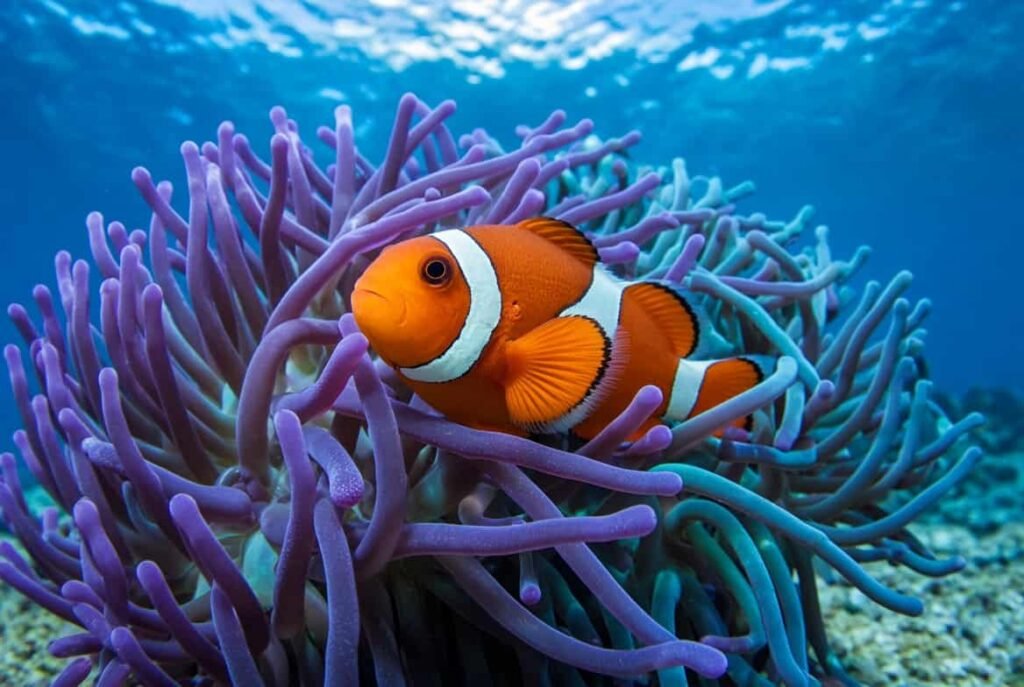
Clownfish live in the warm, shallow waters of the Indo Pacific region, including the Red Sea, the Great Barrier Reef, and reefs throughout Southeast Asia. They are never found in the Atlantic Ocean, the Mediterranean, or the Caribbean, which makes their range fairly limited compared to many other reef fish. Within these areas, they stick to sheltered lagoons and coral reefs where their anemone hosts can thrive.
The relationship between clownfish and sea anemone hosts is one of the most well known partnerships in the ocean. Anemones have stinging tentacles that kill most fish on contact, yet clownfish swim freely among them without harm. Researchers believe a protective mucus layer on the clownfish skin prevents the anemone from recognizing it as prey, though the exact biological mechanism is still debated.
This clownfish anemone relationship benefits both species:
So when people ask where do clownfish live, the honest answer is that they rarely live anywhere without an anemone nearby, since their survival strategy is built entirely around this partnership.
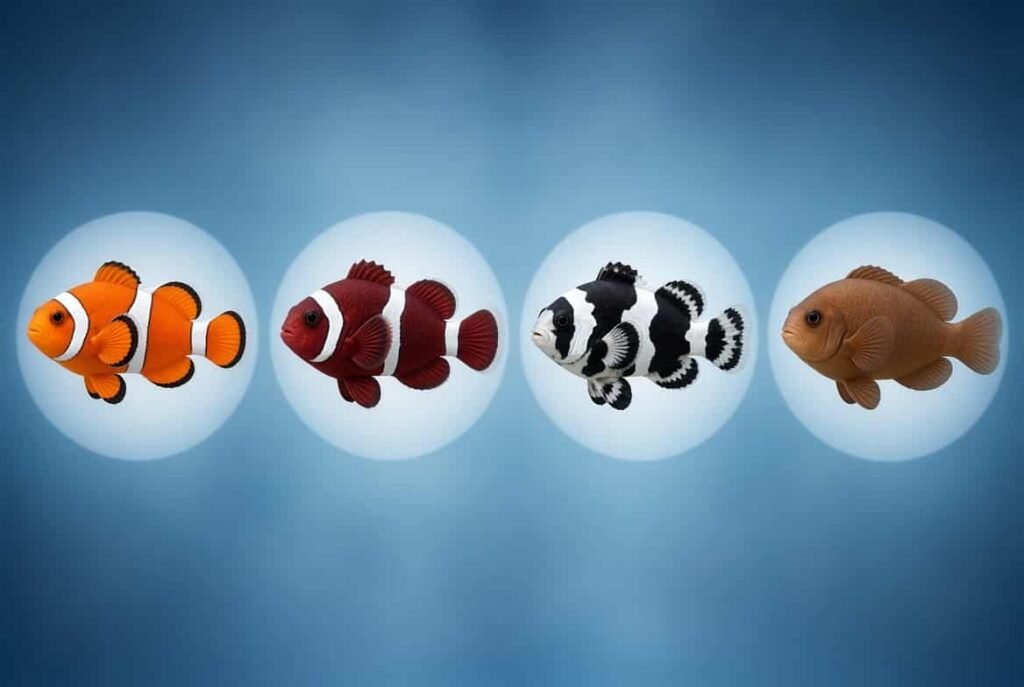
There are roughly 30 recognized clownfish species in the wild, plus dozens of captive bred color varieties developed by aquaculture farms. Below is a breakdown of the most searched and most popular types of clownfish, covering both natural species and designer strains.
Ocellaris Clownfish
The most common type in home aquariums, Ocellaris clownfish are bright orange with three white bands outlined in thin black. They are peaceful, hardy, and easy to care for, making them a favorite for beginners. This is the species most people associate with Finding Nemo.
Percula Clownfish
Percula clownfish look similar to Ocellaris but have noticeably thicker black outlining around their white stripes. They are considered the true clownfish species and tend to be slightly smaller and more vibrant, making them popular among experienced aquarists seeking authenticity.
Maroon Clownfish
Maroon clownfish are larger, more territorial, and known for their deep red or maroon coloring paired with bold white or gold bars. They can grow more aggressive than other types, especially as they mature, and need more tank space to thrive.
Tomato Clownfish
Tomato clownfish have a deep orange red body with a single white stripe behind the eye. Native to the Indo Pacific, they are hardy and adapt well to captivity, though they can become territorial once paired.
Snowflake Clownfish
A captive bred variation of the Ocellaris, Snowflake clownfish have irregular, patchy white patterns instead of clean stripes, caused by a genetic mutation. No two Snowflake clownfish look exactly alike.
Picasso Clownfish
Picasso clownfish are a designer strain of the Percula species with extra white patches and irregular striping, giving each fish a unique painted appearance. They are especially popular among reef hobbyists who want a standout centerpiece fish.
Storm Clownfish
Storm clownfish, including Black Storm and Snow Storm variations, are bred for extended white patterning that can cover much of the body. These strains were developed through selective aquaculture breeding rather than found in the wild.
Frostbite Clownfish
Frostbite clownfish are known for their icy white coloring extending across the head and fins, developed from Snowflake Ocellaris bloodlines. They are one of the more expensive designer types due to their striking appearance.
Gladiator Clownfish
Gladiator clownfish feature bold, wide white stripes with a distinct armored look. This captive bred strain was developed for aquarists who want a more dramatic pattern than the standard Ocellaris.
Mocha Clownfish
Mocha clownfish, sometimes called Mocha Gladiator, have a warm caramel brown body tone instead of the typical bright orange. This subtle color shift makes them a favorite among collectors seeking something different from the classic look.
Skunk Clownfish
Skunk clownfish, including Pink Skunk and Orange Skunk varieties, lack the traditional vertical bars and instead have a single stripe running down the back, resembling a skunk. They tend to be smaller and less aggressive than other types.
Clarkii Clownfish
Clarkii clownfish are one of the most adaptable species, able to host in a wider range of anemone species than most clownfish. They have a yellowish tail and can grow larger than many other types, sometimes reaching 6 inches.
Saddleback Clownfish
Saddleback clownfish get their name from a distinctive dark patch across the back that resembles a saddle. Their coloring is more muted than other types, often blending brown, orange, and white.
Black Clownfish
Black clownfish, often black Ocellaris or black Percula variants, display a deep black body with white stripes instead of the usual orange. These striking color morphs are especially popular in the aquarium trade.
Blue Clownfish
True blue clownfish do not occur naturally since no clownfish species produces blue pigmentation. The name usually refers to fish photographed under blue reef lighting, or occasionally confused with blue colored damselfish relatives.
One of the most surprising clownfish facts is that every clownfish is born male. There is no biological mechanism for a clownfish to be born female, which directly answers a common question: are all clownfish born male. Yes, without exception.
Clownfish live in small social groups built around a strict hierarchy. Each group has one dominant female, one breeding male, and several smaller, non breeding males waiting their turn. If the female dies or is removed, the breeding male undergoes a permanent transformation into a female, a process called protandrous hermaphroditism. This answers the frequently searched question, do clownfish change gender. Yes, but only in one direction, and the change cannot be reversed.
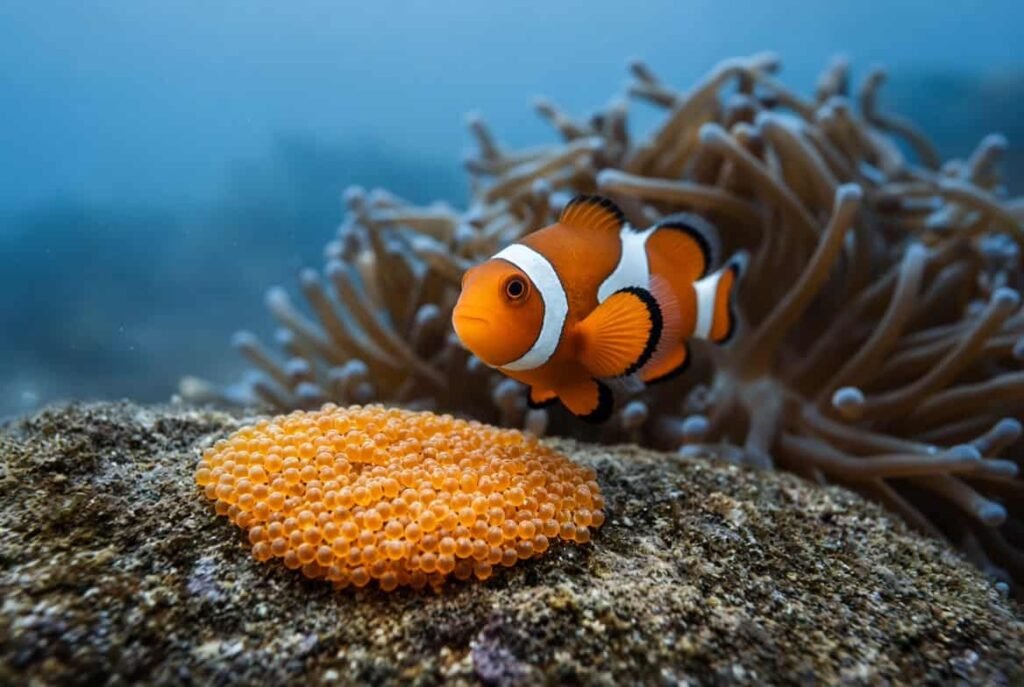
Once paired, the female lays clusters of eggs near the host anemone, and the male fertilizes and guards them until they hatch, usually within six to ten days. During this process, the male will remove and eat any damaged or infertile eggs to protect the healthy ones, which explains why people ask whether do clownfish eat their own eggs. They do, but only the ones that will not survive anyway.
Clownfish are omnivores, which means their diet includes both plant and animal matter. In the wild, the answer to what do clownfish eat comes down to whatever drifts within reach of their host anemone. They feed on zooplankton, small crustaceans, algae, and leftover scraps from the anemone’s own meals.
A typical clownfish diet breaks down into a few main categories:
In captivity, the diet shifts slightly but stays balanced. Good food for clownfish in a home aquarium includes high quality marine pellets, flake food, and frozen options like brine shrimp or mysis shrimp. Many keepers also add spirulina based foods since algae naturally makes up close to a third of a wild clownfish diet.
Feeding once or twice daily in small portions works best, since clownfish have small stomachs and can overeat if given too much at once. A varied diet mixing protein and plant based foods keeps their signature orange coloring vibrant over time.
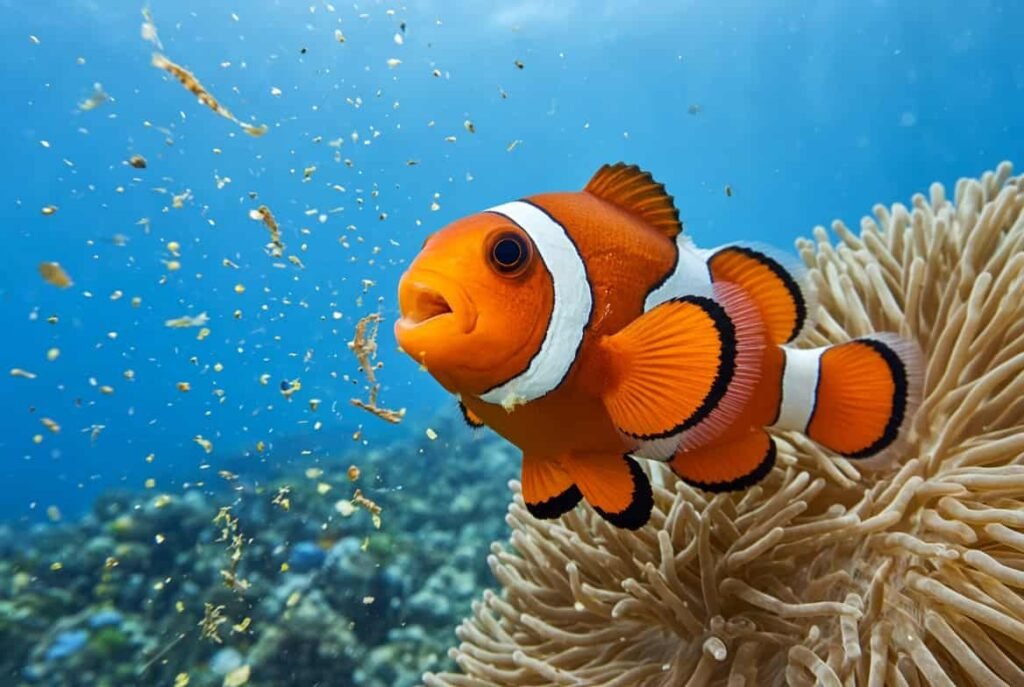
Most clownfish stay fairly small throughout their lives. The average clownfish size ranges from 3 to 5 inches, though some species like the Clarkii clownfish can grow closer to 6 inches. Maroon clownfish tend to be the largest common type, with females sometimes reaching nearly 7 inches.
When it comes to how long do clownfish live, the answer depends heavily on environment. In the wild, clownfish typically live 6 to 10 years, facing natural risks like predation and habitat disruption. In a well maintained aquarium, that lifespan often stretches to 10 years or more, with some reports of clownfish living past 15 years in captivity.
Beyond the basics, there are several clownfish fun facts that surprise most people:
These facts about clownfish highlight just how different their biology and social structure are compared to most fish in the ocean.
Despite their close bond with anemones, clownfish are not fully protected from every threat. Common clownfish predators include larger reef fish, eels, and groupers that hunt near the edges of anemone territory. One frequently asked question is do barracudas eat clownfish, and the answer is yes. Barracudas are fast, opportunistic hunters that will take a clownfish if it strays too far from the safety of its host anemone, though the anemone’s stinging tentacles usually keep most predators at a distance.
A persistent myth worth clearing up involves the idea of a freshwater clownfish. This does not exist. Every clownfish species is strictly a saltwater fish, and none can survive long term in freshwater conditions. The confusion likely comes from clownfish appearing in general tropical fish searches, or from beginners assuming any colorful, hardy aquarium fish must have a freshwater version. If you see a freshwater clownfish for sale, it is either a different species entirely or mislabeled.
Understanding both real predators and common misconceptions helps set realistic expectations, whether you are observing clownfish on a reef or keeping them in a home aquarium.
Clownfish are far more diverse than most people realize, from the classic Ocellaris and Percula to designer strains like Picasso, Frostbite, and Storm. Understanding the different types of clownfish, along with their unique relationship with sea anemones, unusual reproductive biology, and specific dietary needs, gives a complete picture of why these reef fish continue to fascinate scientists, hobbyists, and casual ocean lovers alike.
Whether you are setting up a saltwater aquarium or simply satisfying curiosity sparked by a documentary or a childhood movie, the details covered here go well beyond the surface level facts most searches turn up. As marine research and captive breeding programs continue to introduce new color varieties, the world of clownfish types is only going to keep expanding.
If you are considering keeping clownfish yourself, start with a hardy species like Ocellaris before moving on to more territorial types like Maroon or Clarkii.
What is the difference between ocellaris and percula clownfish?
Ocellaris clownfish have thinner black outlining and are often called false clownfish, while true Percula clownfish have thicker black borders around their white stripes. Both species look similar, are similarly sized, and are equally popular in the aquarium trade, but they belong to distinct scientific classifications.
Do clownfish really need a sea anemone to survive?
No, clownfish do not strictly need a sea anemone to survive in captivity, and many aquarium clownfish thrive without one. In the wild, however, the anemone provides essential protection from predators, so clownfish rarely stray far from a host when one is available nearby.
Can clownfish actually change gender?
Yes, clownfish can change gender, but only from male to female. This happens when the dominant female in a group dies, prompting the breeding male to transform permanently into a female. The reverse process, female to male, never occurs in clownfish biology.
Are all clownfish born male?
Yes, every clownfish is born male with no exceptions. Female clownfish only develop later in life through a biological transformation, and only the dominant fish in a social group ever makes that change, usually triggered by the loss of the existing female.
Do clownfish eat their own eggs?
Yes, but selectively. Male clownfish guard the eggs and will eat any that are damaged, infertile, or unlikely to hatch. This behavior protects the remaining healthy eggs by preventing decay or disease from spreading through the cluster.
What do clownfish eat in the wild versus in a tank?
In the wild, clownfish eat algae, zooplankton, small crustaceans, and anemone food scraps. In a tank, their diet shifts to marine pellets, flakes, and frozen foods like brine shrimp or mysis shrimp, ideally supplemented with spirulina to mimic their natural algae intake.
How long do clownfish live?
Clownfish typically live 6 to 10 years in the wild. In captivity, with stable water conditions and proper diet, many clownfish live past 10 years, and some well cared for individuals have been reported living beyond 15 years.
Is there such a thing as a freshwater clownfish?
No, freshwater clownfish do not exist. All clownfish species are saltwater fish that require marine conditions to survive. Any fish marketed as a freshwater clownfish is either mislabeled or an entirely different species with a similar appearance.

Fish Info Guide helps you explore edible, freshwater, saltwater, and aquarium fish – with simple guides on nutrition, care, and species identification for beginners and enthusiasts alike.
Imortant Links
Quick Links
Subscribe Our Newsletter
Get the latest fish care tips, species guides, and nutrition insights delivered straight to your inbox.