

You bought mackerel because it was cheap and healthy, then it sat in your fridge because you had no idea how to cook it without stinking up the kitchen. That confusion ends here.
Mackerel fish is one of the most nutrient dense saltwater fish you can eat, and one of the most misunderstood. It belongs to the Scombridae family and includes several species such as Atlantic, Pacific, King, Spanish, and Indian mackerel, each with its own flavor, size, and mercury level.
In short: mackerel is rich in omega 3 fatty acids, protein, vitamin B12, and vitamin D, making it one of the best fish choices for heart and brain health when you pick the right species and cook it properly.
This guide covers every type of mackerel, its nutrition facts, real health benefits, safety precautions, regional names, and simple cooking methods you can use tonight.
Mackerel is not one single fish. It is a common name used for several fast swimming saltwater species, most of which belong to the Scombridae family, the same family that includes tuna and bonito. This is why you will see very different fish, from the small Atlantic mackerel to the much larger King mackerel, all sharing the same name.
Most mackerel species share a few common traits. They have a slender, torpedo shaped body built for speed, a deeply forked tail, and skin with distinct wavy stripes or spots. Their flesh is naturally oily, which is exactly what makes them such a rich source of omega 3 fatty acids.
mackerel fish refers to a group of related saltwater species known for their oily flesh, high omega 3 content, and strong flavor, found in temperate and tropical oceans worldwide.
You will find mackerel schooling near the surface in coastal and offshore waters across the Atlantic, Pacific, and Indian Oceans. Because they travel and feed close to the surface, they grow quickly, reproduce early, and remain widely available compared to many other types of fish sold commercially today.
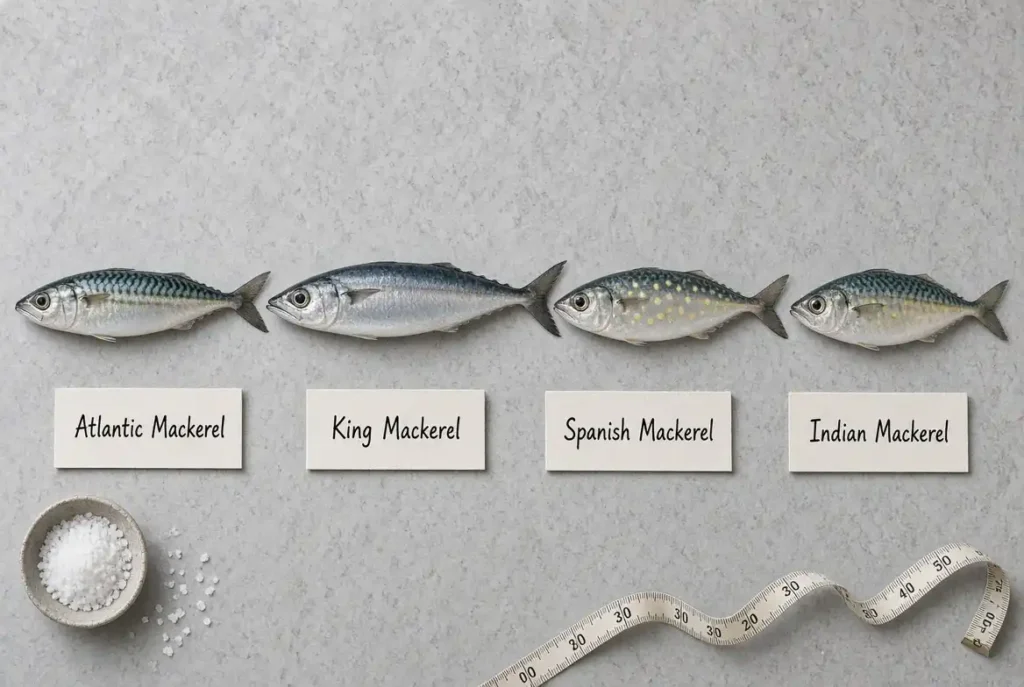
There is no single “correct” mackerel. Depending on where you live and what your local market sells, you could be eating any of eight or more distinct species, each with its own size, flavor, and mercury profile.
the main types of mackerel fish are Atlantic, Pacific, King, Spanish, Indian, Horse, Jack, and Japanese Spanish mackerel, and they differ mainly in size, region, and mercury content.
Type | Scientific Name | Region | Mercury Level | Best For |
Atlantic Mackerel | Scomber scombrus | North Atlantic | Low | Grilling, smoking, sashimi |
Pacific Mackerel | Scomber japonicus | Pacific Ocean | Low | Pan frying, roasting |
King Mackerel | Scomberomorus cavalla | Gulf of Mexico, Atlantic | High | Steaks, grilling (limit intake) |
Spanish Mackerel | Scomberomorus maculatus | Coastal warm waters | Moderate to High | Frying, baking, curries |
Indian Mackerel | Rastrelliger kanagurta | Indian Ocean, South Asia | Low to Moderate | Curry, fish fry |
Horse Mackerel | Trachurus trachurus | Atlantic, Mediterranean | Low | Grilling, canning |
Jack Mackerel | Trachurus symmetricus | Pacific coast | Low | Canning, bait, frying |
Atlantic Mackerel
Atlantic mackerel is the most widely eaten and studied species. It has a distinctive blue green back with dark wavy stripes and a silvery underbelly. It grows to about 16 inches and stays low in mercury, which is why nutrition experts most often recommend it. Its firm, oily flesh holds up well to grilling, smoking, and even raw preparations like sashimi.
Spanish Mackerel
Spanish mackerel is smaller and more delicate than Atlantic mackerel, with a milder taste that works well in curries and light frying. It carries a moderate to high mercury level, so health agencies suggest eating it in moderation rather than as a daily staple.
King Mackerel
King mackerel, often called kingfish, is the largest common variety, prized for its firm steaks. It also carries the highest mercury levels among popular mackerel types, which is why the FDA and EPA specifically advise pregnant women and young children to avoid it.
Indian, Horse and Jack Mackerel
Indian mackerel is a kitchen staple across South Asia, especially in curries and fish fry preparations, and generally carries lower mercury than King or Spanish varieties. Horse mackerel and Jack mackerel are smaller, oilier species popular for canning and as bait, and both remain low mercury, budget friendly options for regular consumption, similar to how Cod Fish varies widely between its own Atlantic and Pacific species.
If you have shopped at an Indian, Middle Eastern, or Nigerian market, you have probably seen mackerel sold under a name that did not look anything like “mackerel.” That is because this fish carries dozens of regional names, especially across South Asia and West Africa.
mackerel fish is called Ayilai or Kanangeluthi in Tamil, Ayala in Malayalam, Kanagarthalu in Telugu, Bangda in Hindi and Marathi, Kajol Gouri in Bengali, and Eja Titus or Alaran in Yoruba.
Language | Mackerel Fish Name |
Tamil | Ayilai, Kanangeluthi |
Telugu | Kanagarthalu, Kannangadatha |
Malayalam | Ayala, Ayila |
Marathi | Bangda |
Hindi | Bangda |
Bengali | Kajol Gouri |
Arabic | Basha, Karuga |
Spanish | Caballa |
Yoruba | Eja Titus, Alaran |
A few naming mix ups are worth clearing up. In Tamil and Telugu, Vanjaram and Surmai actually refer to Spanish mackerel or seer fish (genus Scomberomorus), not true Indian mackerel. True Indian mackerel (Rastrelliger kanagurta), the fish most commonly labeled “mackerel” in South Asian markets, is the smaller, budget friendly, bony fish typically pan fried or curried, known as Bangda in Hindi and Marathi and Ayala in Malayalam.
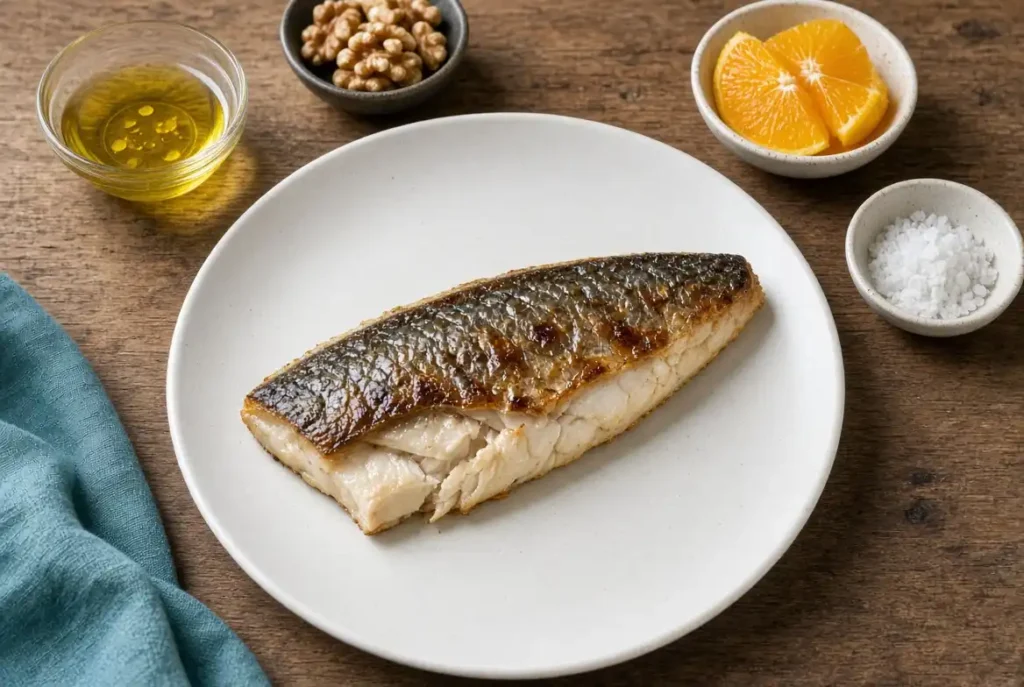
Mackerel earns its “superfood” reputation honestly. A single 100 gram raw serving of Atlantic mackerel delivers roughly 205 calories, nearly 19 grams of protein, and close to 14 grams of fat, most of which is the heart friendly unsaturated kind.
mackerel fish nutrition per 100 grams includes about 205 calories, 18.6g protein, 13.9g fat, 70mg cholesterol, and over 1,000mg of omega 3 fatty acids per 3 ounce cooked serving, making it one of the richest natural sources of omega 3 available.
Nutrient (per 100g raw) | Amount |
Calories | 205 kcal |
Protein | 18.6 g |
Total Fat | 13.9 g |
Saturated Fat | 3.3 g |
Cholesterol | 70 mg |
Sodium | 90 mg |
Selenium | 44.1 mcg |
Omega 3 (per 3oz cooked) | 1,000+ mg |
Beyond the macros, mackerel is one of the best natural sources of vitamin B12, which supports nerve function and red blood cell production, along with vitamin D for bone health and immunity. About 77 percent of the fat in mackerel is unsaturated, meaning it works to lower bad cholesterol rather than raise it, a trait it shares with other lean, protein rich options like Tilapia Fish, which is a key reason nutritionists rank oily fish above many other common protein choices.
Mackerel is not just calorie dense, it is benefit dense. Its combination of omega 3 fatty acids, high quality protein, and key vitamins supports several areas of health at once, which is why the American Heart Association recommends at least two servings of fatty fish like mackerel per week.
mackerel fish benefits include improved heart health, better brain function, stronger bones, and support for healthy weight management, driven mainly by its omega 3, vitamin D, and protein content.
Mackerel is healthy, but not every type of mackerel is safe to eat in unlimited amounts. The biggest concern is mercury, and it varies sharply depending on which species you are eating.
the main disadvantages of mackerel fish are its mercury content in larger species like King mackerel, its risk of scombroid poisoning if not stored properly, and its naturally high sodium content in canned varieties.
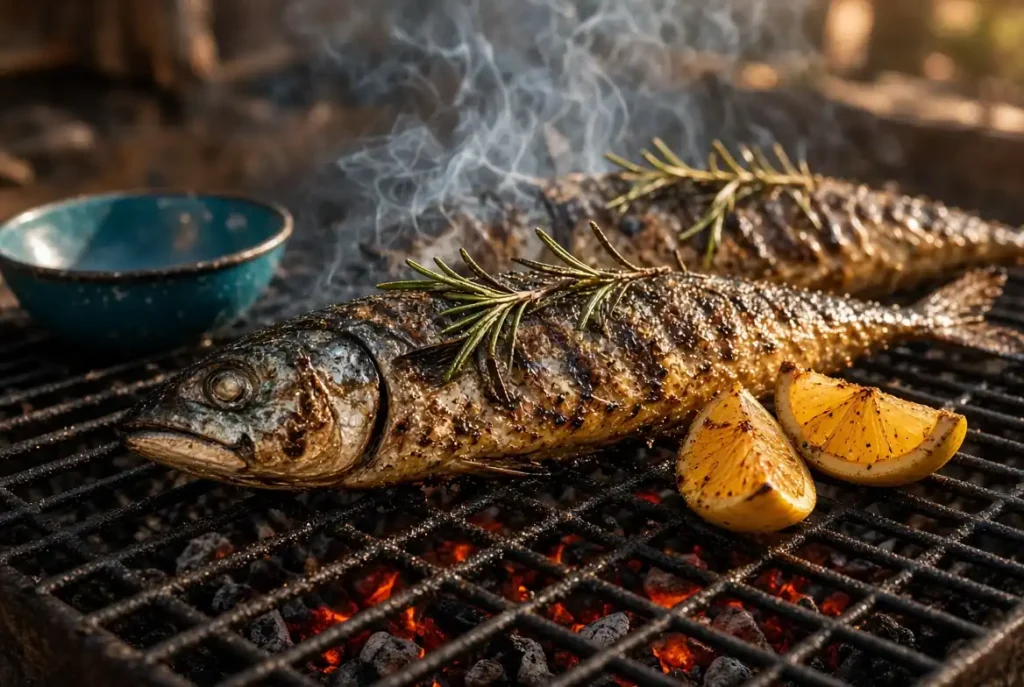
Mackerel’s naturally oily flesh is forgiving to cook and absorbs marinades exceptionally well, which is why it works across so many different cuisines and cooking styles.
mackerel fish can be grilled, pan fried, baked, smoked, or made into curry, and its oily texture keeps it moist through almost any high heat cooking method.
Grilling: Brush fillets with olive oil, season with salt, pepper, and herbs, and cook 3 to 4 minutes per side over medium high heat. Serve with lemon wedges to cut through the richness.
Pan frying: Coat fillets lightly with flour or spices and fry in a nonstick pan over medium heat until golden and crisp on both sides.
Baking: Preheat the oven to 180°C (350°F), place the fish in foil with garlic, herbs, and lemon, and bake for 15 to 20 minutes until fully cooked through.
Smoking: Brine the fish first for extra flavor, then smoke at low temperature until the flesh turns tender and flaky.
Mackerel Fish Curry
Mackerel curry is a staple across South Asian and Southeast Asian coastal cuisines. The fish is typically simmered in a spiced coconut or tomato based gravy, which balances its rich, oily flavor with acidity and heat from chili and tamarind.
Mackerel Fish Fry
A quick pan fry, often called Bangda fry or Ayala fry regionally, involves coating the fish in a spice paste or rice flour coating and shallow frying until crisp. This method works especially well because mackerel’s fine pin bones become safe to eat once fried at high heat.
Mackerel Fish Cakes
Canned or smoked mackerel makes excellent fish cakes. Flake the fish, mix with mashed potato, herbs, and a binding egg, then pan fry into patties for a quick, protein rich meal, much like how Rohu Fish is often flaked into cutlets in South Asian home cooking.
Mackerel is one of the more affordable fish options at most seafood counters, but freshness matters more with mackerel than with almost any other fish because its high oil content means it spoils faster than lean fish varieties.
fresh mackerel should be eaten within 24 hours of purchase, while frozen and canned mackerel fish offer longer shelf life and similar nutrition at a lower cost.
Mackerel is easy to recognize once you know what to look for. Its body is slender and torpedo shaped, built for speed rather than bulk, with a deeply forked tail at the back.
mackerel fish is visually identified by its iridescent blue green back with dark wavy stripes, silvery white underbelly, and streamlined, spindle shaped body.
The top half of the body shows metallic blue green coloring marked with 20 to 30 wavy black bars, while the underside stays smooth and silvery white. This coloring fades quickly after the fish dies, which is one reason freshness matters so much when buying it whole. Photos of mackerel on ice at the market typically show this contrast most clearly, with the vivid stripes still intact on freshly caught fish.
Mackerel fish is one of the most nutrient dense, affordable, and versatile seafood choices available today. From heart healthy omega 3s to bone strengthening vitamin D, its benefits are backed by real nutritional data, not just reputation.
The key is knowing which type you are eating. Stick to low mercury varieties like Atlantic or Pacific mackerel for regular meals, save King mackerel for occasional treats, and always prioritize freshness or proper storage to avoid scombroid poisoning.
Whether you grill it, curry it, or open a can for a quick lunch, mackerel fish delivers serious nutrition without a serious price tag. For more seafood guides like this one, explore our full Edible Fish category on Fish Info Guide.
Is mackerel fish good for health?
Yes. Mackerel is rich in omega 3 fatty acids, high quality protein, vitamin B12, and vitamin D, which together support heart health, brain function, and strong bones. Choosing low mercury varieties like Atlantic or Pacific mackerel makes it safe for regular consumption.
What does mackerel fish taste like?
Mackerel has a rich, slightly oily, and savory flavor with a hint of natural sweetness. Its flesh is soft, flaky, and moist, making it more pronounced in taste than milder white fish but less intense than fully fatty fish like herring.
What are the main types of mackerel fish?
The most common types are Atlantic, Pacific, King, Spanish, Indian, Horse, and Jack mackerel. They differ mainly in size, region, flavor, and mercury content, with Atlantic and Pacific mackerel being the lowest in mercury.
Is mackerel fish high in mercury?
It depends on the species. Atlantic and Pacific mackerel are low in mercury and safe for regular eating. King mackerel and Spanish mackerel carry higher mercury levels, and the FDA advises pregnant women and young children to avoid King mackerel entirely.
How should mackerel fish be cooked?
Mackerel can be grilled, pan fried, baked, smoked, or simmered in curry. Its naturally oily flesh stays moist through high heat cooking, making grilling and pan frying two of the most popular methods worldwide.
Is mackerel fish the same as tuna?
No, but they are closely related. Both belong to the Scombridae family, but mackerel species are generally smaller, more oily, and less expensive than tuna, with a stronger, more distinct flavor.
Can mackerel fish help with weight loss?
Yes, indirectly. Mackerel is high in protein and healthy fats, both of which increase feelings of fullness and can reduce overeating, making it a useful addition to a balanced weight management diet.
Is canned mackerel as healthy as fresh mackerel?
Largely yes. Canned mackerel retains most of its omega 3 and protein content, though it often contains added sodium. Checking the label for water or brine packed options helps keep sodium intake lower.
What is mackerel called in Hindi, Tamil and Telugu?
Mackerel is called Bangda in Hindi, Ayilai or Kanangeluthi in Tamil, and Kanagarthalu in Telugu. These names refer to true Indian mackerel, not Vanjaram or Surmai, which are actually Spanish mackerel or seer fish.
How often can you safely eat mackerel fish?
For low mercury varieties like Atlantic or Pacific mackerel, two to three servings per week is generally considered safe and beneficial. High mercury varieties like King mackerel should be eaten far less frequently, especially by pregnant women and young children.

Fish Info Guide helps you explore edible, freshwater, saltwater, and aquarium fish – with simple guides on nutrition, care, and species identification for beginners and enthusiasts alike.
Imortant Links
Quick Links
Subscribe Our Newsletter
Get the latest fish care tips, species guides, and nutrition insights delivered straight to your inbox.