

Bringing home your first neon tetra fish, only to watch it fade or struggle within days, is a common heartbreak for new aquarium owners. The good news: neon tetra fish are actually one of the easiest, most rewarding freshwater fish once you understand their real needs, not the oversimplified advice floating around online.
The neon tetra fish (Paracheirodon innesi) is a small, peaceful, schooling fish native to the Amazon Basin, prized for its glowing blue and red stripe. With proper water conditions, a suitable tank setup, and the right diet, neon tetras can live five to eight years and bring constant color and movement to a community aquarium.
This guide covers everything: types and colors, tank setup, water parameters, feeding, tank mates, common diseases, breeding, and current pricing, so you can keep thriving, vibrant neon tetras with confidence.
The neon tetra fish, scientifically known as Paracheirodon innesi, is a small freshwater fish belonging to the characin family. It is native to the clear and blackwater streams of the Amazon Basin, particularly in Peru, Brazil, and Colombia, where it swims in large shoals through shaded, slow moving waters.
What makes the neon tetra fish instantly recognizable is its iridescent blue upper body paired with a bright red stripe running along the lower half, from mid body to the tail. This glowing coloration is not just decorative. In the wild, it helps the fish stay visible to its shoal in dim, tannin stained water while still evading predators.
Neon tetra fish are tiny, typically reaching only 1 to 1.5 inches (2.5 to 4 cm) in length, yet their visual impact in a tank is far bigger than their size suggests. They are peaceful, non aggressive, and thrive in groups, making them one of the most popular freshwater fish for community aquariums worldwide.
Attribute | Detail |
Scientific Name | Paracheirodon innesi |
Origin | Amazon Basin, South America |
Adult Size | 1 to 1.5 inches (2.5 to 4 cm) |
Lifespan | 5 to 8 years with proper care |
Temperament | Peaceful, schooling |
Diet | Omnivore |
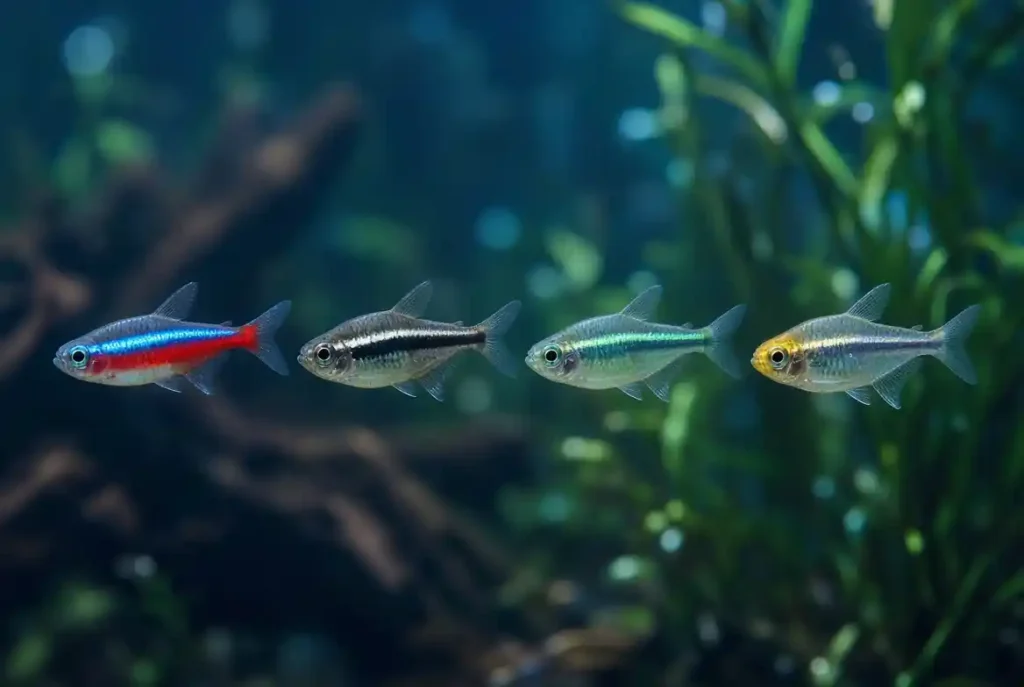
While the classic blue and red neon tetra fish is the most recognizable, selective breeding and natural variation have produced several distinct types, each with its own appeal for aquarium hobbyists.
Common Neon Tetra: The original variety, with a bright blue body and a red stripe covering the back half, from mid body to tail.
Green Neon Tetra (False Neon): Smaller and more subdued, with a greenish blue upper body and a fainter red lower stripe. It has a shorter lifespan of around 2 to 3 years and prefers slightly warmer, more acidic water.
Black Neon Tetra: Features a black horizontal stripe with a pale, silvery white band above it. Hardy and slightly larger than the common variety, it adds strong contrast in a planted tank.
Red Neon Tetra: Often confused with the Cardinal Tetra, this variety displays a more dominant red coloration along the body.
Pink Neon Tetra: A rarer, softer colored variant that has gained popularity among specialty breeders.
Gold Head and Diamond Head Neon Tetra: Selectively bred for a metallic sheen across the head and dorsal area, catching light with a sparkling effect.
Neon Tetra GloFish: A genetically modified, fluorescent version bred to glow vividly under blacklight, popular in themed aquariums.
Neon tetra fish and cardinal tetra fish are often mistaken for one another in pet stores, and it is easy to see why. Both are small, schooling, South American fish with a glowing blue and red color pattern. But once you know what to look for, telling them apart becomes simple.
The clearest difference is the red stripe. On a neon tetra fish, the red color only covers the back half of the body, from the middle to the tail. On a cardinal tetra, the red stripe runs the entire length of the body, from head to tail. Cardinal tetras are also slightly larger and tend to display more vivid, saturated color.
Feature | Neon Tetra | Cardinal Tetra |
Scientific Name | Paracheirodon innesi | Paracheirodon axelrodi |
Red Stripe | Back half of body only | Full length of body |
Adult Size | 1 to 1.5 inches | Up to 2 inches |
Care Level | Easy, beginner friendly | Slightly more demanding |
Typical Price | Lower | Higher |
Water Preference | Slightly acidic, soft water | Softer, more acidic, warmer water |
For beginners, the neon tetra fish is generally the easier and more forgiving choice, while the cardinal tetra suits hobbyists ready for slightly more precise water management.
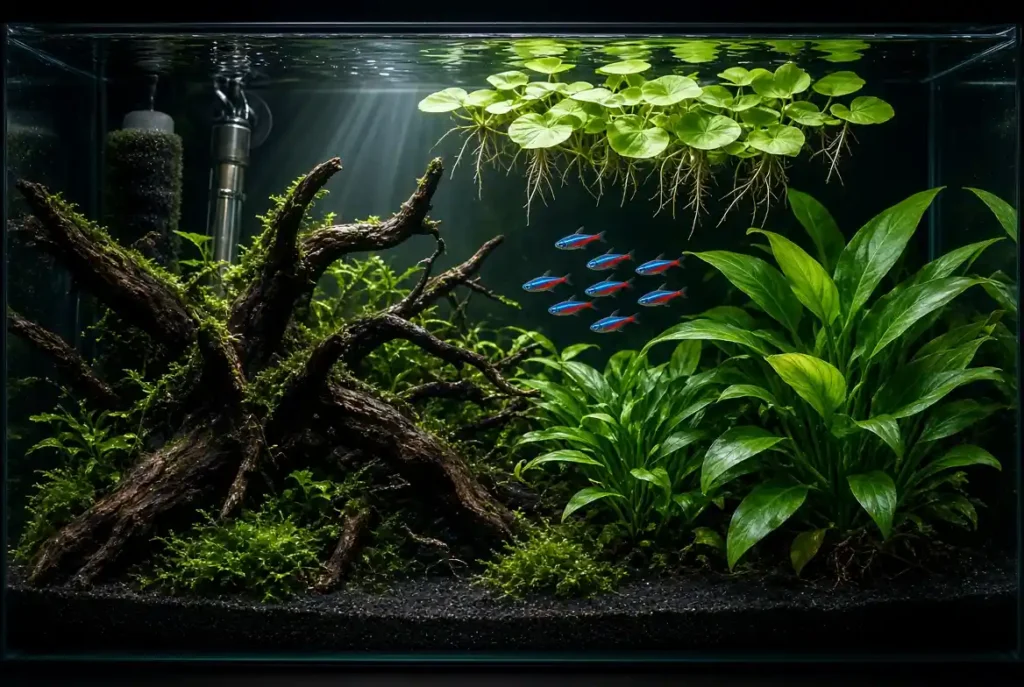
Setting up the right environment is the single biggest factor in keeping neon tetra fish healthy long term. A properly cycled tank with stable conditions prevents most of the stress related deaths new owners experience.
Minimum Tank Size: A neon tetra fish tank should be at least 10 gallons for a small school of six fish. Larger tanks are more forgiving because they dilute waste and hold temperature more steadily.
Filtration: Choose a filter rated to circulate the entire tank volume at least four times per hour. For example, a 10 gallon tank needs a filter rated for roughly 40 gallons per hour (GPH) at minimum. Neon tetras prefer gentle to moderate flow, so avoid oversized filters that create strong currents.
Substrate and Decor: Use a dark colored substrate, such as black sand or dark gravel, to make the fish’s colors pop. Add driftwood, Java moss, and floating plants like frogbit to recreate the shaded, blackwater streams they come from in the wild.
Lighting: Keep lighting moderate to low. Bright, unshaded tanks can stress neon tetras and dull their coloration over time.
A well planned neon tetra fish aquarium mimics a quiet, plant covered Amazon stream, not an open, brightly lit showcase tank.
Getting the water right matters more for neon tetra fish than almost any other single care factor. These fish evolved in soft, slightly acidic, warm streams, and their health depends on staying close to that natural range.
Neon Fish Temperature: Keep the tank between 68 and 79°F (20 to 26°C). A stable heater with a built in thermostat is essential, since temperature swings greater than 2°F within 24 hours can stress the fish and weaken their immune response.
pH Level: Aim for a pH between 5.5 and 7.0. Neon tetras tolerate a slightly wider range once acclimated, but sudden pH shifts are far more dangerous than a stable value at the edge of their comfort zone.
Water Hardness: Neon tetras prefer soft to moderately hard water, generally 1 to 10 dH. Very hard tap water can be softened using reverse osmosis water blended with tap water, or by adding driftwood, which naturally releases tannins.
Why Stability Matters: Neon tetra fish are more sensitive to fluctuating water conditions than to conditions that are simply outside the ideal range. Consistent weekly testing and gradual adjustments prevent the stress that leads to disease outbreaks.
Caring for neon tetra fish is straightforward once you understand a few core habits that experienced keepers rely on every week.
Keep Them in Schools: Neon tetra fish are schooling fish by nature and should always be kept in groups of at least six, ideally eight to ten. A lone or small group of neon tetras shows more stress, hides more often, and displays duller coloration than a properly sized school.
Acclimation Matters: When introducing new neon tetras, avoid dropping them straight into the tank. Use the drip acclimation method, or float the bag and add small amounts of tank water every 10 minutes for about an hour. This slow transition prevents the pH and temperature shock that kills many neon tetras within their first few days.
Weekly Water Changes: Perform a 10 to 25 percent water change every one to two weeks to keep nitrate levels low. Never replace all the water at once, as this disrupts the beneficial bacteria colony.
Common Care Mistakes
Neon tetra care rewards consistency far more than complexity. Stable routines matter more than expensive equipment.
Neon tetra fish are omnivores, meaning a varied diet keeps them healthiest and brings out their brightest colors. Relying on just one type of food is one of the most common feeding mistakes new owners make.
Staple Diet: High quality flake food or micro pellets sized for small fish should form the base of their daily diet. Look for formulas with both protein and plant based ingredients.
Protein Boosts: Two to three times a week, offer live or frozen foods such as brine shrimp, daphnia, or bloodworms. These foods closely mimic what neon tetras eat in the wild and support strong coloration and breeding readiness.
Plant Matter: Occasional blanched vegetables or algae based wafers round out the omnivorous diet, especially useful in tanks without much natural algae growth.
Feeding Frequency: Feed small amounts once or twice daily, only what the fish can finish within one to two minutes. Neon tetra fish have tiny stomachs, and overfeeding is far more dangerous than underfeeding, since leftover food quickly degrades water quality and triggers ammonia spikes.
A simple rule that experienced keepers follow: if food is still visible on the substrate after two minutes, you are feeding too much.
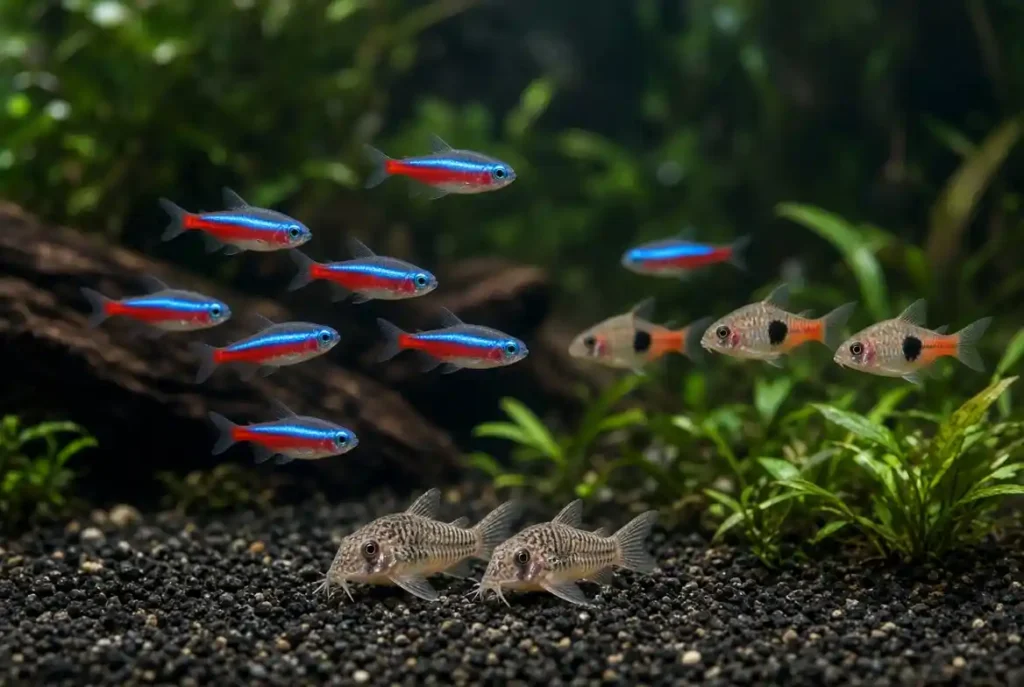
Choosing the right tank mates is essential for neon tetra fish, since they are small, peaceful, and easily outcompeted or stressed by the wrong companions.
Best Tank Mates for Neon Tetra Fish
These species share similar size, temperament, and water preferences, which keeps stress and competition to a minimum.
No, neon tetra fish should not be kept with goldfish. Goldfish need cooler water, typically 65 to 72°F, while neon tetras require warmer, tropical conditions of 68 to 79°F. Beyond the temperature mismatch, goldfish also produce significantly more waste, and their size means they can accidentally eat small neon tetras.
Fish to Avoid
The safest approach is matching size, temperament, and water parameters closely before adding any new species to a neon tetra fish tank.
Knowing what a healthy neon tetra fish looks like, and recognizing early warning signs, can mean the difference between a quick recovery and losing an entire school.
Signs of a Healthy Neon Tetra: Bright, vivid coloration, active schooling behavior, full appetite, and smooth, undamaged fins are all signs of good health. A healthy neon tetra swims mid tank with the group rather than hiding alone.
Neon Tetra Disease: This is a specific, incurable condition caused by a microsporidian parasite that attacks muscle tissue. Symptoms include fading color, a curved or bent spine, restless or erratic swimming, and difficulty maintaining balance. There is no effective treatment, so affected fish should be isolated to prevent the disease from spreading through the school.
Ich (White Spot Disease): One of the most common freshwater fish illnesses, appearing as small white dots across the body and fins. It is treatable with medication and a gradual increase in water temperature, though early detection greatly improves recovery odds.
Fin Rot: Usually caused by poor water quality, this shows up as ragged, discolored, or receding fin edges. Improving water conditions and, if needed, using an antibacterial treatment typically resolves mild cases.
Prevention Tip: Most neon tetra fish diseases trace back to poor water quality or stress. Consistent water testing and quarantining new fish for two weeks before adding them to the main tank prevents the majority of outbreaks.
Breeding neon tetra fish is possible at home, but it requires more precise conditions than daily care, making it a good next step for hobbyists ready to move beyond the basics.
Setting Up a Breeding Tank: Use a separate, dimly lit tank to reduce stress and protect eggs from being eaten by other tank inhabitants. Water should be soft and acidic, around pH 6.0 to 6.5, with a temperature near 78°F (26°C). Add fine leaved plants or a spawning mop, where females will scatter their eggs.
Triggering Spawning: A short period of darkness followed by a gradual increase in dim lighting often triggers spawning behavior. Conditioning the breeding pair beforehand with live or frozen foods like brine shrimp improves egg production and quality.
Neon Tetra Eggs and Hatching: A healthy female can lay over 100 adhesive eggs during a single spawning event. Adult fish should be removed immediately afterward, since neon tetras will readily eat their own eggs. Eggs typically hatch within 24 hours in stable conditions.
Caring for Neon Tetra Fry: Newly hatched fry survive on their yolk sac for the first few days. After that, they need extremely small foods such as infusoria, followed by freshly hatched baby brine shrimp as they grow large enough to eat them.
Breeding success depends heavily on water stability and minimizing light and disturbance during the early stages.
Neon tetra fish are among the most affordable aquarium fish available, which is part of why they remain a top choice for beginners building their first community tank.
Average Price Range: A standard neon tetra fish typically costs between $1.50 and $4 per fish at most retailers. Rarer color varieties, such as gold head, diamond head, or pink neon tetras, usually cost more, often in the $4 to $8 range, due to selective breeding and lower availability.
What Affects Neon Tetra Fish Price
Where to Buy Neon Tetra Fish
Before You Buy: Always check for fading color, clamped fins, or lethargic behavior, since these are early signs of stress or illness. A reputable seller will also be able to tell you how long the fish have been quarantined before sale.
Buying from a trusted source and choosing a full, healthy looking school greatly reduces early losses after bringing neon tetra fish home.
Neon tetra fish remain one of the best choices for beginner and experienced aquarists alike, offering vibrant color, peaceful temperament, and manageable care requirements in a small package. As covered throughout this guide, success comes down to a few core fundamentals: stable water parameters, a properly sized school, a varied diet, and quick attention to early signs of stress or disease.
Whether you are setting up your first community tank, exploring rarer color varieties, or considering breeding, the same principle applies. Consistency matters more than complexity. As more hobbyists move toward planted, naturalistic aquariums in 2026, neon tetra fish continue to be a perfect centerpiece species, easy to source, affordable, and visually rewarding for years to come.
Start with a healthy school, get your water right, and your neon tetra fish will thrive for years.
How long do neon tetra fish live?
Neon tetra fish typically live 5 to 8 years in a well maintained aquarium with stable water conditions. Some individuals can reach up to 10 years with excellent care, though average lifespan in home aquariums is often shorter due to water quality inconsistencies and stress during their early acclimation period.
How many neon tetras should be kept together?
Neon tetras are schooling fish and should be kept in groups of at least six, ideally eight to ten. Larger schools reduce stress, encourage natural behavior, and result in brighter, more consistent coloration compared to fish kept alone or in very small groups.
What is the difference between a neon tetra and a cardinal tetra?
The main difference is the red stripe. On a neon tetra, red covers only the back half of the body. On a cardinal tetra, red runs the full length, head to tail. Cardinal tetras are also slightly larger and generally cost more.
What size tank do neon tetras need?
A minimum of 10 gallons is recommended for a school of six neon tetra fish. Larger tanks provide more stable water conditions, better dilute waste, and allow the school to display more natural swimming and schooling behavior.
Can neon tetra fish live with goldfish?
No. Goldfish require cooler water than neon tetras, and their larger size and heavy waste production make them incompatible tank mates. Goldfish may also eat small neon tetras, so the two species should always be kept in separate aquariums.
What do neon tetra fish eat?
Neon tetra fish are omnivores that eat high quality flake food or micro pellets daily, supplemented two to three times weekly with live or frozen foods like brine shrimp and bloodworms, plus occasional blanched vegetables or algae wafers for balanced nutrition.
Why are my neon tetras losing color?
Fading color usually signals stress, poor water quality, incorrect temperature, or the early stages of illness such as Neon Tetra Disease. Testing water parameters immediately and reviewing recent changes to the tank is the fastest way to identify the cause.
What is neon tetra disease and is it curable?
Neon Tetra Disease is a parasitic infection that causes color fading, spinal curvature, and erratic swimming. It has no effective cure, so infected fish should be isolated immediately to protect the rest of the school from infection.
How much does a neon tetra fish cost?
A standard neon tetra fish typically costs between $1.50 and $4, while rarer varieties like gold head, diamond head, or pink neon tetras can range from $4 to $8 depending on rarity, size, and the retailer.
Are neon tetra fish easy to breed?
Breeding neon tetra fish is more challenging than general care. It requires a separate breeding tank, soft acidic water, dim lighting, and precise temperature control around 78°F. With the right conditions, a female can lay over 100 eggs per spawning.

Fish Info Guide helps you explore edible, freshwater, saltwater, and aquarium fish – with simple guides on nutrition, care, and species identification for beginners and enthusiasts alike.
Imortant Links
Quick Links
Subscribe Our Newsletter
Get the latest fish care tips, species guides, and nutrition insights delivered straight to your inbox.