

You have probably heard that salmon is one of the healthiest foods you can eat, but is that actually true, or is it just marketing? The good news is that the science backs it up. Salmon’s health benefits are well documented, from heart protection to brain support, and this guide breaks down exactly why, using real nutrition data instead of vague claims.
breaks down exactly why, using real nutrition data instead of vague claims.
In short, salmon is rich in omega-3 fatty acids, high-quality protein, vitamin D, vitamin B12, and selenium, making it one of the most nutrient-dense fish available in the United States. It also comes with a few things you should know before you buy it, including mercury levels, wild versus farmed differences, and how to cook it without losing its nutrients.
By the end of this guide, you will know exactly how salmon fits into a healthy diet and how to choose the right type for your needs.
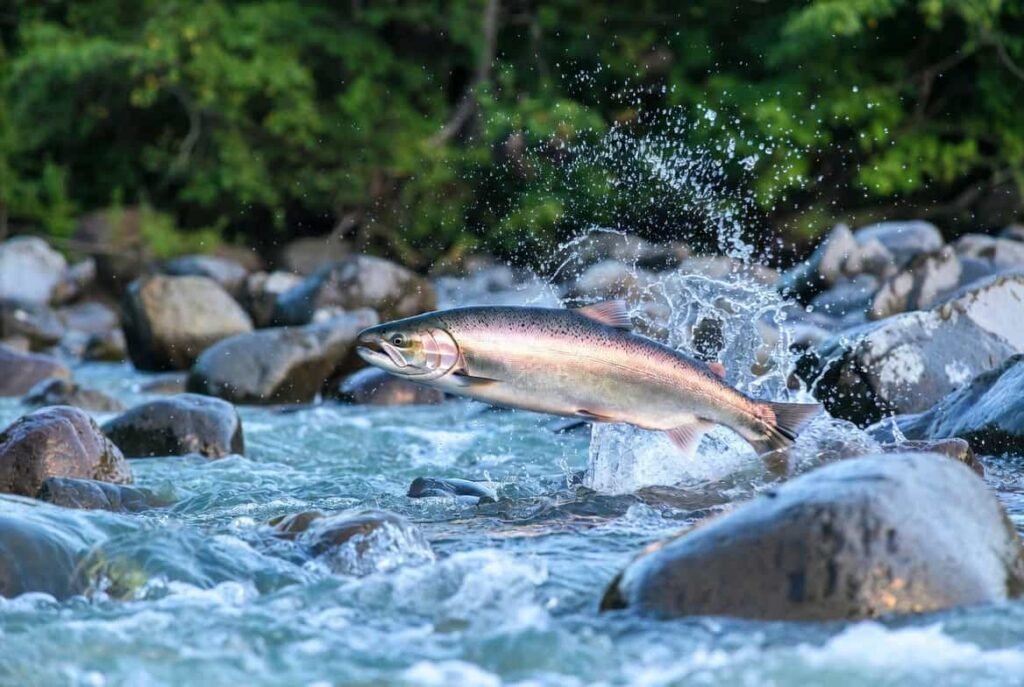
Salmon is a cold-water species scientifically known as Salmo salar, though the name “salmon” also covers several Pacific species in the Oncorhynchus genus. What makes salmon unique is that it is anadromous, meaning it is born in freshwater rivers, migrates to the ocean to grow and mature, then swims back upstream to spawn. This life cycle shapes everything about the fish, from its firm muscle structure to its high fat content, both of which develop from the long-distance swimming and cold ocean environment.
Salmon belongs to the Salmonidae family, which also includes trout and char, and it is widely classified as an oily or fatty fish because of the natural fat reserves it builds up before spawning. This fat is exactly what gives salmon its rich flavor and its dense omega-3 content.
You will find salmon in two broad categories. Atlantic salmon, almost entirely farmed today, and Pacific salmon, which includes Chinook, Sockeye, Coho, Pink, and Chum. Each type has a slightly different flavor, texture, and nutrient profile, which is covered in detail later in this guide.
Quick answer: Salmon is a nutrient-dense, anadromous fatty fish (Salmo salar and related Oncorhynchus species) known for its high omega-3, protein, and vitamin D content.
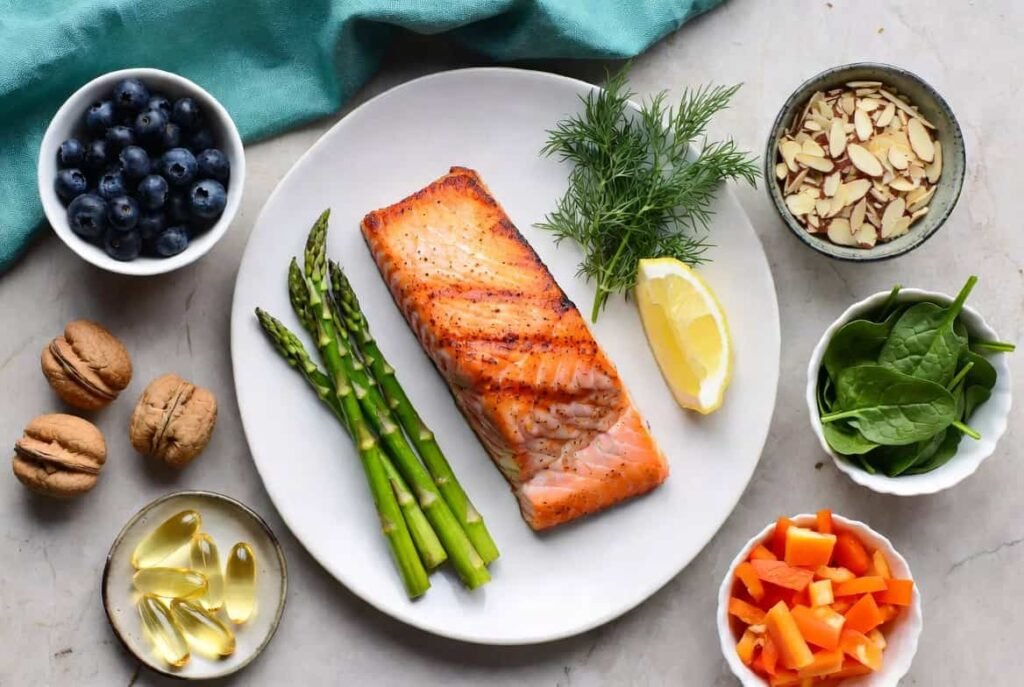
Salmon fish nutrition varies slightly depending on whether it is wild-caught or farmed, but both versions are dense in protein, healthy fats, and essential vitamins. A 100-gram cooked serving gives you a meaningful share of your daily nutrient needs in a single meal, which is one reason nutritionists consistently recommend it.
Nutrient | Wild Salmon (100g) | Farmed Salmon (100g) |
Calories | 182 | 206 |
Protein | 25g | 22g |
Fat | 8g | 12g |
Omega 3 (EPA + DHA) | High | Slightly higher |
Vitamin D | Very high | High |
Vitamin B12 | High | High |
Selenium | High | High |
Potassium | Moderate | Moderate |
Protein is where salmon really stands out. A 100-gram serving provides 22 to 25 grams of high-quality, complete protein, meaning it contains all nine essential amino acids your body cannot produce on its own. This is close to the 20 to 30 grams per meal that current nutrition research recommends for muscle maintenance and repair.
Beyond protein and fat, salmon is one of the few natural food sources rich in vitamin D, a nutrient many people in the United States are actually deficient in, especially during winter months. It also delivers a strong dose of vitamin B12 for nerve function and selenium, which supports immune health.
Quick answer: A 100-gram serving of cooked salmon contains roughly 182 to 206 calories, 22 to 25 grams of protein, 8 to 12 grams of fat, and is rich in omega-3, vitamin D, vitamin B12, and selenium.
Salmon’s fish health benefits go well beyond “it is good for you.” The nutrient combination inside salmon directly supports several major systems in the body, and each benefit is backed by specific compounds found in the fish itself.
Salmon is one of the richest natural sources of omega-3 fatty acids, specifically EPA and DHA. These fats help lower triglycerides, reduce blood pressure, and support healthy cholesterol levels, all of which lower your long-term risk of heart disease. Eating salmon two to three times a week is one of the most researched dietary habits for cardiovascular protection.
DHA, the same omega-3 fat that protects your heart, also makes up a large portion of your brain tissue. Regular salmon consumption has been linked to slower cognitive decline and better memory function, particularly in older adults, because omega-3s reduce inflammation in brain cells and support the hippocampus.
With 22 to 25 grams of complete protein per 100 grams, salmon supports muscle repair, growth, and maintenance. This makes it especially useful for people who are active, aging, or trying to preserve muscle mass while losing weight, since protein helps you stay full and prevents muscle loss during a calorie deficit.
Salmon is one of the few natural food sources of vitamin D, a nutrient that helps your body absorb calcium for stronger bones. Combined with selenium, which plays a direct role in immune function, salmon contributes to both skeletal and immune health in a single serving.
Because salmon is high in protein and healthy fat but relatively low in calories for its nutrient density, it keeps you full longer than many other protein sources. This makes it a practical choice for anyone managing their weight without sacrificing nutrition.
Quick answer: The main salmon fish health benefits are improved heart health, better brain function, muscle support from high-quality protein, stronger bones and immunity from vitamin D and selenium, and better weight management.
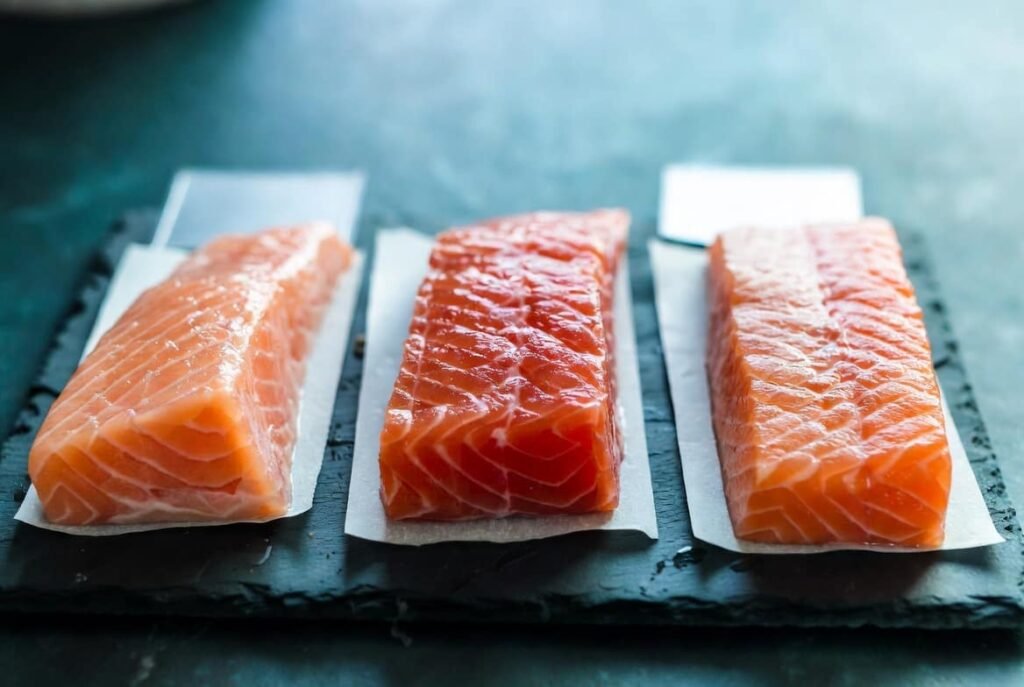
There are seven recognized salmon species worldwide, one Atlantic species and six Pacific species, though most people only encounter six of them in stores and restaurants across the United States. Knowing the differences helps you pick the right salmon for your recipe, budget, and flavor preference.
Type | Region | Flavor and Texture | Best Use |
Atlantic Salmon | Atlantic Ocean, mostly farmed | Mild, rich, buttery | Pan-searing, baking, everyday meals |
Chinook (King) Salmon | Alaska, Pacific Northwest | Richest, highest fat content | Grilling, slow roasting, special occasions |
Sockeye (Red) Salmon | North Pacific, Alaska | Bold, firm, deep red flesh | Grilling, smoking, strong flavor dishes |
Coho (Silver) Salmon | North America | Mild to moderately rich | Roasting, sauteing, weeknight meals |
Pink (Humpback) Salmon | Pacific Ocean | Light, lean, mild | Canning, salmon patties, budget meals |
Chum (Keta) Salmon | North Pacific | Mild, firm, less oily | Marinated dishes, grilling, roe for sushi |
Atlantic salmon is the salmon fish most Americans buy, since wild Atlantic salmon fishing has been prohibited in the United States since 1948 due to population decline. Nearly all Atlantic salmon sold today comes from regulated fish farms, primarily in Norway.
Chinook salmon, also called king salmon, has the highest fat content of any salmon type, giving it a rich, almost buttery texture. It is considered the most premium and expensive variety, often reserved for special meals rather than everyday cooking.
Sockeye salmon stands out immediately because of its deep red flesh, which comes from a diet high in krill and shrimp. It has the boldest, most distinctly “salmon” flavor of any type, which is why it is a favorite for smoking.
Coho salmon sits in the middle of the flavor spectrum, milder than sockeye but firmer than Atlantic, making it a versatile choice for salads, pasta, and general weeknight cooking.
Pink salmon is the most abundant wild Pacific species and the most budget-friendly. Its mild flavor works well in dishes with added sauces or seasoning, and it is the type most commonly found canned.
Chum salmon is often overlooked, but it holds up well to marinades and is a major source of salmon roe used in sushi.
Quick answer: The main salmon fish types are Atlantic, Chinook (King), Sockeye (Red), Coho (Silver), Pink (Humpback), and Chum (Keta), each differing in fat content, flavor intensity, and best culinary use.
One of the most common questions about salmon fish is whether wild-caught or farmed is the healthier and better choice. The honest answer is that both are nutritious, but they differ in a few meaningful ways.
Nutrition differences. Wild salmon tends to be slightly higher in protein and slightly lower in calories and fat, while farmed salmon usually has a bit more total fat, including omega 3s. This means farmed salmon is not automatically the worse option nutritionally; it simply has a different fat profile due to its controlled diet.
Taste and texture. Wild salmon generally has a firmer texture and a more pronounced, “oceanic” flavor because of its varied natural diet of smaller fish, krill, and plankton. Farmed salmon tends to be milder and fattier, which many home cooks actually prefer for grilling and baking since it stays moist.
Color. Wild salmon gets its natural pink to red color from astaxanthin in its diet, particularly from krill. Farmed salmon is fed a diet that includes added astaxanthin to reach a similar color, since farmed fish do not have access to the same natural food sources.
Sustainability and cost. Farmed salmon is generally more affordable and widely available year round, largely because wild Atlantic salmon fishing is banned in the United States and Pacific wild salmon is seasonal. Look for ASC (Aquaculture Stewardship Council) or MSC (Marine Stewardship Council) certification on farmed or wild salmon to ensure it comes from a responsibly managed source.
Practical takeaway. If your priority is a slightly leaner profile and bolder flavor, choose wild. If you want consistent availability, a milder taste, and a slightly higher omega 3 content, farmed is a solid choice. Neither is unhealthy, and both fit comfortably into a balanced diet.
Quick answer: Wild salmon is leaner with a firmer texture and bolder flavor, while farmed salmon is fattier, milder, and more consistently available. Both are nutritious, and the best choice depends on personal preference and budget rather than health concerns.
Salmon is considered one of the safest and lowest-mercury fish you can regularly eat, which is a major reason health agencies recommend it over many other seafood options.
Mercury levels. Salmon falls into the FDA’s and EPA’s “best choices” category for seafood, meaning it has one of the lowest mercury levels among commonly eaten fish, far below high mercury species like swordfish, shark, or king mackerel. This makes it safe for regular consumption for most people, including children.
Pregnancy safety. Salmon is specifically recommended for pregnant and breastfeeding women by the FDA and EPA because of its low mercury content combined with high omega-3 levels, which support fetal brain development. Current U.S. guidelines suggest 2 to 3 servings of low-mercury fish like salmon per week during pregnancy.
How often you can eat it. For the general population, eating salmon 2 to 3 times per week is considered both safe and beneficial, based on dietary guidelines that recommend at least two servings of oily fish weekly for heart health.
Possible side effects. While rare, some people can be allergic to salmon or fish in general, with symptoms ranging from mild skin reactions to more serious responses requiring medical attention. Very high doses of concentrated omega 3, typically from supplements rather than food, can also act as a blood thinner and may cause bleeding issues in people on anticoagulant medication. Eating whole salmon as food does not carry this risk at normal serving sizes.
Skin safety. Salmon skin is safe and nutritious to eat when the fish is sourced from clean waters and properly cleaned, and it actually contains a concentrated amount of the same omega 3 fats found in the flesh.
Quick answer: Salmon fish is safe to eat and is classified as a low-mercury fish by the FDA and EPA, making it one of the recommended seafood choices during pregnancy. Most adults can safely eat salmon 2 to 3 times per week.
Salmon fish live one of the most unusual life cycles in the animal kingdom, and understanding it explains a lot about why the fish looks, tastes, and behaves the way it does.
The anadromous life cycle. Salmon are born as eggs in cold freshwater rivers, hatch into fry, and spend their early life in that river system. As they mature, they migrate downstream to the ocean, where they spend most of their adult life growing and building fat reserves. When it is time to reproduce, they swim back, often hundreds of miles, to the exact river where they were born, guided largely by scent memory of their home waters.
Semelparity vs. iteroparity. Most Pacific salmon species, including Chinook, sockeye, coho, pink, and chum, follow a strategy called semelparity. They spawn only once and die shortly after, having spent every bit of stored energy on the migration and reproduction process. Atlantic salmon are different. Many survive spawning and return to the ocean, where they can recover and spawn again in future years, a pattern called iteroparity. This is one of the clearest biological differences between Atlantic and Pacific salmon.
Salmon vs. trout: Are they the same fish? This is a common point of confusion. Salmon and trout both belong to the Salmonidae family, but they split into two genera. Pacific salmon belong to Oncorhynchus, the same genus as rainbow trout, while Atlantic salmon belong to Salmo, the same genus as brown trout. The old rule that salmon go to the ocean and trout stay in freshwater does not always hold true. Steelhead, for example, is genetically a rainbow trout that migrates to the ocean and back just like salmon, which is why some trout are biologically closer to salmon than to other trout.
Why this matters. This life cycle is directly responsible for salmon’s nutrient density. The long migration and fat storage process is what builds up the omega-3 reserves that make salmon fish so nutritionally valuable in the first place.
Quick answer: Salmon fish are anadromous, meaning they hatch in freshwater, mature in the ocean, then return to freshwater to spawn. Most Pacific salmon die after spawning once, while Atlantic salmon can survive and spawn multiple times.
Cooking salmon fish correctly makes a real difference in both taste and nutrition, since overcooking dries out the fish and breaks down some of its delicate omega-3 fats. Here are the most reliable methods.
Grilling. Brush the fillet lightly with olive oil and season simply with salt, pepper, and lemon. Grill skin side down first for 4 to 5 minutes, then flip and cook another 2 to 3 minutes depending on thickness. This method works best for firmer types like Sockeye or Chinook, which hold up well to direct heat.
Baking. Preheat your oven to 400°F (200°C). Place the fillet on a lined baking sheet or wrap it in foil with herbs and lemon slices, then bake for 12 to 15 minutes depending on thickness. Baking is one of the gentlest cooking methods, which makes it ideal for milder types like Atlantic or Pink salmon.
Pan-searing. Heat a nonstick or cast iron pan over medium-high heat with a small amount of oil. Place the salmon skin-side down first to get a crisp exterior, cook for about 4 minutes, then flip and cook 2 to 3 more minutes. This is one of the fastest methods and works well for weeknight meals.
Checking doneness. The safest and most reliable way to check if salmon is done is with a meat thermometer. The USDA recommends an internal temperature of 145°F (63°C). The flesh should also flake easily with a fork and turn from translucent to opaque.
Practical tip. Avoid moving the fillet too much while it cooks, especially when pan searing or grilling, since this is the most common reason salmon sticks or falls apart. Let it develop a crust before flipping.
Quick answer: Salmon fish can be grilled, baked, or pan-seared and is done when it reaches an internal temperature of 145°F (63°C) and flakes easily with a fork.
Sustainability has become a real concern for anyone who regularly buys salmon fish, and the answer depends heavily on where and how the fish was caught or farmed.
Wild salmon populations. Some wild salmon populations are under serious pressure. In the United States, wild Atlantic salmon is listed as endangered under the Endangered Species Act, with the only remaining wild populations found in a handful of rivers in Maine. Commercial and recreational fishing for wild Atlantic salmon has been banned since 1948 as a result. Pacific wild salmon populations, particularly in Alaska, are generally healthier and are managed under strict harvest quotas.
Farmed salmon and aquaculture. Modern salmon farming has improved significantly over the past decade, with better waste management, reduced antibiotic use, and stricter regulations in major producing countries like Norway and Chile. Responsible aquaculture is now a major source of the world’s salmon supply and takes pressure off wild populations.
What certifications to look for. Two labels make it easy to identify responsibly sourced salmon. ASC (Aquaculture Stewardship Council) certifies farmed salmon that meets environmental and social standards, while MSC (Marine Stewardship Council) certifies wild-caught salmon from sustainably managed fisheries. Choosing salmon fish with either label is the simplest way to support sustainable sourcing without needing to research every supplier yourself.
Practical takeaway. If sustainability matters to you, prioritize ASC or MSC-certified products over price or brand name alone, and consider Alaskan wild salmon or Norwegian farmed salmon, both of which operate under some of the strictest regulatory standards in the industry.
Quick answer: Salmon fishing sustainability varies by source. Wild Atlantic salmon is endangered and protected, while Alaskan wild salmon and ASC or MSC-certified farmed salmon represent the most sustainable choices available today.
Salmon’s health benefits go far beyond a passing health trend. Backed by real nutrition data, salmon delivers high-quality protein, essential omega-3 fatty acids, and key vitamins like D and B12, making it one of the most nutrient-dense foods you can add to a weekly meal plan. Whether you choose wild or farmed, Atlantic or Pacific, salmon supports your heart, brain, muscles, and immune system in ways few other foods can match.
As more people turn to both search engines and AI tools to research nutrition, understanding the real science behind salmon, not just the marketing, matters more than ever. With low mercury levels, pregnancy-safe status, and multiple cooking methods to choose from, salmon remains a smart, sustainable choice for 2026 and beyond.
Is salmon fish good for you?
Yes, salmon is one of the healthiest foods you can eat. It is rich in omega-3 fatty acids, high-quality protein, vitamin D, vitamin B12, and selenium, which together support heart health, brain function, muscle maintenance, and immune health when eaten as part of a balanced diet.
Does salmon fish have mercury?
Salmon fish has one of the lowest mercury levels among commonly eaten fish, placing it in the FDA’s and EPA’s “best choices” category. This makes it safe for regular consumption, including for children and pregnant women, unlike high-mercury fish such as swordfish or shark.
Can pregnant women eat salmon?
Yes, salmon is specifically recommended for pregnant women by the FDA and EPA due to its low mercury content and high omega-3 levels, which support fetal brain development. Current guidelines suggest 2 to 3 servings of low-mercury fish like salmon per week.
How much protein is in salmon fish?
A 100-gram serving of cooked salmon fish contains approximately 22 to 25 grams of high-quality, complete protein, depending on whether it is wild-caught or farmed. This makes it one of the most efficient protein sources available per calorie.
Is salmon fish skin good for you?
Yes, salmon skin is safe and nutritious when the fish is properly cleaned and sourced from clean waters. It contains a concentrated amount of the same omega-3 fatty acids found in the flesh, along with additional collagen.
What is the healthiest way to cook salmon?
Baking and grilling are considered the healthiest cooking methods for salmon, since they require minimal added fat and preserve the natural omega-3 content. Avoid deep frying, which adds unnecessary calories and can degrade delicate fats through high heat.
How often should you eat salmon per week?
Most dietary guidelines recommend eating salmon 2 to 3 times per week. This frequency provides consistent omega-3 intake for heart and brain health without exceeding safe mercury exposure limits for the general population.
Is farmed salmon as healthy as wild salmon?
Yes, farmed salmon is just as nutritious as wild salmon, though the fat and omega-3 content is slightly different. Farmed salmon tends to have slightly more total fat, while wild salmon is slightly higher in protein and lower in calories.

Fish Info Guide helps you explore edible, freshwater, saltwater, and aquarium fish – with simple guides on nutrition, care, and species identification for beginners and enthusiasts alike.
Imortant Links
Quick Links
Subscribe Our Newsletter
Get the latest fish care tips, species guides, and nutrition insights delivered straight to your inbox.