

Wondering if that giant koi in the pond, or the puffer fish on a sushi menu, could actually end up on your dinner plate? You are not alone. Millions of people search every month trying to figure out which species are safe to eat and which ones to avoid.
Understanding edible fish types means looking past size and color and into biology, safety and tradition. Some fish carry deadly toxins. Others are protected by law. Many are simply too bony to bother with.
This guide breaks down every major category of edible fish types, from everyday freshwater picks to rare regional catches in Hawaii and India, plus the debated cases like koi, goldfish and piranha. By the end, you will know exactly what is safe to eat, why, and how to tell the difference with confidence.
A fish earns the label “edible” through three factors working together: safety, biology and tradition. It needs to be free of harmful toxins, unlikely to carry disease causing parasites when prepared correctly, and built with flesh that is actually worth eating rather than mostly bone and cartilage.
In the United States, the FDA monitors commercial seafood for contamination, mercury levels and parasite risk. That oversight is why fish from a grocery store or reputable market is generally safe to eat straight out of the package. Wild caught or self caught fish is a different story entirely. Local water quality, what the fish has been eating and how carefully it gets cleaned all affect whether it is truly safe.
Tradition plays a role too. Some cultures treat fish eyes, skin and roe as prized delicacies. Others discard them without a second thought. That difference comes down to taste and custom, not biology.
Quick answer: A fish counts as edible when it is non toxic, correctly identified and prepared using food safe methods. Even naturally toxic species can become edible when handled by someone trained to remove the dangerous parts.
No, not every fish is edible. Some species carry natural toxins, such as tetrodotoxin found in puffer fish. Others live in contaminated water or accumulate dangerous mercury levels over their lifespan, which makes them unsafe no matter how they are cooked. Ornamental fish like koi are technically non toxic, yet they are rarely eaten because of how they are farmed, their bone structure and their cultural role as pets rather than food.
Sometimes the fastest way to answer “what counts as edible fish” is a simple reference list. The table below covers common species across habitats, along with where they are typically found and how they are usually eaten. Species with a dedicated in-depth guide are linked below.
Fish Name | Habitat | Common Region | Typical Use |
Salmon | Saltwater / Anadromous | North Pacific, North Atlantic | Grilled, smoked, raw |
Tuna | Saltwater | Global oceans | Sushi, canned, seared |
Cod | Saltwater | North Atlantic, North Pacific | Fried, baked, chowder |
Tilapia | Freshwater | Global farms | Grilled, pan fried |
Catfish | Freshwater | Southern US | Fried, blackened |
Basa | Freshwater | Mekong Delta, Vietnam | Fried, baked fillets |
Sardines | Saltwater | Global | Canned, grilled whole |
Mackerel | Saltwater | Atlantic, Pacific | Grilled, smoked |
Snapper | Saltwater | Gulf of Mexico, Pacific reefs | Baked, grilled whole |
Eel | Freshwater / Catadromous | East Asia, Europe | Grilled (unagi), smoked |
Trout | Freshwater | Global rivers and lakes | Grilled, smoked |
Bass | Freshwater / Saltwater | Global | Roasted whole, filleted |
Anchovies | Saltwater | Mediterranean, Pacific | Cured, sauces |
Halibut | Saltwater | North Atlantic, North Pacific | Pan seared, baked |
Swordfish | Saltwater | Global oceans | Grilled steaks |
Mahi mahi | Saltwater | Tropical waters | Tacos, grilled |
Koi | Freshwater | Ornamental ponds | Rarely eaten |
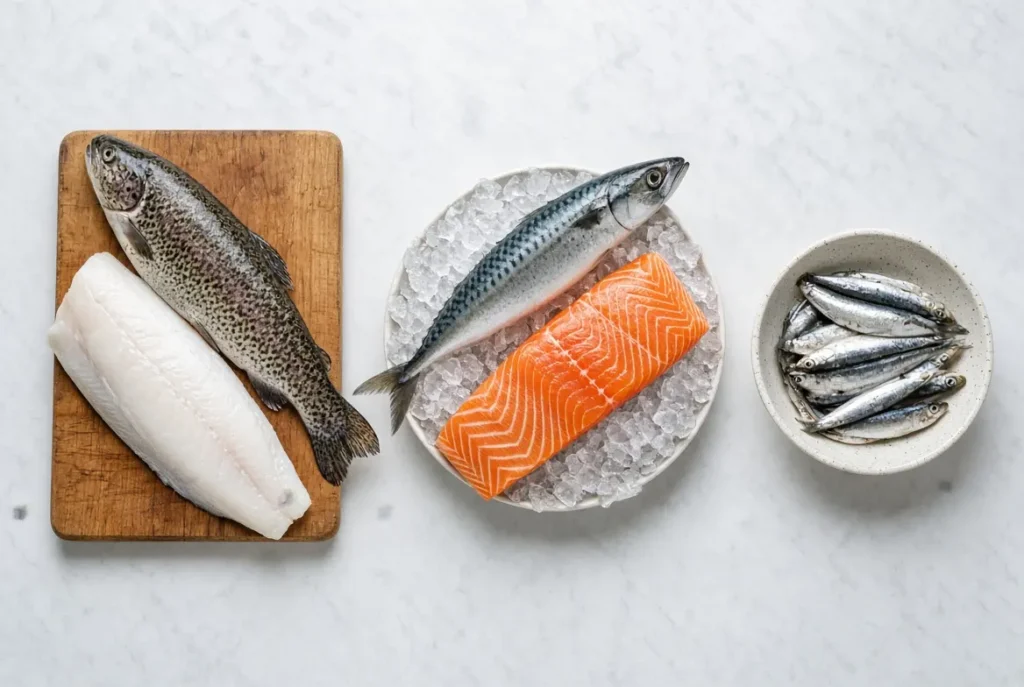
Edible fish generally fall into four practical categories: freshwater, saltwater, small fish and large fish. Each group carries a distinct flavor profile, nutrient makeup and cooking style, which is why understanding the differences matters whether you are shopping, cooking or just curious about what ends up on the plate.
Edible Freshwater Fish
Freshwater fish live in rivers, lakes and ponds, and many are farmed for consistent size and quality. Common picks include:
Edible Sea Fish
Saltwater fish tend to carry richer flavor thanks to a more varied ocean diet. Widely eaten options include Salmon, prized for omega 3s and versatility, Tuna, a lean protein staple in sushi and canned form, Cod, the flaky white fish behind fish and chips, and Mackerel, an oily and affordable nutrient dense choice.
Edible Small Fish
Small fish are often eaten whole, bones included, which boosts calcium intake. Sardines, anchovies and smelt fall into this group, prized for both affordability and high omega 3 content.
Large Edible Fish
Large edible fish include tuna, swordfish, halibut and marlin, species that can weigh well over 100 pounds. These fish offer dense, meaty flesh, but their size and position at the top of the food chain also means higher mercury accumulation, so moderation matters more here than with smaller species.
Hawaii’s waters produce some of the most sought after edible fish types in the world, shaped by warm Pacific currents and a strong local fishing culture. These species show up everywhere from poke bowls to high end sushi counters.
Uku (grey snapper), a reef fish valued for its delicate, slightly sweet white flesh
Quick answer: Edible fish in Hawaii center on ahi, mahi mahi, ono, opah and uku, all staples of island cuisine and widely available at local fish markets and restaurants across the state.
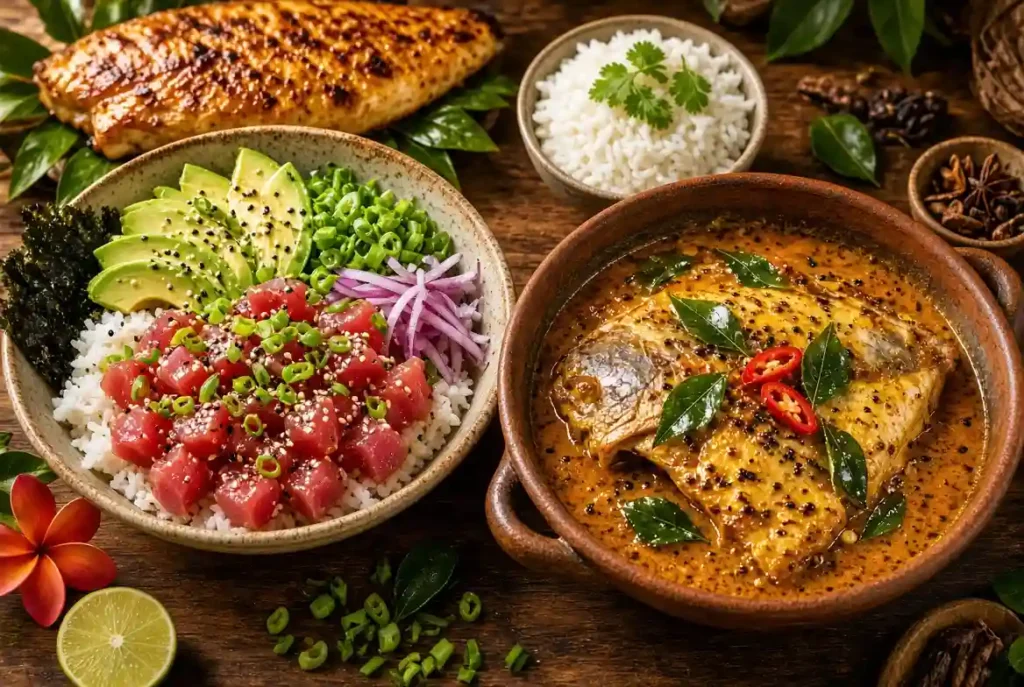
India’s diverse coastline and river systems support one of the widest ranges of edible fish types anywhere in the world, with regional cuisines built around specific local catches.
Quick answer: Popular edible fish in India include rohu, katla, hilsa, pomfret and surmai, reflecting the country’s mix of freshwater river fish and coastal saltwater catches used across regional cuisines.
Some fish spark genuine debate about whether they belong on a plate at all. These species are technically edible, but each comes with a specific caveat around safety, taste or cultural perception.
Are Koi Fish Edible?
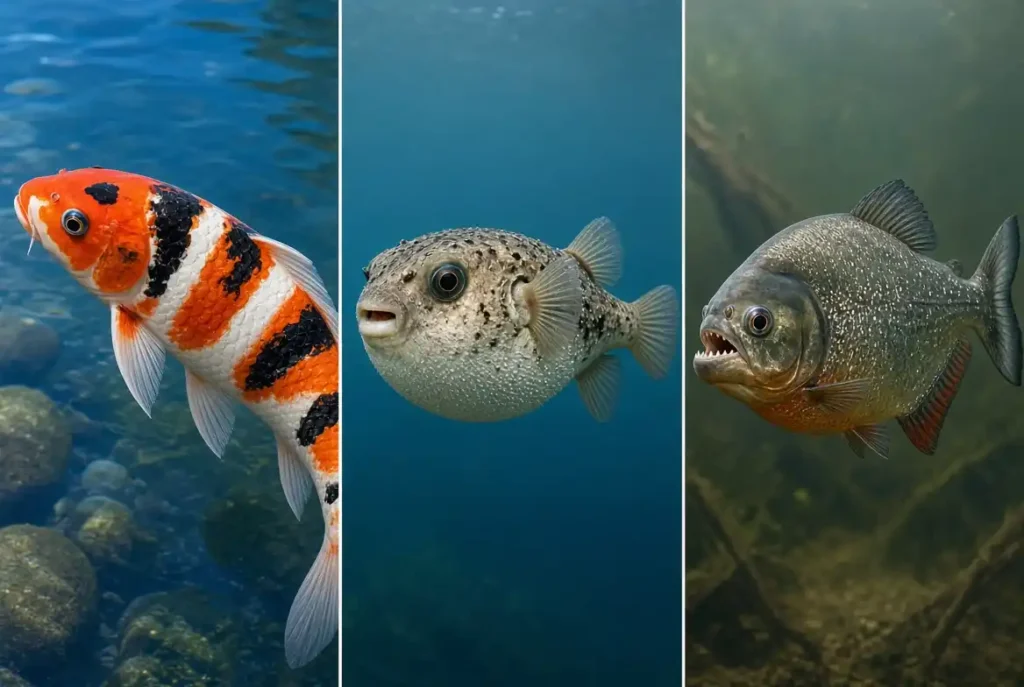
Yes, koi are technically edible since they are a variety of common carp. However, they are rarely eaten because they are bred and valued as ornamental pond fish rather than food. Their flesh also tends to taste muddy, a result of how they are raised in decorative ponds instead of clean, flowing water.
Are Goldfish Edible?
Yes, goldfish are edible and, like koi, belong to the carp family. They are not toxic, but they are almost never eaten in practice. Goldfish are typically raised in tanks or ornamental ponds without any food safety standards, which means water quality and diet are not controlled the way farmed food fish are. Their small size and bony structure also make them impractical as a meal.
Are Pleco Fish Edible?
Yes, pleco fish (armored catfish, common in home aquariums) are edible and are actually eaten in parts of Central and South America, where wild populations have become invasive in some rivers. Despite their tough, armored exterior, the meat underneath is described as mild and firm. Most aquarium owners never consider eating them since plecos are sold specifically as tank cleaners, not food.
Is Puffer Fish Edible?
Yes, but only when prepared by licensed, specially trained chefs. Puffer fish, known as fugu in Japan, contains tetrodotoxin, a potent neurotoxin concentrated in the liver, ovaries and skin. Chefs in Japan need official certification to legally serve it, since improper preparation can be fatal.
Is Piranha Fish Edible?
Yes, piranha is eaten in parts of South America, particularly in Amazonian communities. The meat is firm and mild tasting, though the fish’s small size and dense bone structure make it less practical compared to other freshwater options.
Quick answer: Koi, goldfish, pleco, puffer fish and piranha are all technically edible, but each involves a different consideration, whether that is farming conditions, bone structure, toxin risk or simple cultural convention that keeps them off most plates.
Beyond the fillet, several fish parts spark curiosity about whether they are safe or worth eating. These questions come up often because most people never see these parts prepared at home.
Is Fish Roe Edible?
Yes, fish roe is not only edible but considered a delicacy in many cuisines around the world. Caviar (sturgeon roe), salmon roe and tobiko (flying fish roe) are staples in sushi and gourmet dishes. Roe is rich in omega 3 fatty acids, protein and vitamin B12, making it as nutritious as it is prized. Texture and flavor vary widely by species, from the briny pop of salmon roe to the fine, delicate grain of caviar.
Is Fish Skin Edible?
Yes, fish skin is edible and, when cooked properly, adds a crisp texture and rich flavor. Salmon and branzino skin are commonly pan seared until crackling. Skin also contains collagen and healthy fats, though it should always come from cleaned, scaled fish to avoid grit or contaminants. Crisping fish skin correctly comes down to starting with a dry surface and cooking it skin side down in a hot pan without moving it too soon.
Quick answer: Fish roe and skin are both edible and widely used across global cuisines. Roe delivers a nutrient dense, delicacy status ingredient, while skin offers crispy texture and collagen when properly cleaned and cooked.
While most fish are safe when properly identified and prepared, a handful of species should be avoided altogether due to toxicity or health risk.
Highly toxic species:
Practical reasons to avoid:
Quick answer: Non edible or high risk fish fall into two broad groups: those carrying natural toxins, such as puffer fish organs and ciguatera prone reef fish, and those unsafe due to farming conditions or heavy metal buildup, such as ornamental fish and large mercury heavy predators.
Crossword puzzles frequently call for short, common fish names, and a surprising number of people search for edible fish crossword clue answers while stuck on a puzzle. Most of these answers are three to five letter fish names that also happen to be common edible species.
Letters | Common Crossword Answer |
3 | COD, EEL, RAY |
4 | CARP, SOLE, DACE, CHAR |
5 | SMELT, TROUT, BREAM, SHARK |
3 (alt) | DAB |
Quick answer: Common edible fish crossword answers include cod, Eel, ray, carp, sole and dab, all short, well known fish names that regularly appear in puzzle clues asking for a type of edible fish.
Edible fish types span a far wider range than most people realize, from everyday picks like salmon and tilapia to debated cases like koi, goldfish and puffer fish. Safety, biology and tradition all shape what actually ends up on a plate, and knowing the difference helps you shop, cook and eat with confidence.
Whether you are drawn to Hawaii’s ahi and mahi mahi, India’s rohu and hilsa, or simply want to know if that pond fish is safe to try, the same three questions apply every time: Is it toxic? Is it properly identified? Is it prepared using food safe methods?
As seafood curiosity keeps growing alongside AI powered search, this guide aims to stay the clearest, most complete answer on edible fish types available, covering common species, rare regional catches and every debated case in between.
What is the safest edible fish to eat regularly?
Low mercury options like salmon, cod, sardines, tilapia and trout are widely considered safest for regular consumption. These species are also high in omega 3 fatty acids and generally come from well monitored farming or fishing operations, making them reliable everyday choices.
Can you eat a fish straight from a lake without cooking it properly?
No. Wild freshwater fish can carry parasites and bacteria that only proper cooking eliminates. Even fish that look healthy may harbor organisms invisible to the eye, so cooking to a safe internal temperature is essential before eating any self caught fish.
Are ornamental fish like koi and goldfish safe if farmed for food?
Technically yes, since both are carp species without inherent toxins. In practice, they are raised in decorative ponds without food safety oversight, so their flesh quality and cleanliness cannot be guaranteed the way farmed food fish can.
What fish should pregnant women avoid?
Pregnant women should avoid high mercury fish such as shark, swordfish, king mackerel and tilefish. The FDA and EPA recommend choosing lower mercury options like salmon, cod and light canned tuna instead during pregnancy.
Is it safe to eat fish eggs from any species?
No. While roe from species like salmon, sturgeon and flying fish is commonly eaten, roe from toxic species such as puffer fish can be dangerous. Always confirm the source species before eating any fish eggs.
Why do some fish carry natural toxins while others do not?
Toxins often develop as a defense mechanism or accumulate through diet. Puffer fish produce tetrodotoxin internally, while reef fish like barracuda absorb ciguatera toxin from algae in their food chain, making toxicity species and location specific.
What is the difference between edible and inedible fish parts?
Edible parts, like fillets, skin and roe, are structurally safe and nutrient rich when properly cleaned. Inedible parts, such as certain organs in puffer fish, concentrate toxins and must be removed by trained professionals before the fish is safe.
Which fish names commonly appear as crossword answers?
Short, well known fish names like cod, eel, ray, carp, sole and dab appear frequently in crossword puzzles due to their brevity and familiarity, making them convenient answers for clues asking about types of edible fish.
Can invasive species like lionfish be eaten safely?
Yes. Lionfish are edible and eating them is actively encouraged, since they are invasive in the Atlantic and Caribbean. Their venomous spines make handling dangerous, but once removed, the meat is safe, mild and flaky.
What edible fish are native to Hawaii and India specifically?
Hawaii’s waters feature ahi (tuna), mahi mahi, ono, opah and uku, while India’s rivers and coastlines produce rohu, katla, hilsa, pomfret and surmai, reflecting each region’s distinct freshwater and saltwater fishing traditions.

Fish Info Guide helps you explore edible, freshwater, saltwater, and aquarium fish – with simple guides on nutrition, care, and species identification for beginners and enthusiasts alike.
Imortant Links
Quick Links
Subscribe Our Newsletter
Get the latest fish care tips, species guides, and nutrition insights delivered straight to your inbox.