

Peppered corydoras are one of the easiest freshwater fish to get wrong, not because they’re delicate, but because most care advice ignores what makes them different from every other cory species. Get the setup right, and you have a hardy, sociable bottom dweller that can live well past five years.
Peppered corydoras (Corydoras paleatus) are a peaceful, schooling catfish native to South America, prized for their mottled grey and black pattern and unusually cool water tolerance. Unlike most tropical corydoras, they thrive without a heater in many homes, making them one of the most forgiving choices for a beginner community tank. This guide is part of FishInfoGuide’s full library of species care sheets, so you can cross check related species and setups as you plan your tank.
This guide covers everything you need before bringing them home: ideal tank setup, water parameters, diet, compatible tank mates, color varieties, breeding basics, and how they compare to other catfish species like corydoras sterbai and the common pleco.
Peppered corydoras (Corydoras paleatus) belong to the Callichthyidae family, a group of armored catfish native to the slow moving rivers and streams of Argentina, Brazil, and Uruguay. Their name comes from the mottled, salt and pepper pattern of dark grey and black spots that covers a pale silver or olive body, a pattern that gives them their popular nickname: salt and pepper cory.
Adults typically reach 2 to 3 inches in length, with females growing slightly larger and rounder than males, especially when carrying eggs. Like other corydoras species, they have sensitive barbels near the mouth that they use to sift through substrate in search of food, and bony plates instead of scales for protection.
What sets peppered corydoras apart within the wider catfish species group is their tolerance for cooler water. Most tropical corydoras need a heater, but peppered corys evolved in cooler South American waters and stay active and healthy at room temperature in many climates.
In short: peppered corydoras are a hardy, peaceful, bottom dwelling catfish species best known for their cool water tolerance, social schooling behavior, and distinctive peppered coloration.
Before diving into full care details, here’s a snapshot overview for quick reference, useful if you’re comparing peppered corydoras against other catfish species before buying.
Attribute | Detail |
Scientific name | Corydoras paleatus |
Common names | Peppered cory, salt and pepper cory |
Family | Callichthyidae |
Origin | Argentina, Brazil, Uruguay |
Adult size | 2 to 3 inches (5 to 7 cm) |
Lifespan | 5 to 10 years with proper care |
Temperament | Peaceful, social, shoaling |
Care level | Easy, beginner friendly |
Minimum tank size | 20 gallons for a group of 6 |
Temperature | 65 to 77°F (cooler than most tropical fish) |
pH range | 6.0 to 8.0 |
Diet | Omnivore, sinking foods |
Peppered corydoras consistently rank among the most beginner friendly catfish species because they tolerate a wide range of water chemistry and don’t require specialized equipment. Their biggest care distinction from other varieties of catfish, including corydoras sterbai, is their preference for cooler, unheated water.
One thing this table can’t show: personality. Kept in groups of six or more, peppered corys display constant, visible foraging and schooling behavior that makes them one of the most engaging bottom dwelling fish to watch in a community tank.
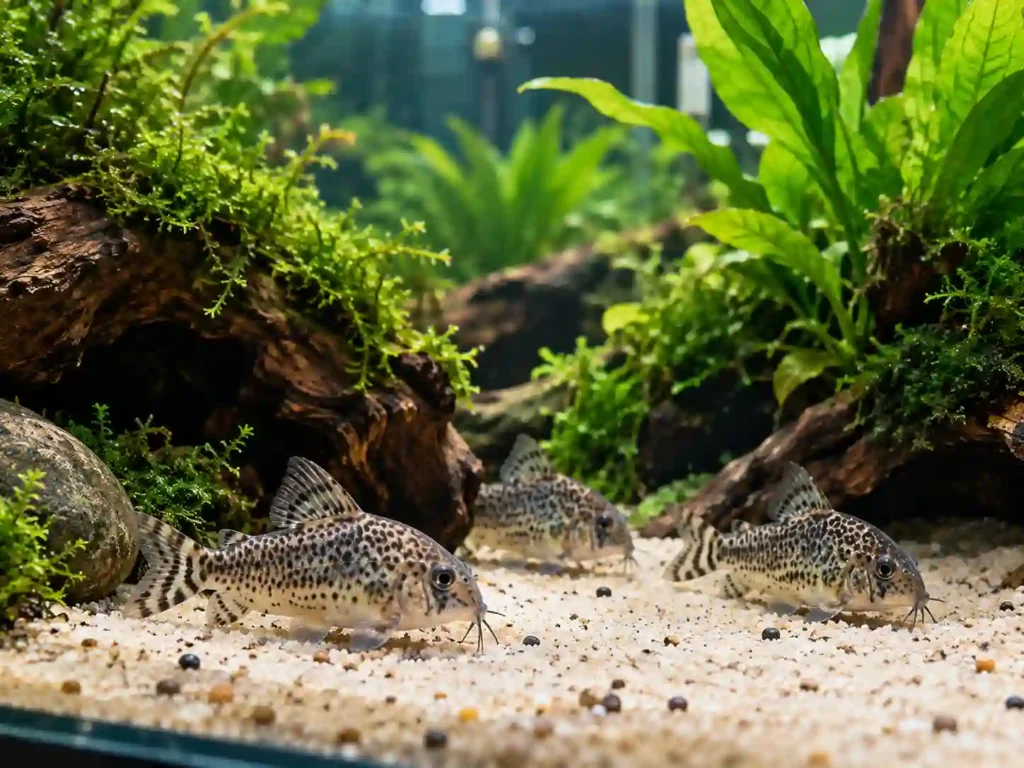
Peppered corydoras need a setup that respects two things: their bottom dwelling habits and their barbels, which are easily damaged by rough substrate. Getting the tank layout right prevents most of the health issues new keepers run into.
Tank size and stocking
A 20 gallon long tank is the practical minimum for a group of six peppered corydoras. Because they’re a schooling species, keeping fewer than six leads to stress, hiding, and reduced activity. If you’re planning a larger community tank with other catfish species or tank mates, size up accordingly, prioritizing floor space over height since corydoras spend nearly all their time near the substrate.
Substrate
Use soft sand or smooth, fine gravel. Sharp or rough substrate wears down their barbels over time, which can lead to infection. Sand is generally considered the gold standard for any variety of catfish that forages along the tank floor.
Decor and hiding spots
Quick answer: the ideal peppered corydoras tank setup is a 20 gallon or larger tank with soft sand substrate, gentle filtration, hiding spots, and a group of at least six fish.
Water Parameters and Filtration
Stable water quality matters more than hitting an exact number for peppered corydoras. This species is genuinely one of the most chemistry tolerant catfish species available, but temperature is the one parameter worth taking seriously.
Recommended water parameters
Unlike many tropical catfish species, peppered corydoras don’t just tolerate cooler water, they need it long term. Keeping them consistently above 78°F shortens their lifespan and makes them noticeably sluggish, a common mistake among keepers who assume all corydoras require tropical heating like corydoras sterbai does.
Filtration and flow
Choose a filter that provides gentle to moderate flow and strong biological filtration. A hang on back filter or sponge filter works well. Avoid powerful currents, since peppered corys prefer calmer water that mimics their native river habitat.
Quick answer: peppered corydoras thrive at 65 to 77°F with a pH between 6.0 and 8.0, gentle filtration, and weekly 25% water changes to keep nitrate levels low.
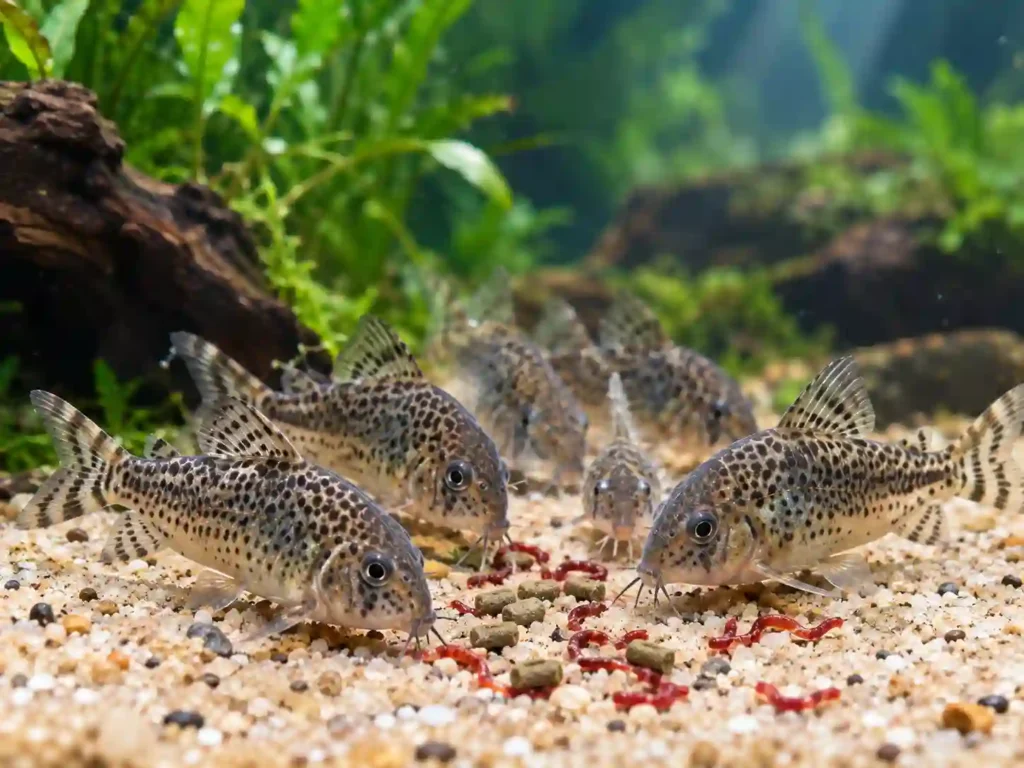
Peppered corydoras are omnivorous scavengers, and feeding them well is one of the simplest parts of their care. In the wild, they forage along riverbeds for small invertebrates, plant matter, and organic debris, a habit that translates directly to their role in a home aquarium.
Core diet
Because they feed at the bottom, peppered corydoras are often mistakenly treated as tank cleanup crew alongside algae eating catfish species like the common pleco or plecostomus catfish. This is a misconception worth correcting: corydoras are not algae eaters, and relying on leftover food alone will leave them undernourished. They need direct feeding of sinking foods that reach the substrate before faster swimming tank mates eat it all.
Feed once or twice daily, only what they can finish in two to three minutes, to avoid water quality issues from excess waste.
Quick answer: peppered corydoras are omnivores that need daily sinking pellets supplemented with live or frozen protein like bloodworms and brine shrimp, they do not eat algae the way a pleco does.
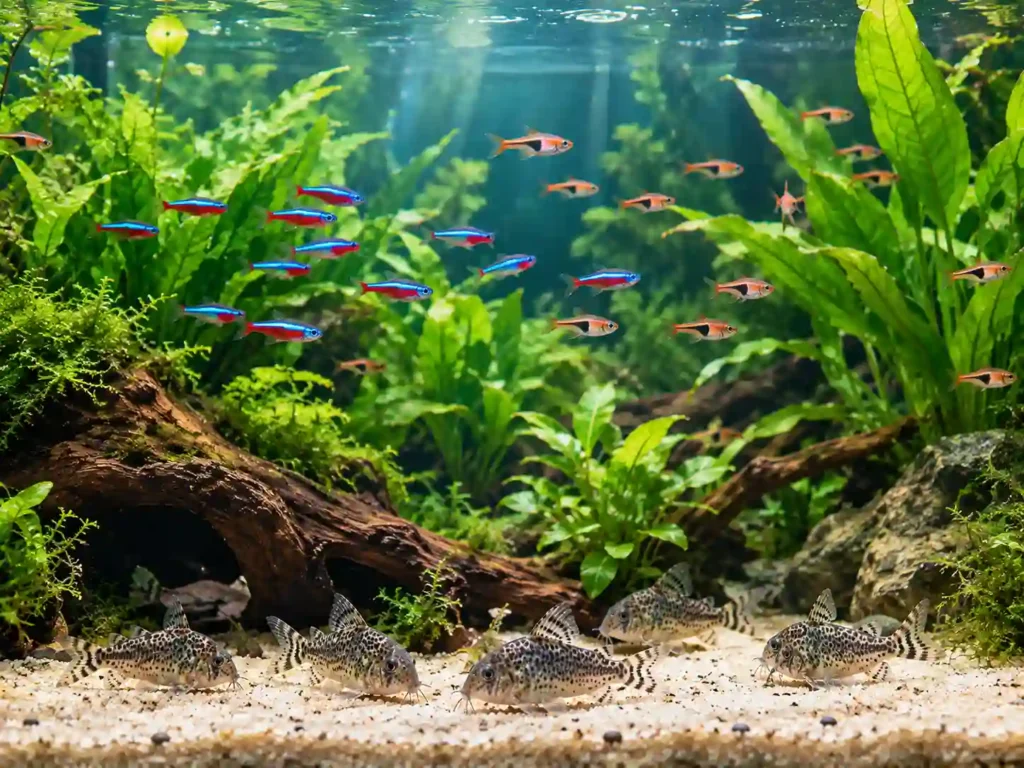
Peppered corydoras are peaceful, non territorial fish that do well in most community tanks, provided tank mates share their preference for calm water and similar temperament. Their cooler water needs make compatibility slightly more specific than with tropical corydoras like corydoras sterbai.
Good tank mates
Fish to avoid
A common question among beginners is whether peppered corydoras can share a tank with a common pleco or plecostomus catfish. They generally can, since both are peaceful bottom dwellers, but plecos grow much larger than most home aquariums can support and produce significantly more bioload, so tank size needs careful planning. For a broader look at compatible species, browse the community tank guides on FishInfoGuide.
Quick answer: the best tank mates for peppered corydoras are peaceful, similarly sized community fish that tolerate cooler water, such as tetras, rasboras, and white cloud minnows.
Peppered corydoras come in a handful of color morphs, all sharing the same core care requirements as the standard wild type.
Common varieties
Peppered Corydoras vs Corydoras Sterbai
This is one of the most common points of confusion among fishkeepers comparing different types of catfish before buying.
Trait | Peppered Corydoras | Corydoras Sterbai |
Temperature | 65 to 77°F, cool water | 75 to 82°F, tropical |
Pattern | Mottled peppered spots | Fine spotted, orange tinted fins |
Origin | Argentina, Brazil, Uruguay | Rio Guapore, Brazil/Bolivia |
Price | Widely available, budget friendly | Slightly pricier, popular in tropical tanks |
Best for | Unheated or cooler tanks | Standard tropical community tanks |
The main takeaway: peppered corydoras and corydoras sterbai are not interchangeable. Mixing them long term in the same tank means compromising one species’ temperature needs, since their preferred ranges barely overlap. See FishInfoGuide’s other corydoras species profiles for a side by side comparison before you buy.
Quick answer: peppered corydoras are a cool water species best suited to unheated tanks, while corydoras sterbai need warmer, tropical conditions, making them suited to different tank setups despite looking superficially similar.
How Peppered Corydoras Compare to Other Catfish Types
The term “catfish” covers an enormous range of species, and beginners often lump peppered corydoras in with fish that behave completely differently. Understanding these distinctions helps when planning a community tank or choosing between catfish species that start with S, like corydoras sterbai, versus other bottom dwelling options.
Peppered corydoras vs common pleco
The common pleco (Hypostomus plecostomus) is frequently sold to beginners as a tank cleaner, but it grows to 12 to 18 inches, far larger than most home aquariums can accommodate long term. Peppered corydoras stay under 3 inches and are a schooling species, while plecos are largely solitary and territorial as adults. If you want a small, social bottom dweller rather than a fish that will eventually outgrow a standard tank, corydoras are the better fit.
Peppered corydoras vs plecostomus catfish generally
Plecostomus catfish are primarily algae grazers with a suckermouth adaptation, while corydoras are substrate foragers that need direct feeding. They fill different ecological roles in a tank and can coexist, but one does not replace the other.
Peppered corydoras vs other types of catfish
Compared to larger or more specialized catfish varieties, corydoras species as a group are defined by their small size, peaceful schooling behavior, and suitability for community tanks, traits that make peppered corydoras one of the most accessible entry points into catfish keeping.
Quick answer: peppered corydoras differ from plecos and larger catfish types by staying small, schooling socially, and foraging substrate rather than grazing algae, making them better suited to standard community tanks.
Peppered corydoras are considered one of the easier catfish species to breed at home, which is part of why they’re a popular recommendation for fishkeepers moving beyond basic care into propagation.
Sexing: Females are noticeably rounder and larger when viewed from above, especially when full of eggs. Males are slimmer and slightly smaller.
Conditioning: Feed a protein rich diet for one to two weeks before attempting to breed, using live or frozen bloodworms, daphnia, and brine shrimp. Well fed, conditioned corys spawn far more reliably than underfed ones.
Spawning trigger: The classic method is a large, cooler water change, often a drop of 4 to 8°F paired with a 30 to 50% water change. This mimics the seasonal rain and snowmelt that triggers spawning in their native rivers. Some keepers report success with feeding alone, without any temperature manipulation.
Egg care: Females lay adhesive eggs on glass, plants, or hard surfaces, often in the distinctive T position alongside a male. Eggs hatch in 4 to 6 days. Moving eggs to a separate rearing container with a sponge filter reduces the risk of adults eating them.
Quick answer: peppered corydoras breed readily after a cooler water change combined with a protein rich diet, laying eggs that hatch within about a week.
Peppered corydoras are hardy, but a handful of preventable issues account for most problems keepers encounter, nearly all linked back to water quality or physical tank setup.
Barbel damage: Rough or sharp substrate wears down the sensitive barbels corydoras use to forage, sometimes leading to infection. Prevention is simple: use soft sand or smooth fine gravel from the start, and avoid decor with sharp edges near the substrate.
Ich (white spot disease): A common stress or temperature fluctuation response in freshwater fish generally. Signs include small white spots on the body and fins, clamped fins, and reduced appetite. Stable temperature and quarantining new fish before introduction significantly reduce risk.
Fin rot and bacterial infections: Usually linked to poor water quality. Regular testing for ammonia and nitrite, paired with weekly 25% water changes, prevents most bacterial issues before they start.
Gasping at the surface: If peppered corydoras are repeatedly gasping near the surface, this typically signals low dissolved oxygen or a spike in ammonia or nitrite, not simply normal behavior. Test water parameters immediately and increase surface agitation or perform a water change.
Quick answer: most peppered corydoras health issues trace back to substrate roughness, water quality, or temperature instability, all of which are preventable with proper tank setup and regular maintenance.
After covering setup, water parameters, diet, tank mates, and breeding, the real question is whether peppered corydoras fit your specific situation.
Peppered corydoras are a strong choice if you:
They may not be the right fit if you:
Quick answer: peppered corydoras suit beginner to intermediate fishkeepers who want a hardy, social, cool water tolerant catfish for a peaceful community tank, but they’re not ideal for tanks already committed to warmer tropical temperatures.
Peppered corydoras stand out among catfish species for one simple reason: they’re genuinely forgiving. A 20 gallon tank with soft sand, stable cooler water, a group of six or more, and a varied diet is really all it takes to keep them thriving for years.
The details that trip up beginners, mixing them with tropical species like corydoras sterbai, treating them as algae cleaners like a common pleco, or skipping the group size, are all avoidable once you understand what makes this species different from other varieties of catfish.
If you’re setting up a peaceful, cooler community tank in 2026 and want a hardy, sociable bottom dweller, peppered corydoras are worth the investment. Start with water parameters and tank size, get those right, and the rest of their care follows naturally. For more species care guides and tank setup tips, visit FishInfoGuide.
What is the lifespan of a peppered corydoras?
Peppered corydoras typically live 5 to 10 years with proper care, including stable water quality, a varied diet, and appropriate cooler temperatures. Lifespan tends to shorten significantly when kept consistently above 78°F, since warmer water stresses this cool water adapted catfish species over time.
Do peppered corydoras need a heater?
Not usually. Peppered corydoras thrive at 65 to 77°F, which matches average room temperature in many homes. A heater is only necessary if your home consistently drops below 65°F or if they’re housed with tropical tank mates requiring warmer water.
How many peppered corydoras should be kept together?
Keep at least six peppered corydoras together. As a schooling species, smaller groups experience stress, hide more often, and show reduced activity. Larger groups of eight or more create more natural, visible schooling behavior in a community tank.
What is the difference between peppered corydoras and corydoras sterbai?
Peppered corydoras prefer cooler water, 65 to 77°F, while corydoras sterbai need tropical temperatures of 75 to 82°F. They also differ in pattern and origin, making them unsuitable as long term tank mates without compromising one species’ temperature needs.
Can peppered corydoras live with bettas?
Yes, in most cases. Both are peaceful and can share a tank if it’s at least 20 gallons with a betta tolerant of cooler temperatures. Always monitor the betta’s temperament, as individual aggression varies more than compatibility charts suggest.
Are peppered corydoras easy to breed?
Yes, they’re considered one of the easier catfish species to breed at home. A protein rich diet combined with a cooler water change of 4 to 8°F reliably triggers spawning, with eggs hatching within 4 to 6 days.
What do peppered corydoras eat?
Peppered corydoras are omnivores that eat sinking pellets, wafers, and live or frozen foods like bloodworms and brine shrimp. They are not algae eaters, so relying on leftover food alone will leave them undernourished over time.
Is a peppered corydoras the same as a common pleco or plecostomus catfish?
No. Peppered corydoras stay under 3 inches and forage substrate, while common plecos grow 12 to 18 inches and graze algae. They belong to different catfish families and serve different roles in a tank.
What tank size do peppered corydoras need?
A 20 gallon long tank is the practical minimum for a group of six peppered corydoras, prioritizing floor space since they spend nearly all their time near the substrate rather than swimming at mid or upper levels.
Why is my peppered corydoras gasping at the surface?
This usually signals low dissolved oxygen or an ammonia or nitrite spike, not normal behavior. Test your water parameters immediately, increase surface agitation, and perform a water change to address the underlying water quality issue.

Fish Info Guide helps you explore edible, freshwater, saltwater, and aquarium fish – with simple guides on nutrition, care, and species identification for beginners and enthusiasts alike.
Imortant Links
Quick Links
Subscribe Our Newsletter
Get the latest fish care tips, species guides, and nutrition insights delivered straight to your inbox.