

Choosing the right aquarium fish is the single biggest factor in whether your first tank thrives or turns into a stressful cycle of dead fish and cloudy water. This guide covers exactly what most beginner articles skip: real tank sizes, water parameters, diet, and compatibility for ten of the most popular freshwater aquarium fish, so you can set up a healthy tank the first time.
An aquarium fish is any fish species kept in a home or office tank rather than in the wild, where water temperature, filtration, and lighting are controlled artificially. Most beginner-friendly aquarium fish are freshwater species, though saltwater fish are also kept in reef tanks. Freshwater aquarium fish such as Neon Tetra, Betta, and Mollies are popular because they are hardy, colorful, and require less specialized equipment than saltwater species.
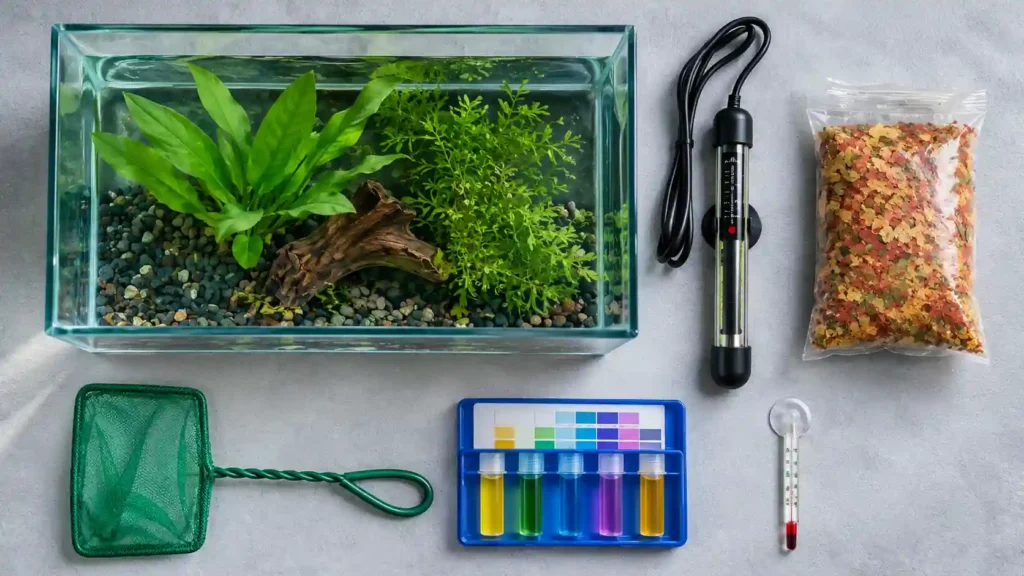
Before picking fish based on looks alone, run through this short checklist. It prevents the most common beginner mistakes: overstocking a small tank and mixing incompatible species.
Use this table to compare care requirements at a glance before choosing which fish to combine in one tank.
Fish | Tank Size | Temperature | pH | Diet | Temperament | Difficulty |
Neon Tetra | 10 gal (group of 6+) | 70–81°F | 6.0–7.0 | Omnivore, flakes/micro pellets | Peaceful, schooling | Easy |
Cardinal Tetra | 15 gal (group of 6+) | 73–81°F | 5.0–7.0 | Omnivore, small flakes/live food | Peaceful, schooling | Moderate |
Angelfish | 29 gal (per pair) | 76–84°F | 6.5–7.5 | Omnivore, pellets/frozen food | Semi-aggressive | Moderate |
Betta Fish | 5 gal (single male) | 76–81°F | 6.5–7.5 | Carnivore, pellets/bloodworms | Territorial, solo | Easy |
Mollies | 10 gal (group) | 72–78°F | 7.5–8.5 | Omnivore, algae/flakes/veggies | Peaceful | Easy |
Platies | 10 gal (group) | 70–77°F | 7.0–8.2 | Omnivore, flakes/veggies | Peaceful | Easy |
Swordtail | 15 gal (group) | 72–79°F | 7.0–8.3 | Omnivore, flakes/live food | Peaceful, semi-active | Easy |
Corydoras Catfish | 20 gal (group of 5+) | 72–79°F | 6.0–7.5 | Omnivore, sinking pellets/wafers | Peaceful, bottom dweller | Easy |
Zebra Danio | 10 gal (group of 6+) | 64–75°F | 6.5–7.5 | Omnivore, flakes/micro pellets | Peaceful, active | Easy |
Medaka (Japanese Rice Fish) | 5 gal (group) | 61–78°F | 6.5–8.0 | Omnivore, flakes/micro pellets | Peaceful, hardy | Very Easy |
Below are ten freshwater aquarium fish that are well suited to beginners, along with the specific care details most guides leave out.
Neon Tetra (Paracheirodon innesi)
Neon Tetra is one of the most recognizable community fish, thanks to its bright blue and red stripe. It is a schooling fish and should always be kept in groups of at least six, since a lone or under-grouped neon tetra becomes stressed and reclusive.
Tank size: 10 gallons minimum for a group of six
Temperature & pH: 70–81°F, pH 6.0–7.0
Diet: Omnivore — micro pellets, flakes, occasional live or frozen food
Lifespan: 5 to 8 years with stable water quality
Tip: Add neon tetras to an already-cycled tank; they are sensitive to ammonia spikes in new setups
Cardinal Tetra (Paracheirodon axelrodi)
Cardinal Tetra looks similar to the Neon Tetra but carries its red stripe the full length of its body. It is slightly more sensitive to water changes and does best in soft, slightly acidic water that mimics its native Amazon basin habitat.
Tank size: 15 gallons minimum for a group of six
Temperature & pH: 73–81°F, pH 5.0–7.0
Diet: Omnivore — small flakes, micro pellets, occasional live food
Lifespan: 4 to 5 years
Tip: Keep with other calm schooling fish; avoid pairing with fin nippers
Angelfish (Pterophyllum scalare)
Angelfish grow larger than most beginner fish and need more vertical swimming space because of their tall, laterally flattened body shape. They can become territorial once paired off, especially during breeding.
Tank size: 29 gallons minimum per pair, larger for a group
Temperature & pH: 76–84°F, pH 6.5–7.5
Diet: Omnivore — pellets, flakes, occasional frozen bloodworms
Lifespan: 8 to 10 years
Tip: Avoid housing with very small fish like neon tetras once angelfish are adult sized, since they may be eaten
Betta Fish (Betta splendens)
Betta Fish is one of the most popular single-fish tank options because of its vivid colors and flowing fins. Male bettas are territorial and should not be housed with other male bettas or brightly colored, long-finned fish.
Tank size: 5 gallons minimum for a single male
Temperature & pH: 76–81°F, pH 6.5–7.5
Diet: Carnivore — betta-specific pellets, occasional bloodworms
Lifespan: 2 to 4 years
Tip: Use a heater — bettas are tropical fish and struggle in unheated tanks below 76°F
Mollies (Poecilia sphenops)
Mollies are hardy livebearers that adapt well to a range of water conditions, including slightly brackish setups. They breed easily, so plan ahead if you keep males and females together.
Tank size: 10 gallons minimum for a small group
Temperature & pH: 72–78°F, pH 7.5–8.5
Diet: Omnivore — algae wafers, flakes, blanched vegetables
Lifespan: 3 to 5 years
Tip: Keep more females than males to reduce mating stress on individual females
Platies (Xiphophorus maculatus)
Platies are compact, colorful livebearers closely related to swordtails and mollies. They are easygoing community fish that tolerate a range of beginner setups well.
Tank size: 10 gallons minimum for a small group
Temperature & pH: 70–77°F, pH 7.0–8.2
Diet: Omnivore — flakes, blanched vegetables, occasional live food
Lifespan: 3 to 5 years
Tip: Provide floating plants; fry have a better survival rate with cover to hide in
Swordtail (Xiphophorus hellerii)
Swordtail is named for the sword-like extension on the male’s tail fin. It is a peaceful, semi-active livebearer that does well in a community tank with similarly sized fish.
Tank size: 15 gallons minimum for a small group
Temperature & pH: 72–79°F, pH 7.0–8.3
Diet: Omnivore — flakes, occasional live or frozen food
Lifespan: 3 to 5 years
Tip: Keep one male per two to three females to limit chasing behavior
Corydoras Catfish (Corydoras spp.)
Corydoras Catfish is a bottom-dwelling scavenger that helps keep the substrate clean. It is a social species that should be kept in groups and pairs well with most peaceful community fish.
Tank size: 20 gallons minimum for a group of five or more
Temperature & pH: 72–79°F, pH 6.0–7.5
Diet: Omnivore — sinking pellets, algae wafers, leftover food
Lifespan: 5 to 10 years
Tip: Use a fine, smooth substrate — sharp gravel can damage their sensitive barbels
Zebra Danio (Danio rerio)
Zebra Danio is a fast, active schooling fish recognized by its horizontal stripes. It tolerates a wider temperature range than most tropical fish, making it forgiving for beginners still learning to manage water conditions.
Tank size: 10 gallons minimum for a group of six
Temperature & pH: 64–75°F, pH 6.5–7.5
Diet: Omnivore — flakes, micro pellets, occasional live food
Lifespan: 3 to 5 years
Tip: Give it a tank with some open swimming space; it is an active mid-to-top swimmer
Medaka (Oryzias latipes, also called Japanese Rice Fish)
Medaka is an extremely hardy, small schooling fish that tolerates cooler temperatures better than most tropical aquarium fish, making it suitable for unheated tanks in moderate climates.
Tank size: 5 gallons minimum for a small group
Temperature & pH: 61–78°F, pH 6.5–8.0
Diet: Omnivore — flakes, micro pellets
Lifespan: 2 to 3 years
Tip: Suitable for outdoor or unheated indoor setups where temperatures stay above 61°F
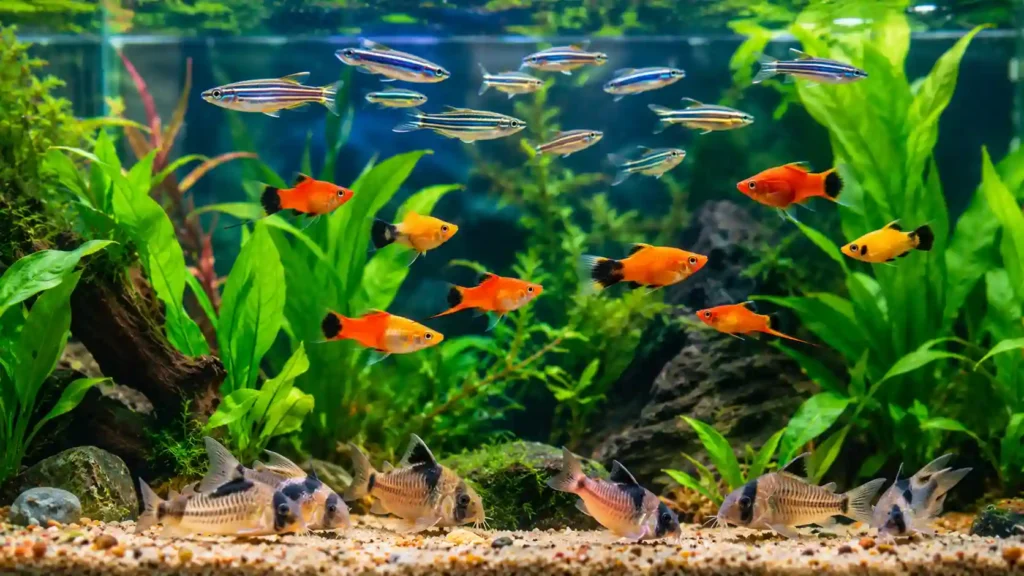
A community tank works when every fish shares similar water needs and none of them see each other as food or a territorial threat. Peaceful schooling fish such as Neon Tetra, Cardinal Tetra, Zebra Danio, and Corydoras Catfish generally mix well together. Livebearers like Mollies, Platies, and Swordtail are also easy community additions since they share similar water chemistry preferences. Betta Fish is the main exception on this list — it is best kept alone or with calm bottom dwellers, never with other bettas or fish that resemble another betta’s fins and colors. Angelfish can be combined with mid-sized community fish but should not be paired with fish small enough to be seen as food once the angelfish reaches adult size.
Most aquarium fish should be fed once or twice a day, in an amount they can finish within two to three minutes. Overfeeding is the most common beginner mistake and is a direct cause of poor water quality, since uneaten food breaks down into ammonia. Skipping a feeding day once a week is a healthy practice for adult fish and helps prevent digestive issues. Fry and juvenile fish need more frequent, smaller feedings, typically two to three times a day, to support faster growth.
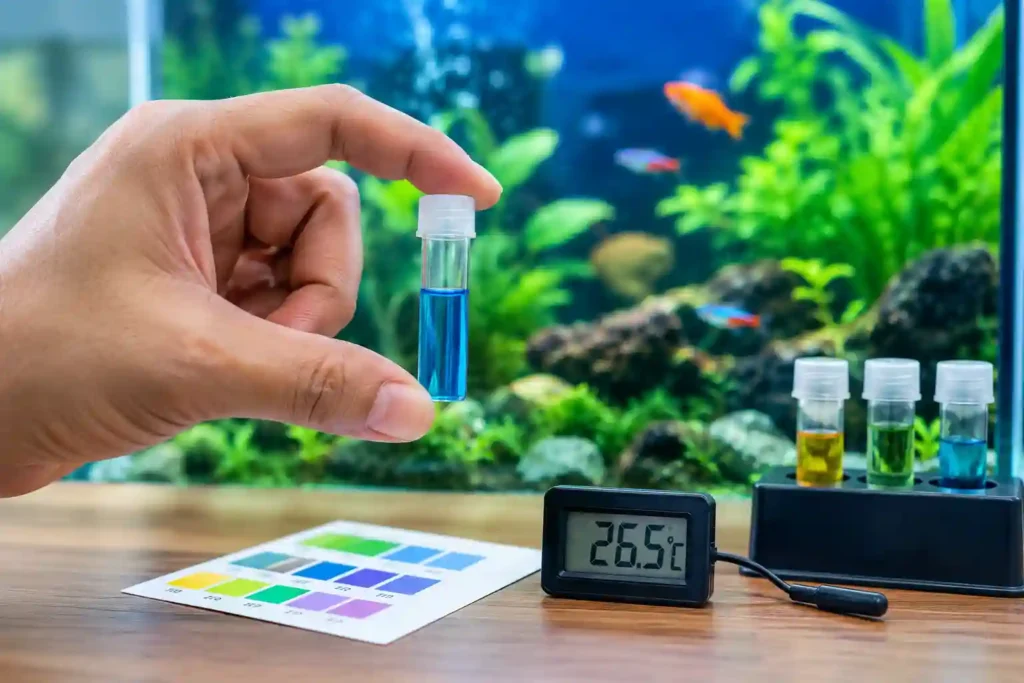
Most aquarium fish diseases trace back to poor water quality or a lack of quarantine before adding new fish. Recognizing early symptoms lets you treat issues before they spread through the whole tank.
The best prevention across all of these is consistent water testing, regular partial water changes, and a two to four week quarantine period for any new fish before adding them to an established tank.
Every aquarium fish tank depends on the nitrogen cycle, the biological process where beneficial bacteria convert toxic ammonia from fish waste into nitrite and then into less harmful nitrate. A new tank needs to be cycled for two to six weeks before fish are added, either with a fishless cycling method or by adding a small number of hardy fish gradually. Regular testing for ammonia, nitrite, nitrate, and pH with a liquid test kit helps catch problems before they harm the fish. Weekly partial water changes of ten to twenty five percent, combined with proper filtration sized for your tank volume, keep water parameters stable long term.
Picking the right aquarium fish comes down to matching tank size, water parameters, and temperament before you fall in love with a color pattern. Neon Tetra, Mollies, Platies, Swordtail, Corydoras Catfish, Zebra Danio, and Medaka all make forgiving community choices for a first tank, while Betta Fish and Angelfish reward slightly more careful planning around tank mates. Start with a properly cycled tank, stick to the stocking and feeding guidelines above, and most beginner mistakes become easy to avoid.
What is the easiest aquarium fish to take care of?
Medaka, Zebra Danio, and Corydoras Catfish are among the easiest, since they tolerate a wider range of water conditions and are forgiving of beginner mistakes.
How many fish can I keep in a 5 gallon tank?
A 5 gallon tank comfortably fits one Betta Fish or a very small group of Medaka. It is too small for most schooling fish, which need at least 10 gallons.
Do aquarium fish sleep?
Yes, most aquarium fish rest during set periods, often becoming still or settling near the substrate or plants, though they do not close their eyes since most species lack eyelids.
How often should I feed my aquarium fish?
Once or twice a day is standard for adult fish, in an amount they finish within two to three minutes, with one fasting day per week.
What fish can live together in a community tank?
Peaceful schooling fish and livebearers with similar water needs, such as Neon Tetra, Cardinal Tetra, Zebra Danio, Corydoras Catfish, Mollies, Platies, and Swordtail, generally do well together.
How long do aquarium fish typically live?
Lifespan varies by species, from around 2 to 3 years for Medaka up to 8 to 10 years for Angelfish, assuming stable water quality and proper diet.
What is the best beginner aquarium fish for a first tank?
Betta Fish, Mollies, and Corydoras Catfish are strong first choices because they are hardy, widely available, and tolerant of minor water fluctuations while a new fishkeeper learns the basics.
How do I know if my aquarium fish is sick?
Watch for white spots, ragged fins, clamped fins, loss of appetite, unusual floating or sinking, or hiding more than usual — these are the earliest common signs of illness.
Can aquarium fish live without a filter?
It is not recommended. A filter supports the beneficial bacteria that process fish waste; without one, ammonia builds up quickly and puts fish at serious risk, even in a small tank.
What is the difference between freshwater and saltwater aquarium fish?
Freshwater aquarium fish live in tanks with little to no salt content and are generally easier and less expensive to maintain, while saltwater fish require precise salinity levels and specialized equipment.

Fish Info Guide helps you explore edible, freshwater, saltwater, and aquarium fish – with simple guides on nutrition, care, and species identification for beginners and enthusiasts alike.
Imortant Links
Quick Links
Subscribe Our Newsletter
Get the latest fish care tips, species guides, and nutrition insights delivered straight to your inbox.