

You picked up a tilapia fillet at the store, then paused. Is tilapia fish good for you, or is it one of those foods that looks healthy but isn’t? Here is the direct answer. Tilapia fish is good for you when it comes from a responsible source. It is a lean, low-calorie protein packed with selenium, vitamin B12, and phosphorus, making it a smart choice for muscle health, bone strength, and everyday meals.
But the full picture matters. Farming practices, feed quality, and origin can affect its nutritional value and safety. This guide breaks down tilapia fish nutrition facts, its protein and omega-3 content, real risks you should know about, pregnancy safety, its bones and skin, different types, where it comes from, and the best way to cook it. By the end, you will know exactly how tilapia fits into your diet.
Tilapia fish refers to several species of freshwater fish that belong to the Cichlidae family. The most farmed species is Nile tilapia, scientifically named Oreochromis niloticus. It originally comes from Africa and the Middle East, but it now thrives in warm freshwater farms across more than 130 countries.
Tilapia earned its popularity for a simple reason: it grows fast, tolerates a wide range of water conditions, and requires minimal farming inputs. This makes it one of the most affordable and widely available fish in grocery stores, restaurants, and seafood markets worldwide.
Tilapia is not a wild ocean catch in most markets. Nearly all tilapia sold in the U.S. is farm raised, which directly shapes both its nutritional profile and the health considerations covered later in this guide.
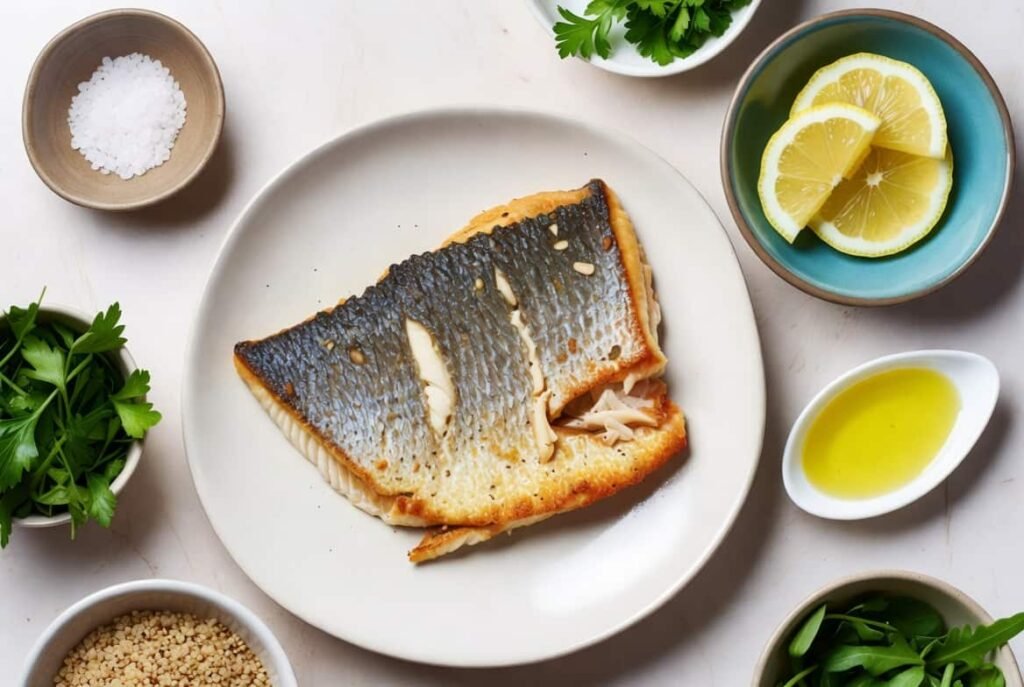
Tilapia fish nutrition makes it one of the leaner options in the seafood aisle. Based on USDA FoodData Central values, an 87 gram cooked tilapia fillet contains the following:
Nutrient | Amount per 87g fillet |
Calories | 111 kcal |
Protein | 22.8 g |
Total Fat | 2.3 g |
Calcium | 12.2 mg |
Iron | 0.6 mg |
Magnesium | 29.6 mg |
Phosphorus | 177 mg |
Potassium | 331 mg |
Sodium | 48.7 mg |
Selenium | 47.3 mcg |
Niacin | 4.12 mg |
Vitamin B12 | 1.62 mcg |
Three nutrients stand out. Selenium supports thyroid function and immune health, and one fillet provides a significant share of your daily needs. Vitamin B12 supports nerve function and red blood cell production. Phosphorus works alongside calcium to maintain strong bones and teeth.
Tilapia is also naturally low in carbohydrates, making it suitable for low carb and diabetic friendly meal plans. Compared to red meat, it delivers a similar protein punch at a fraction of the saturated fat.
Quick takeaway: A standard 100g serving of tilapia gives you roughly 26g of protein and just under 130 calories, making it one of the most efficient protein-to-calorie ratios among common fish.
Tilapia fish protein content is one of its biggest selling points. A standard 100 gram cooked serving delivers approximately 26 grams of protein, while a typical restaurant sized 200 gram fillet provides nearly 40 to 44 grams. That is close to the full daily protein requirement for many adults in a single meal.
For comparison, here is how tilapia stacks up against other common protein sources per 100g:
Tilapia holds its own against chicken breast while staying lower in calories than salmon. This makes it a practical choice for anyone focused on muscle building, weight management, or simply getting more usable protein without excess fat.
Answer in short: Tilapia fish protein content averages 22 to 26 grams per 100g serving, positioning it as a lean, high protein, low calorie option comparable to skinless chicken breast.
Tilapia fish omega 3 content is lower than fatty fish like salmon or sardines, but this fact is often misunderstood. Tilapia contains more omega 6 fatty acids than omega 3, which has fueled claims that it causes inflammation. The science does not support this concern.
Tilapia’s omega 6 to omega 3 ratio sits around 1.5 to 1. Health experts generally recommend a dietary ratio between 1:1 and 4:1 for optimal health, so tilapia actually falls within a healthy range. The typical Western diet, by contrast, runs closer to a 20:1 ratio due to processed foods and vegetable oils, not fish.
A few points worth knowing:
Direct answer: Tilapia fish is not inflammatory. Its omega 6 to omega 3 ratio of roughly 1.5:1 falls within the range experts consider balanced, so avoiding tilapia over inflammation concerns is not supported by current evidence.
If you specifically want higher omega 3 intake, pairing tilapia with fatty fish like salmon once or twice a week gives you the best of both worlds: lean protein from tilapia and concentrated omega 3s elsewhere.
Yes, tilapia fish is good for you, especially when it comes from a well managed farm. It offers a combination of benefits that make it a smart addition to almost any diet.
Tilapia delivers complete protein with all essential amino acids, supporting muscle repair, immune function, and satiety without excess calories.
Its phosphorus and selenium content contribute to strong bones and proper thyroid hormone regulation, two nutrients often overlooked in everyday diets.
Tilapia is consistently one of the most affordable seafood options, making high quality protein accessible without the price tag of salmon or tuna.
At roughly 128 calories per 100g with minimal fat, tilapia allows for larger, more satisfying portions compared to fattier proteins.
Its low saturated fat content makes it a reasonable substitute for red meat in heart healthy eating patterns, when prepared without heavy frying or butter.
Bottom line: Tilapia fish is good for you as a lean protein source rich in selenium, B12, and phosphorus. The real factors that determine its overall healthfulness are farming practices and sourcing, which the next section covers in detail.
Tilapia fish is not inherently unhealthy, but certain farming practices can make it a less ideal choice depending on where it comes from. The concerns are less about the fish itself and more about how it is raised.
Some tilapia farms, particularly in parts of Asia, have used animal waste such as poultry, sheep, or hog manure as a low cost feed source. Research from McGill University in Canada has raised concerns about bacterial contamination linked to this practice.
Certain tilapia farming operations, notably in China, have faced scrutiny over the use of antibiotics that are banned in other regions. Overuse of antibiotics in aquaculture contributes to broader antibiotic resistance, a growing public health concern.
Tilapia raised on low quality corn and soy based feed can have a different fat and nutrient profile compared to fish raised on higher quality feed.
Where to source tilapia responsibly:
The Monterey Bay Aquarium Seafood Watch program recommends favoring tilapia from Colombia, Indonesia, Taiwan, or Mexico, and exercising more caution with tilapia sourced from China due to documented farming and antibiotic concerns.
Direct answer: Tilapia fish is considered bad for you mainly when it is sourced from poorly regulated farms using manure based feed or banned antibiotics. Choosing tilapia from well regulated countries largely eliminates these risks.
Tilapia fish has one of the lowest mercury levels among commonly eaten fish. Because it is farm raised on a controlled diet rather than feeding on smaller fish in the wild, it does not accumulate mercury the way large predatory fish do.
The FDA and EPA classify tilapia in their “Best Choices” category for seafood consumption, alongside salmon, shrimp, and catfish. This category is considered safe for regular consumption, including multiple servings per week for most adults.
Mercury levels in perspective:
Mercury accumulates as it moves up the food chain, meaning larger, longer living predatory fish carry the highest risk. Tilapia’s short farming cycle and plant based or pellet feed diet keep its mercury exposure minimal.
Direct answer: Tilapia fish does not have significant mercury levels. It falls into the FDA’s “Best Choices” category, making it one of the safer fish options for regular consumption, including for children and pregnant women.
Yes, tilapia fish is safe to eat during pregnancy, and it is actually recommended by health authorities. Because of its low mercury content, tilapia falls into the FDA and EPA’s “Best Choices” seafood category, which is specifically highlighted as safe for pregnant and breastfeeding women.
Recommended guidelines for pregnant women:
Protein and omega 3 fatty acids, even at tilapia’s moderate levels, support fetal brain and eye development. The selenium and B12 content also support maternal thyroid function and energy levels during pregnancy, both of which are commonly strained during this period.
Direct answer: Tilapia fish is safe during pregnancy when fully cooked and sourced responsibly. It is one of the low mercury fish options explicitly recommended by the FDA and EPA for expecting mothers.
Yes, tilapia fish has both bones and scales, though most of what reaches your plate has been cleaned and prepared to minimize them.
Bones
Whole tilapia has a central spine along with smaller pin bones running through the flesh, similar to most fish. Filleted tilapia removes the majority of these bones, but small pin bones can occasionally remain embedded near the center of the fillet. It is worth running a finger along a fillet before cooking to check for any remaining bones, especially when serving children.
Scales
Tilapia is covered in small, cycloid scales that are almost always removed during processing before the fish reaches grocery stores or restaurants. If you buy whole tilapia directly from a fish market, descaling is a necessary step before cooking.
Skin
Tilapia skin is edible and can be cooked crispy, similar to salmon skin, though many home cooks prefer skinless fillets for a milder taste and simpler preparation. Skin-on fillets also help the fish hold together better during grilling or pan searing.
Direct answer: Tilapia fish does have bones and scales in its natural form, but commercially sold fillets are typically boneless and scaleless, with only occasional small pin bones remaining.
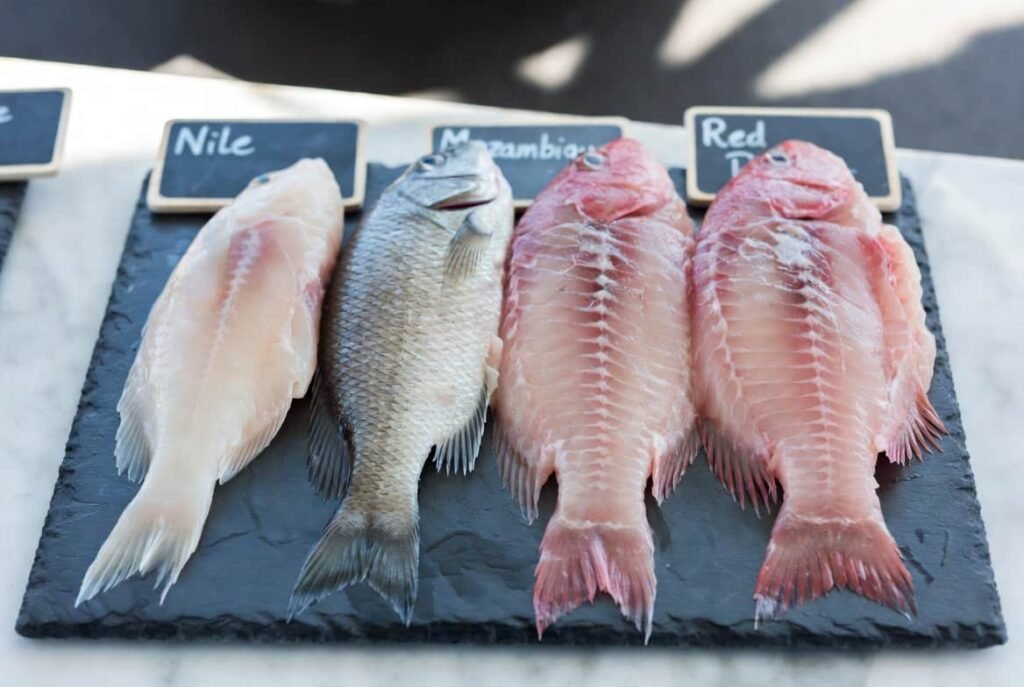
Several species and varieties fall under the tilapia fish name, each with slightly different characteristics suited to different farming environments and cooking styles.
Type | Scientific Name | Flavor & Texture | Common Uses |
Oreochromis niloticus | Mild flavor, tender flesh | Pan frying, grilling, steaming; most widely farmed globally | |
Oreochromis aureus | Firmer texture, neutral taste | Baking, grilling; popular for lean, health focused recipes | |
Oreochromis mossambicus | Richer flavor, firmer flesh | Spicy curries, stir fries, common in African and Asian cuisine | |
Hybrid (Oreochromis spp.) | Mild flavor, firm flesh, pinkish hue | Oven baked dishes, pairs well with herbs and sauces |
Nile tilapia dominates global aquaculture production due to its fast growth rate and adaptability, making it the type most commonly found in U.S. grocery stores.
Red tilapia, a hybrid variety, has gained popularity for its more visually appealing pink toned flesh, which some consumers associate with a milder, less “fishy” eating experience, even though the nutritional profile is nearly identical to Nile tilapia.
Direct answer: The main kinds of tilapia fish are Nile, blue, Mozambique, and red tilapia. Nile tilapia is the most commonly farmed and consumed type worldwide, while red tilapia is popular for its appearance and mild flavor.
Tilapia fish originally comes from Africa and the Middle East, where it has been a food source since ancient times. Historical records trace tilapia consumption back to the Nile River region as early as 1500 BC, and some biblical scholars have linked it to the fish referenced in accounts of the Sea of Galilee.
Today, tilapia farming has expanded far beyond its native range. It is now farmed in more than 130 countries, making it one of the most globally distributed farmed fish species after carp.
Major tilapia producing countries:
How tilapia is farmed:
Tilapia thrives in warm freshwater ponds, lakes, cages, and indoor recirculating tanks. It tolerates a wide range of water temperatures and salinity levels, and requires relatively low inputs compared to other farmed fish, which keeps production costs and retail prices low.
Direct answer: Tilapia fish originally comes from Africa and the Middle East but is now farmed commercially in over 130 countries, with China, Indonesia, Colombia, and Mexico among the largest producers supplying global markets.

The best way to cook tilapia fish is baking or grilling, since both methods preserve its delicate texture while allowing seasonings to shine. Tilapia’s mild flavor makes it highly adaptable, but its lean, thin fillets also mean it cooks quickly and can dry out if overdone.
Baked tilapia fish
Grilled tilapia fish
Pan fried tilapia fish
10.Cook fillets 3 to 4 minutes per side until golden
11.Serve immediately with a sauce or fresh herbs
Food safety tip: Regardless of method, cook tilapia to an internal temperature of 145°F (63°C), measured at the thickest part of the fillet, to ensure it is fully safe to eat.
Direct answer: The best way to cook tilapia fish is baking at 400°F for 12 to 15 minutes or grilling for 3 to 4 minutes per side, both of which keep the lean fillet moist while reaching a safe internal temperature of 145°F.
Tilapia fish price remains one of its biggest advantages over other seafood. On average, tilapia fillets cost between $4 and $8 per pound in the United States, making it significantly more affordable than salmon, tuna, or halibut.
Typical pricing by source:
Grocery chains (Walmart, Kroger, Costco): Frozen tilapia fillets typically range from $4 to $6 per pound, often sold in bulk bags for even lower per unit cost
Seafood markets and fishmongers: Fresh tilapia usually runs $6 to $9 per pound, reflecting the premium for fresh over frozen
Warehouse clubs like Costco: Frequently offer competitive bulk pricing on farm raised tilapia, appealing to families and meal preppers
Fresh vs. frozen:
Frozen tilapia is flash frozen shortly after processing, which preserves nutritional value nearly identically to fresh fillets. For most home cooks, frozen tilapia offers the same quality at a lower price point and longer shelf life, making it a practical everyday choice.
Where to buy tilapia fish:
Tilapia is widely available at major grocery chains, warehouse clubs, dedicated seafood markets, and increasingly through online seafood delivery services that ship fresh or frozen fillets directly to your door.
Direct answer: Tilapia fish price typically ranges from $4 to $9 per pound depending on whether it is fresh or frozen and where you buy it, making it one of the most budget friendly seafood options widely available at grocery stores, warehouse clubs, and seafood markets.
So, is tilapia fish good for you? The answer is yes, when it comes from a responsible source. Tilapia offers lean, high quality protein, low calories, and meaningful amounts of selenium, vitamin B12, and phosphorus, all while remaining one of the most affordable seafood options available. Its low mercury content makes it safe for regular consumption, including during pregnancy, and its mild flavor adapts easily to baking, grilling, or pan frying.
The real factor that determines whether tilapia is good or bad for you comes down to sourcing. Choosing tilapia from well regulated regions like Colombia, Indonesia, Taiwan, or Mexico, and cooking it to a safe internal temperature, lets you enjoy its full nutritional benefits with minimal risk.
Is tilapia fish good for you?
Yes. Tilapia is a lean, affordable source of high quality protein, selenium, and vitamin B12. It is low in calories and saturated fat, making it a healthy choice when sourced from a well regulated farm rather than an unregulated one.
Why is tilapia fish bad for you?
Tilapia itself is not unhealthy, but some farms use manure based feed or banned antibiotics, mainly in parts of China. Choosing tilapia from Colombia, Indonesia, Taiwan, or Mexico largely avoids these farming related risks.
Does tilapia fish have mercury?
No, tilapia has very low mercury levels. The FDA and EPA place it in the “Best Choices” seafood category, meaning it is safe for regular consumption, including for children and pregnant women.
Can you eat tilapia fish during pregnancy?
Yes. Tilapia is recommended by the FDA and EPA as a low mercury fish safe during pregnancy, within 2 to 3 servings per week, as long as it is cooked thoroughly to 145°F.
Do tilapia fish have bones?
Yes, whole tilapia has a central spine and small pin bones. Filleted tilapia removes most bones, though occasional small pin bones can remain, so checking fillets before cooking is recommended.
What is the scientific name of tilapia fish?
The most farmed species, Nile tilapia, is scientifically named Oreochromis niloticus. Other common farmed species include Oreochromis aureus (blue tilapia) and Oreochromis mossambicus (Mozambique tilapia).
Where does tilapia fish come from?
Tilapia originally comes from Africa and the Middle East. It is now farmed commercially in over 130 countries, with China, Indonesia, Colombia, and Mexico among the largest global producers today.
What is the best way to cook tilapia fish?
Baking at 400°F for 12 to 15 minutes or grilling for 3 to 4 minutes per side works best. Both methods keep the lean fillet moist while safely reaching an internal temperature of 145°F.
How much protein does tilapia fish have?
A 100 gram cooked serving contains approximately 26 grams of protein, comparable to skinless chicken breast, making tilapia an efficient, low calorie protein source for muscle building and weight management goals.
Is tilapia fish farmed or wild caught?
Nearly all tilapia sold commercially, including in the United States, is farm raised rather than wild caught. Farming allows for consistent supply and lower prices compared to wild caught seafood.

Fish Info Guide helps you explore edible, freshwater, saltwater, and aquarium fish – with simple guides on nutrition, care, and species identification for beginners and enthusiasts alike.
Imortant Links
Quick Links
Subscribe Our Newsletter
Get the latest fish care tips, species guides, and nutrition insights delivered straight to your inbox.