

You picked up a whole goatfish at the fish market, or maybe read about it on a menu, and paused. Is goatfish good for you, or is it one of those obscure fish better left alone? Here is the direct answer. Goatfish nutrition facts show it is a lean, low calorie source of high quality protein, along with selenium, omega 3 fatty acids, and several essential minerals, making it a smart pick for muscle health, heart health, and everyday meals.
But the full picture matters more than a single stat. Where the fish comes from, how it is caught, and which species you are eating all affect its safety and nutritional value. This guide breaks down goatfish nutrition facts, its protein and calorie content, real health benefits, safety concerns like mercury and ciguatera, its different species, and the best ways to cook it. By the end, you will know exactly how goatfish fits into your diet.
Goatfish is the common name for over 60 species of fish belonging to the family Mullidae. They are also known as red mullet, especially in Europe, though that term technically refers to a narrower group within the family, mainly the genus Mullus. This naming overlap causes a lot of confusion, and we will clear it up later in this guide.
The defining feature of every goatfish is a pair of long, sensitive barbels hanging from the chin, which look a bit like a goat’s beard, hence the name. These barbels are packed with taste receptors and are used to probe sand and reef crevices for hidden prey. When not in use, the barbels fold neatly into a groove under the throat.
Goatfish have elongated bodies, two widely separated dorsal fins, and forked tails. Most species range from 9 to 24 inches in length, though a few can grow past 2 feet. They are found in warm coastal waters across the Atlantic, Indian, and Pacific Oceans, and many species are brightly colored in shades of red, yellow, or gold, with some able to change color rapidly to blend into their surroundings.
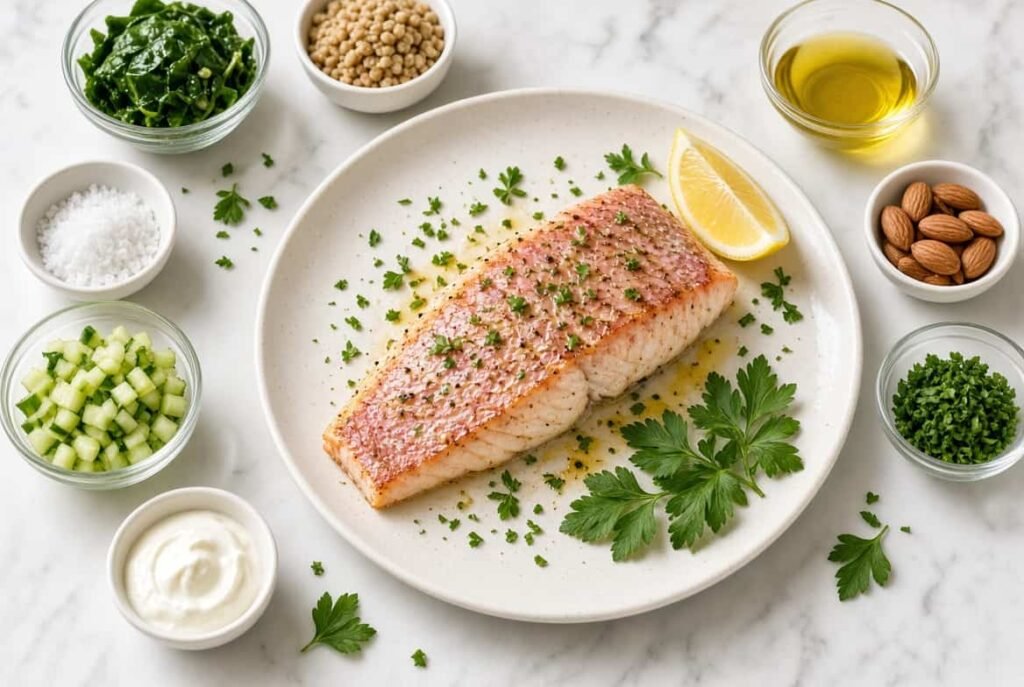
Goatfish nutrition data varies slightly by species and data source, but here is a consolidated picture based on USDA style reporting and fisheries nutrient databases.
Nutrition Facts (per 100g cooked serving, values may vary by species)
Nutrient | Amount | Benefit |
Calories | Approximately 105 to 140 | Moderate energy density |
Protein | 18 to 24g | Muscle repair and growth |
Total Fat | 1.5 to 2g | Low fat, lean profile |
Cholesterol | Approximately 70 to 90mg | Moderate, typical for fish |
Sodium | Approximately 35 to 45mg | Naturally low sodium |
Potassium | Approximately 400 to 520mg | Supports fluid balance |
Omega 3 | Approximately 0.1g | Heart and brain support |
Selenium | Approximately 67mcg | Immune and thyroid support |
Calcium | Approximately 22mg | Bone health |
Iron | Approximately 0.27mg | Oxygen transport |
Vitamin A | Approximately 158mcg | Vision and immune function |
A standard 100g serving of goatfish delivers roughly 18 to 24g of protein at only about 105 to 140 calories, putting it in the same lean, high protein category as tilapia and cod, while offering a meaningfully higher selenium content than most common whitefish.
Why the range varies:
Goatfish covers more than 60 species across different oceans, so nutrient values shift depending on which species, its diet, and its size. This is normal for a multi species common name and does not indicate inconsistent data.
Goatfish protein content is one of its strongest selling points. A standard 100 gram cooked serving delivers approximately 18 to 24 grams of protein, while a typical 200 gram restaurant sized fillet provides close to 36 to 48 grams. That covers a large share of the average adult’s daily protein needs in a single meal.
For comparison, here is how goatfish stacks up against other common protein sources per 100g:
Goatfish holds its own against other lean whitefish like cod and tilapia, offering a similar protein to calorie ratio. It falls short of chicken breast in raw protein grams, but it comes with the added benefit of omega 3 fatty acids and a notably higher selenium content, something poultry does not provide.
Direct answer:
Goatfish protein content averages 18 to 24 grams per 100g serving, positioning it as a lean, moderate to high protein option comparable to cod and tilapia, and a genuinely useful addition for anyone focused on muscle building or weight management.
Yes, goatfish is good for you, especially as part of a varied seafood diet. It combines lean protein with several nutrients that are often underrepresented in everyday meals.
Bottom line:
Goatfish is good for you as a lean protein source rich in selenium, omega 3s, and essential minerals. The next section covers the safety side, including mercury and ciguatera risk, which matters just as much as the nutrition profile.
Goatfish is generally safe to eat, and mercury is not the primary concern with this fish. Because goatfish are relatively small, short lived bottom feeders rather than large, long lived predators, they do not accumulate mercury the way tuna, swordfish, or shark do. This puts goatfish closer to the low mercury end of the spectrum, similar to tilapia and cod.
The more relevant safety concern with goatfish, particularly reef associated tropical species, is ciguatera toxin. Ciguatera is a natural toxin produced by marine algae that accumulates in certain reef fish through the food chain. Some goatfish species have been documented carrying ciguatera, especially those caught around tropical reef systems in the Pacific and Caribbean.
Practical safety tips:
Direct answer:
Goatfish is safe to eat when sourced properly, with low mercury risk similar to tilapia and cod. The main precaution is ciguatera toxin in some reef caught tropical specimens, which is a sourcing issue rather than a reason to avoid the fish altogether.
Goatfish has a mild, slightly sweet flavor with firm, white flesh, closer in character to red snapper or mullet than to something oily like salmon or mackerel. It is not considered a ‘fishy’ tasting fish, which makes it approachable even for people who are usually hesitant about seafood.
The texture is firm but flaky once cooked, holding together well on the grill or in a pan without falling apart. Skin on preparations, common in Mediterranean and Hawaiian cooking, add a slightly crisp, savory edge when seared properly.
A few flavor notes worth knowing:
Direct answer:
Goatfish tastes mild and slightly sweet with a firm, flaky texture, similar to red snapper, making it a versatile, easy to season option for grilling, baking, or pan searing.
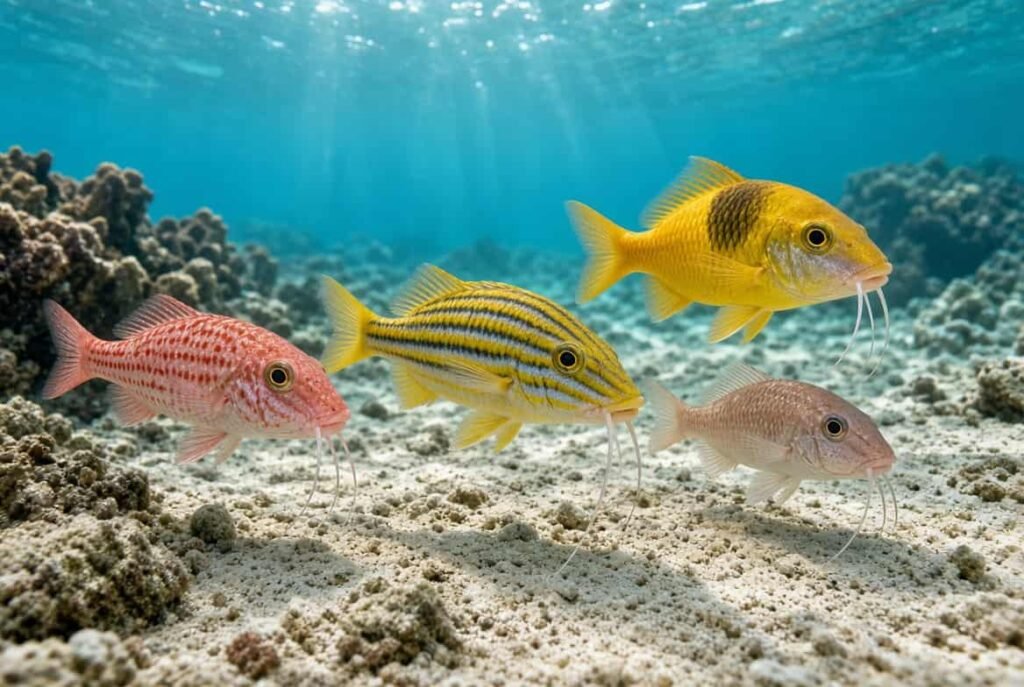
There are more than 60 species of goatfish worldwide, grouped into six genera within the family Mullidae. Most home cooks and diners will only encounter a handful of these regularly, either on a plate or while snorkeling near a reef.
Type | Scientific Name | Region | Notable Traits |
|---|---|---|---|
Red mullet (striped) | Mullus barbatus / Mullus surmuletus | Mediterranean, Eastern Atlantic | The classic ‘red mullet’ of European cuisine, prized since ancient Rome |
Dash and dot goatfish | Parupeneus barberinus | Indo Pacific | Largest common species, up to 24 inches, popular food fish in Hawaii and Asia |
Yellowfin goatfish | Mulloidichthys vanicolensis | Indo Pacific, Red Sea | Forms large daytime schools, whitish body with a yellow stripe |
Yellowstripe goatfish | Mulloidichthys flavolineatus | Indo Pacific | Silvery body with a yellow side stripe, common on sandy reef flats |
Goldsaddle (yellow) goatfish | Parupeneus cyclostomus | Indo Pacific, Red Sea | Highly variable coloring, can shift between blue, yellow, and gold |
Bicolor goatfish | Parupeneus barberinoides | Western Pacific | Reddish black front, creamy white rear, most common aquarium species |
Spotted goatfish | Pseudupeneus maculatus | Western Atlantic, Caribbean | Only common goatfish native to the Western Hemisphere |
Which types are commonly eaten versus kept in aquariums:
Red mullet, dash and dot goatfish, and spotted goatfish are the species most often found at fish markets and on menus. Yellowfin, yellowstripe, bicolor, and goldsaddle goatfish are more frequently sold through the aquarium trade for reef tanks, though they are not typically farmed or fished commercially for food in the same way.
Direct answer:
The main types of goatfish include red mullet, dash and dot goatfish, yellowfin, yellowstripe, goldsaddle, and bicolor goatfish, with red mullet and dash and dot goatfish being the most commonly eaten varieties worldwide.
This is one of the most confusing naming issues in seafood, and it deserves a clear answer. Goatfish and red mullet are related but not always the exact same thing, and the confusion comes down to how broadly the term is used.
“Goatfish” is the general common name for the entire family Mullidae, which includes over 60 species across six genera worldwide. “Red mullet” technically refers more narrowly to species within the genus Mullus, specifically Mullus barbatus and Mullus surmuletus, which are native to the Mediterranean and Eastern Atlantic. These two species were prized by ancient Romans and remain a staple in European cooking today.
In everyday use, especially outside of scientific or culinary circles, people often use “goatfish” and “red mullet” interchangeably to describe any member of the Mullidae family, regardless of genus. This is technically imprecise but extremely common, particularly in the United States, where “goatfish” is the more familiar term for Indo Pacific and Hawaiian species.
Quick comparison:
Feature | Goatfish (general term) | Red Mullet (Mullus genus) |
Scope | All 60+ species, family Mullidae | Specific genus within that family |
Region | Worldwide, tropical and subtropical | Mainly Mediterranean and Eastern Atlantic |
Common usage | Broad, especially in USA and Pacific regions | Narrow, mainly European culinary term |
Direct answer:
All red mullet are goatfish, but not all goatfish are red mullet. Red mullet specifically refers to the genus Mullus found in the Mediterranean, while goatfish is the broader family name covering species found across the Atlantic, Indian, and Pacific Oceans.
Goatfish are found in tropical, subtropical, and temperate waters across the Atlantic, Indian, and Pacific Oceans, making them one of the more widely distributed reef associated fish families in the world.
Preferred habitat:
Regional distribution:
Most goatfish do not migrate long distances. They tend to stay within a home reef system, moving between feeding areas during the day and resting or schooling areas at night, depending on the species’ particular activity pattern.
Direct answer:
Goatfish live in shallow, warm coastal waters worldwide, favoring sandy bottoms near coral reefs across the Atlantic, Indian, and Pacific Oceans, with different species concentrated in the Mediterranean, Indo Pacific, Caribbean, and Hawaiian regions.
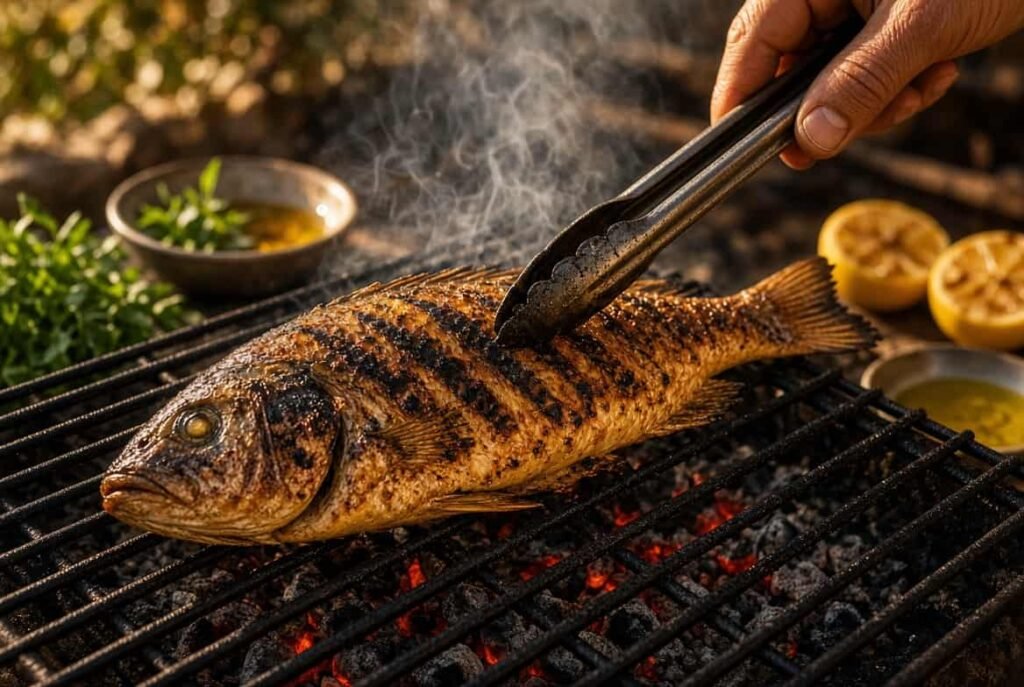
Goatfish is versatile in the kitchen thanks to its mild flavor and firm texture, and it adapts well to grilling, frying, baking, or whole roasted preparations, the same way it has been prepared for centuries in Mediterranean and Hawaiian cooking traditions.
Grilling
Pan frying
Baking
Whole roasted, Roman style
Ancient Romans famously served red mullet whole, sometimes even live to the table for its rapid color change, then quickly cooked and eaten with minimal seasoning to let the natural flavor shine. A modern version simply involves roasting the whole cleaned fish with olive oil, garlic, and fresh herbs at high heat until the skin crisps.
A note on bones:
Goatfish, like most whole fish, has a central spine along with smaller bones running through the flesh. Running a finger along a fillet before cooking helps catch any remaining pin bones, especially when serving children.
Direct answer:
The best way to cook goatfish is grilling or baking, both of which preserve its mild, slightly sweet flavor while keeping the lean fillet moist, and both reach a safe internal temperature of 145°F within 15 to 20 minutes.
Goatfish availability in the United States varies significantly by region, since it is not as mainstream as tilapia or salmon in most grocery stores.
Specialty and ethnic seafood markets:
Goatfish is most reliably found at Hawaiian, Mediterranean, Middle Eastern, and Asian seafood markets, where it may be sold under its regional name, such as moano or kūmū in Hawaii, or as “red mullet” in European and Middle Eastern grocers.
Hawaii and Gulf Coast fish markets:
In Hawaii, goatfish is a well established local catch, often available fresh at fish auctions and local markets. Gulf Coast seafood suppliers occasionally carry spotted goatfish, the species native to Western Atlantic waters.
Online seafood delivery:
Specialty online seafood services increasingly ship frozen or flash frozen goatfish, particularly red mullet imported from Mediterranean suppliers, to customers across the country.
Catch your own:
For anglers and spearfishers on the Gulf Coast, in Florida, or in Hawaii, goatfish is a legal and fairly common catch, though local size and bag limits vary by state, so checking regional fishing regulations first is essential.
What to look for when buying:
Direct answer:
Goatfish is most commonly found at specialty Hawaiian, Mediterranean, and Asian seafood markets, or through online seafood delivery services, since it is not widely stocked in mainstream grocery chains across the United States.
Goatfish has held cultural significance across two very different civilizations separated by thousands of miles and centuries, which adds an unusual depth to what might otherwise seem like an ordinary reef fish.
Ancient Rome:
Red mullet, the Mediterranean goatfish species, was considered a luxury food among wealthy Romans, prized as much for its dramatic color change as for its taste. Because the fish shifts through shades of red and silver as it dies, Romans would often have it delivered live to the dinner table so guests could watch the color change happen in real time before it was cooked and served. Prices for large specimens reportedly rivaled the cost of a skilled slave, making red mullet one of the most conspicuous luxury foods of the era.
Hawaiian tradition:
In Hawaii, several goatfish species carry deep cultural meaning beyond their role as food. The whitesaddle goatfish, known as kūmū, translates to “foundation” or “source,” and was historically offered to the gods during important ceremonies like canoe launches and hula dedications. It was also prepared in specific traditional ways, including being wrapped in ti leaves or salted and dried for several days before roasting. Another species, the manybar goatfish, is referenced in traditional Hawaiian song as moano nui ka lehua, reflecting its long standing place in local cuisine and storytelling.
Direct answer:
Goatfish has been culturally significant since antiquity, from its status as a luxury dinner spectacle in ancient Rome to its ceremonial and culinary importance in traditional Hawaiian culture, where certain species are still tied to language, song, and ritual today.
So, is goatfish good for you? The answer is yes, when it comes from a reliable source. Goatfish nutrition facts show a lean, protein rich fish with meaningful amounts of selenium and omega 3 fatty acids, all while remaining relatively low in calories and mercury compared to larger predatory fish. Its main safety consideration, ciguatera toxin in certain tropical reef caught specimens, is a sourcing issue rather than a reason to avoid this fish altogether.
From its role as a prized luxury dish in ancient Rome to its ceremonial significance in Hawaiian culture, goatfish carries more history and versatility than its reputation as an obscure reef fish suggests. Whether you are trying to identify a species you caught, comparing it to red mullet, or simply deciding if it belongs on your plate, this guide gives you a complete, evidence based picture of what makes goatfish worth a second look.
As search behavior increasingly shifts toward direct, answer first content and AI powered summaries, understanding a lesser known fish this thoroughly, from nutrition to safety to the plate, is exactly the kind of depth that continues to hold value in 2026 and beyond.
Is goatfish good for you?
Yes. Goatfish is a lean, moderate to high protein seafood option rich in selenium and omega 3 fatty acids. It is low in calories and saturated fat, making it a healthy choice for muscle building, heart health, and overall balanced eating when sourced properly.
Is goatfish the same as red mullet?
Not exactly. Red mullet refers specifically to the genus Mullus found mainly in the Mediterranean, while goatfish is the broader family name Mullidae covering over 60 species worldwide. All red mullet are goatfish, but not all goatfish are red mullet.
Does goatfish have a lot of mercury?
No. Goatfish are small, relatively short lived bottom feeders, so they do not accumulate significant mercury like large predatory fish. Mercury is low, similar to tilapia and cod. The bigger safety concern is ciguatera toxin in some tropical reef caught species.
What does goatfish taste like?
Goatfish has a mild, slightly sweet flavor with firm, flaky white flesh, closer to red snapper than to oily fish like salmon. It is not considered fishy tasting and takes on marinades and seasoning well.
Can you eat goatfish skin?
Yes, goatfish skin is edible and can be cooked crispy, similar to snapper or red mullet skin. Many Mediterranean and Hawaiian preparations leave the skin on for texture and flavor, though skinless fillets work fine for milder taste.
Is goatfish high in protein?
Yes. A 100 gram cooked serving provides approximately 18 to 24 grams of protein, comparable to cod and tilapia, making goatfish a solid lean protein source for anyone focused on muscle maintenance or weight management.
What is the best way to cook goatfish?
Grilling or baking work best, preserving the fish’s mild flavor while keeping it moist. Grill 3 to 5 minutes per side, or bake at 400°F for 12 to 18 minutes, until the internal temperature reaches a safe 145°F.
Are goatfish bottom feeders safe to eat?
Yes, generally. Unlike freshwater bottom feeders such as carp, goatfish forage on clean sand and reef invertebrates rather than muddy sediment, so they do not develop an earthy taste. The main precaution is ciguatera risk in certain tropical reef regions.
Where can you buy goatfish in the USA?
Goatfish is most commonly found at Hawaiian, Mediterranean, and Asian specialty seafood markets, or through online seafood delivery services. It is not typically stocked in mainstream grocery chains, so sourcing usually requires a dedicated fish market.
Is goatfish safe during pregnancy?
Goatfish’s low mercury content generally makes it a reasonable seafood choice during pregnancy, similar to tilapia or cod. However, avoid large, reef caught tropical specimens due to ciguatera risk, and always cook thoroughly to 145°F before eating.

Fish Info Guide helps you explore edible, freshwater, saltwater, and aquarium fish – with simple guides on nutrition, care, and species identification for beginners and enthusiasts alike.
Imortant Links
Quick Links
Subscribe Our Newsletter
Get the latest fish care tips, species guides, and nutrition insights delivered straight to your inbox.