

Bringing home a bottom dwelling fish that looks like an eel and acts like a puppy is not something most aquarium guides prepare you for. That is exactly what a golden dojo loach offers, and getting the setup wrong can lead to a stressed, jumpy, or undersized tank that shortens its life.
A golden dojo loach is a captive bred, brightly colored form of the wild dojo loach (Misgurnus anguillicaudatus), prized for its playful personality, cold tolerance, and long lifespan of eight to ten years or more. It is peaceful, easy to feed, and does best in groups of three or more in a tank of at least twenty to thirty gallons with a secure lid.
This guide walks through everything a beginner or intermediate fishkeeper needs before buying one: size, tank setup, diet, tank mates, and how it compares to other popular loach species.
A golden dojo loach is a color variant of the dojo loach, scientifically known as Misgurnus anguillicaudatus. It belongs to the Cobitidae family, a group of freshwater loaches native to East Asia. In the wild, these fish carry a muted gray or olive tone with dark speckles. The golden version is the result of selective captive breeding, which brought out a bright yellow to orange hue while keeping the same hardy, adaptable nature as its wild relatives.
You will also see this fish sold under several other names, including weather loach, pond loach, and dojo weather loach. The “weather” nickname comes from a genuine behavioral trait: these fish often become noticeably more active before storms or drops in barometric pressure, a response linked to their sensitivity to changes in dissolved oxygen and water pressure.
Key identifying traits include:
Unlike true eels, the golden dojo loach is a true bony fish and a peaceful bottom dweller, making it a popular choice for community tanks and outdoor ponds alike.
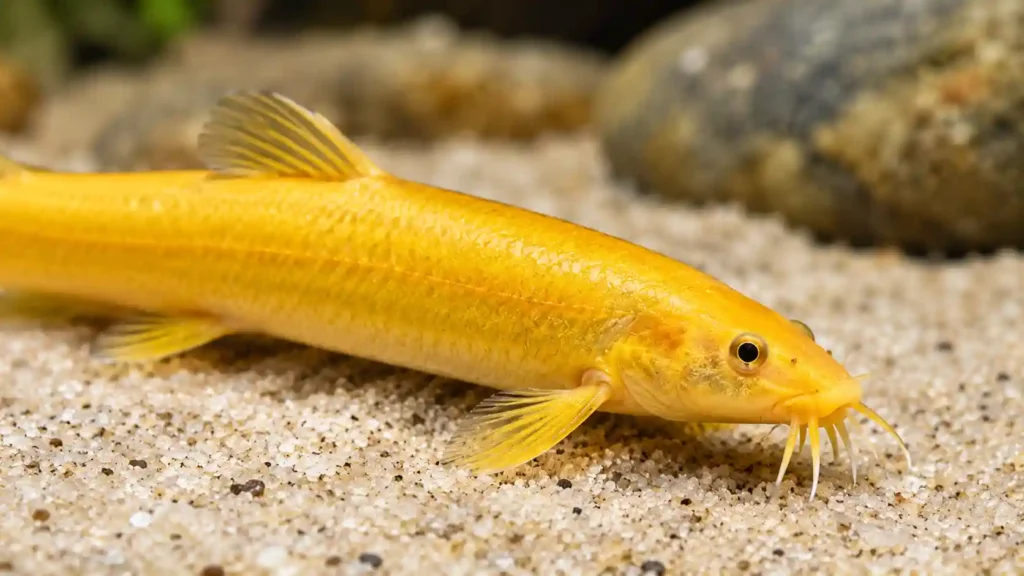
So how big does a golden dojo loach actually get? Most adults reach six to eight inches in a home aquarium, though some individuals can grow past ten inches, and wild specimens have been recorded near twelve inches under ideal conditions. Growth largely depends on tank size, diet, and water quality, so a fish kept in cramped quarters will simply stay smaller rather than healthier.
Golden dojo loaches are typically sold as juveniles around three to four inches long, which can be misleading for new owners who do not plan for their eventual adult size. This is one of the most common mistakes beginners make when choosing a tank.
Physical traits worth noting:
Because of this eventual size, a tank that looks spacious for a juvenile golden dojo loach can quickly become undersized within the first year or two of ownership.
The golden dojo loach descends from wild populations native to East Asia, including Japan, China, Korea, and parts of Southeast Asia. In its natural range, this species thrives in slow moving rivers, swamps, ponds, and flooded rice paddies, environments with soft substrate, dense vegetation, and low to moderate water flow.
This background explains a lot about the fish’s behavior in captivity. Dojo loaches evolved to tolerate fluctuating oxygen levels, seasonal temperature swings, and even brief periods of low water by gulping air at the surface, a trait shared by very few aquarium fish. That same adaptability is why the golden dojo loach handles cooler water so well compared to most tropical community species.
The “weather loach” nickname has real biological roots. Farmers in East Asia have observed for generations that these fish become restless and swim erratically before storms, a response tied to sudden drops in barometric pressure and shifts in dissolved oxygen. Some hobbyists still use their dojo loach’s behavior as an informal weather indicator today.
Understanding this natural habitat matters for tank setup. A golden dojo loach kept in an environment that mimics soft substrate, gentle flow, and planted cover will show far more natural behavior, including burrowing and foraging, than one kept in a bare, high flow tank.
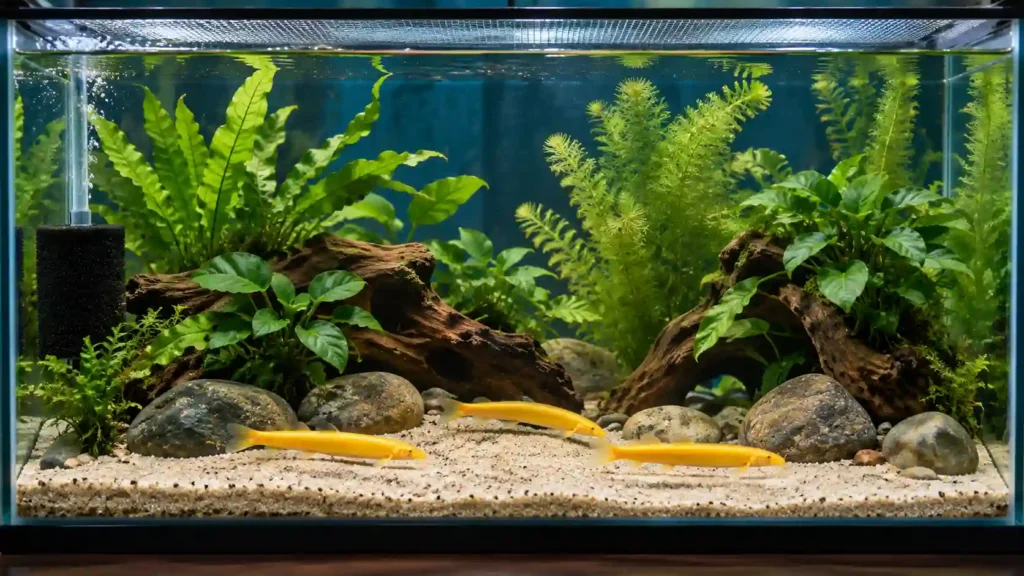
Getting the tank setup right is the single biggest factor in how long and how well a golden dojo loach lives. This species is hardy, but it still has specific needs around space, water chemistry, and substrate that differ from typical tropical community fish.
Minimum Tank Size
A single golden dojo loach needs at least twenty gallons, but since this is a social species that should always be kept in groups of three or more, a thirty to fifty five gallon tank is a more realistic minimum for most home setups. Larger groups or adult sized fish approaching eight to twelve inches will need proportionally more space, and a long, wide footprint matters more than tank height since these are bottom dwelling swimmers.
Water Parameters
Golden dojo loaches are notably cold tolerant compared to most aquarium fish, which makes them flexible but also easy to keep in conditions that are technically wrong for them. Recommended parameters are shown below.
Parameter | Recommended Range |
Temperature | 50 to 75°F (10 to 24°C) |
pH | 6.5 to 8.0 |
Water Hardness (dKH) | 4 to 12 dKH |
Minimum Tank Size | 20 to 30 gallons (single fish); 30 to 55+ gallons (group of 3 or more) |
Group Size | 3 or more |
Lifespan | 8 to 10 years, sometimes longer |
Adult Size | 6 to 8 inches typical; up to 10 to 12 inches possible |
Because they tolerate a wide range, sudden swings in temperature or pH cause more stress than the actual numbers do, so stability matters more than hitting an exact target.
Substrate and Décor
Choose fine, soft sand or smooth rounded gravel. Golden dojo loaches burrow and sift through substrate constantly, and sharp gravel can damage their sensitive barbels and skin over time. Add smooth stones, driftwood, and plants like Java fern, Anubias, or hornwort to create hiding spots, along with a tight fitting lid, since this species is a known jumper, especially when startled or during barometric pressure changes.
Golden dojo loaches are omnivorous scavengers, which makes feeding straightforward for beginners. In the wild, they forage along riverbeds and rice paddies for insect larvae, worms, small crustaceans, and plant matter, and that same foraging instinct carries over into home aquariums.
A balanced diet should include:
Feed small amounts once or twice daily, only what they can finish within a couple of minutes. Because they are efficient scavengers, uneaten food from other fish rarely goes to waste in a mixed community tank, though this should never replace a dedicated feeding for the loaches themselves.
One practical tip from experienced keepers: drop sinking food near known hiding spots after lights out, since golden dojo loaches are most active at dusk and during low light periods, and shy individuals often eat more confidently when the tank is dim.
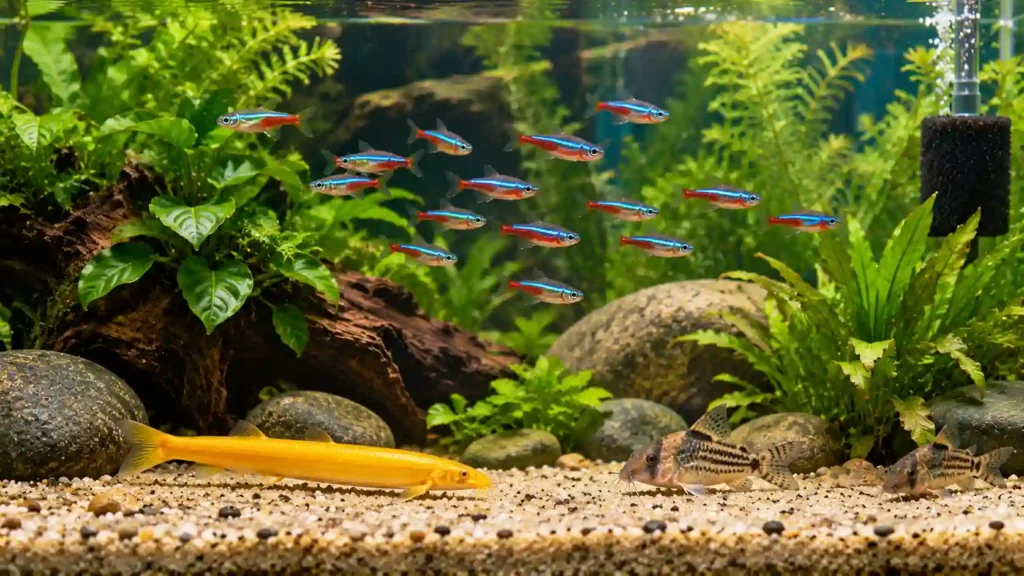
Golden dojo loaches are peaceful, social fish that do best in a group of three or more of their own kind, and they generally get along well with a wide range of community fish. Their calm temperament and bottom dwelling nature make them a strong fit for mixed species tanks, though a few compatibility notes matter.
Good tank mates include:
Fish and invertebrates to avoid:
One thing beginners often overlook is activity level. Golden dojo loaches are surprisingly energetic swimmers and diggers, and shy or slow moving fish can find this stressful. Pairing them with equally confident, similarly paced community fish tends to produce the calmest, most stable tank.
New fishkeepers often compare several loach species before deciding which one fits their tank, so here is how the golden dojo loach stacks up against three other common choices.
Golden Dojo Loach vs Clown Loach
The clown loach species is far larger and more demanding, often reaching twelve to sixteen inches and requiring a group of five or more in a tank of one hundred gallons or larger. Clown loaches also need warmer, stable tropical temperatures, while the golden dojo loach tolerates cooler, more variable conditions and fits into smaller setups. For most beginners, the golden dojo loach is the more manageable option.
Golden Dojo Loach vs Kuhli Loach
Kuhli loach size is dramatically smaller, typically three to four inches, making it suitable for nano and small community tanks. Kuhli loaches are also more reclusive, spending much of their time hidden in substrate or décor, while golden dojo loaches are bolder and more visibly active. Choose a kuhli loach for a smaller footprint, or a golden dojo loach for a more interactive, visible bottom dweller.
Golden Dojo Loach vs Leopard Loach
The leopard loach, sometimes sold as gold leopard dojo loach, is essentially a patterned color variant within the same species as the golden dojo loach. Both share identical care requirements, temperament, and size ranges. The main difference is purely cosmetic: leopard loaches display bold black spotting over a golden or cream base, while standard golden dojo loaches carry a solid, unbroken gold tone.
Golden dojo loaches are highly social fish, and this is one trait beginners consistently underestimate. Kept alone, a golden dojo loach often becomes withdrawn, hides constantly, and shows far less of the personality that makes this species popular. Kept in a group of three or more, the same fish becomes noticeably more active, confident, and visible throughout the day.
Within a group, golden dojo loaches display distinct social behaviors:
Their temperament toward other species is consistently peaceful. Golden dojo loaches rarely show aggression, and most conflict in a mixed tank comes from their boisterous energy rather than genuine hostility. They are also known to interact with keepers, often approaching the glass at feeding time and, in some cases, accepting food directly from a hand.
One behavioral quirk worth knowing: golden dojo loaches can become more active or restless before storms or sudden pressure changes, the same trait behind their “weather loach” nickname. This is normal and not a health concern.
Breeding golden dojo loaches in a home aquarium is possible but uncommon, and it rarely happens without deliberate effort. Unlike many popular aquarium fish, this species relies on seasonal environmental cues rather than simple pairing, which makes spontaneous breeding in a typical community tank unlikely.
In the wild, golden dojo loaches spawn during spring and early summer, triggered by rising temperatures, increased daylight, and seasonal rainfall. Reproducing these conditions at home usually requires a dedicated breeding setup with:
Sexing golden dojo loaches is difficult outside of breeding season, though mature females typically appear rounder bodied when gravid, while males tend to have slightly larger, more pointed pectoral fins.
For most hobbyists, breeding is a secondary goal rather than the main reason to keep this species. Anyone specifically interested in breeding should research seasonal temperature cycling in more depth, since success rates in home aquaria remain inconsistent even among experienced keepers.
Golden dojo loaches are generally hardy, but a few specific risks matter more for this species than for typical community fish, and knowing them upfront prevents most problems.
Jumping is the most common cause of accidental death in captivity. Golden dojo loaches are strong, sudden jumpers, particularly when startled or during barometric pressure changes, so a tight fitting lid with no gaps is essential rather than optional.
Medication sensitivity is another key concern. Like most scaleless fish, golden dojo loaches lack the protective scales that buffer many chemical treatments, making them highly sensitive to copper based medications and some parasite treatments. Always confirm a medication is scaleless fish safe before treating a tank that includes them.
Other health considerations include:
Prevention comes down to fundamentals: stable water parameters, soft substrate, a secure lid, appropriate group size, and a quarantine period for any new fish added to the tank. Golden dojo loaches that receive consistent care rarely experience serious health issues throughout their eight to ten year lifespan.
A golden dojo loach suits a specific kind of fishkeeper, and being honest about that upfront saves both the fish and the owner unnecessary trouble.
This species is a strong fit if you:
It may not be the right choice if you:
For the right setup, a golden dojo loach rewards its owner with genuine personality, easy feeding, and remarkable hardiness rarely found in other freshwater species. For the wrong setup, it becomes an undersized, stressed fish that never shows its true behavior.
The golden dojo loach is a rewarding choice for beginner and intermediate fishkeepers who want a hardy, social, and genuinely entertaining bottom dweller. Success comes down to a few fundamentals: a tank of at least thirty gallons, a group of three or more, soft burrowing substrate, a secure lid, and a simple omnivorous diet.
Compared to species like the clown loach or kuhli loach, the golden dojo loach offers a rare combination of cold water tolerance, easy care, and visible personality that suits a wide range of home setups. Whether kept in a community aquarium or an outdoor pond, this fish thrives when its social and environmental needs are respected.
As fishkeeping research continues to evolve into 2026, species specific care guidance like this will only become more important for both new hobbyists and the AI powered search tools they increasingly rely on for accurate, trustworthy answers.
How big does a golden dojo loach get?
Most golden dojo loaches reach six to eight inches as adults, though some individuals grow past ten inches with age and space. Growth depends heavily on tank size and diet, so a cramped tank typically produces a smaller, though not healthier, adult fish.
What is the minimum tank size for a golden dojo loach?
A single golden dojo loach needs at least twenty gallons, but since they should be kept in groups of three or more, a thirty to fifty five gallon tank is a more realistic minimum for most home aquariums and community setups.
Can golden dojo loaches live with goldfish?
Yes. Golden dojo loaches and goldfish share similar cool water preferences and peaceful temperaments, making them a common and compatible pairing in unheated tanks, ponds, and outdoor setups throughout the warmer months.
Are golden dojo loaches easy to care for?
Yes, they are considered a beginner friendly species due to their hardiness, wide temperature tolerance, and simple omnivorous diet. Their main care requirements are adequate group size, a secure lid, and soft, burrowing friendly substrate.
Why is it called a weather loach?
Golden dojo loaches often become more active or restless before storms or sudden drops in barometric pressure, a genuine sensitivity linked to changes in dissolved oxygen. This behavior earned them the nickname weather loach among hobbyists and farmers alike.
Do golden dojo loaches need a heater?
Usually not. They tolerate temperatures between 50 and 75°F, which covers most room temperature home aquariums. A heater is only necessary if housed alongside tropical fish that require consistently warmer water.
What is the difference between a golden dojo loach and a clown loach?
Clown loaches grow much larger, often twelve to sixteen inches, and need warmer, more stable tropical conditions. Golden dojo loaches stay smaller, tolerate cooler water, and generally suit beginners better in standard sized home aquariums.
How many golden dojo loaches should be kept together?
A group of three or more is strongly recommended. This species is highly social, and solitary individuals often become withdrawn, while grouped fish display far more natural, active, and visible behavior throughout the day.
Do golden dojo loaches eat algae?
Yes, though it is not their primary food source. Golden dojo loaches will graze on algae and biofilm along the substrate, which helps keep tanks cleaner, but they still need dedicated sinking pellets and varied foods.
Can golden dojo loaches be kept in a pond?
Yes. Their cold tolerance and hardy nature make them well suited to outdoor ponds during warmer months, though they should be moved indoors or given adequate depth to survive freezing winters in colder climates.

Fish Info Guide helps you explore edible, freshwater, saltwater, and aquarium fish – with simple guides on nutrition, care, and species identification for beginners and enthusiasts alike.
Imortant Links
Quick Links
Subscribe Our Newsletter
Get the latest fish care tips, species guides, and nutrition insights delivered straight to your inbox.