

Most goldfish die years before they should, and a cramped tank is usually the reason why. If you want your fish to live a long, healthy life, the goldfish tank you choose matters more than almost any other decision you make as an owner.
A single fancy goldfish needs at least 20 gallons, while a common or comet goldfish needs closer to 30, and every additional fish adds more. This guide walks through tank size, setup, feeding, breed differences, and the everyday care habits that keep goldfish thriving for a decade or longer.
You will also learn whether goldfish sleep, how long they can realistically live, and whether koi can safely share their water. By the end, you will know exactly what your goldfish needs to flourish, not just survive.
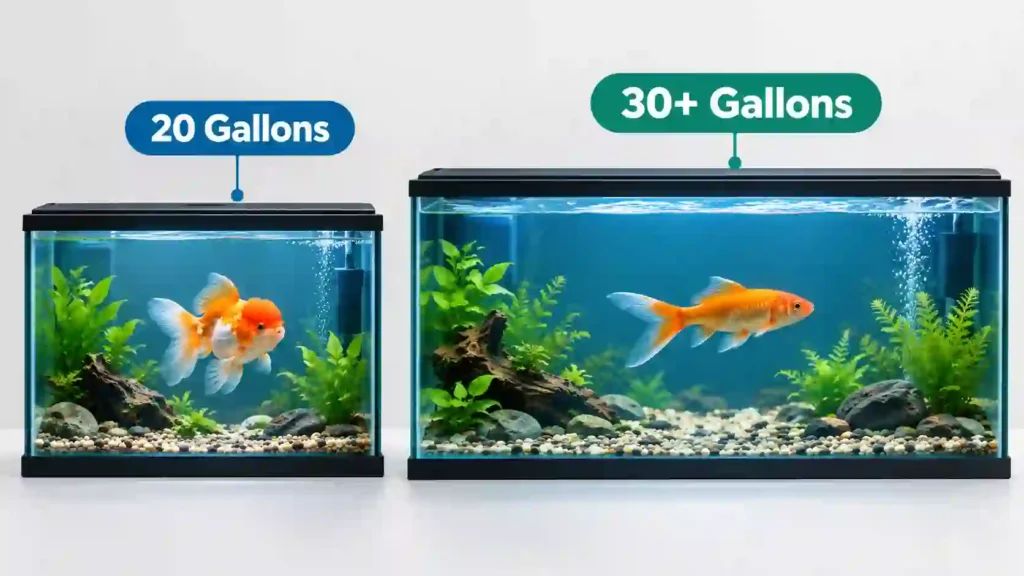
A single fancy goldfish needs a minimum of 20 gallons, and a single common or comet goldfish needs at least 30 gallons, since these breeds grow larger and swim more actively. Add roughly 10 gallons for every additional fancy goldfish, or 10 to 12 gallons for every additional common goldfish.
Tank shape matters just as much as volume. Goldfish do best in a wide, squat tank with plenty of surface area rather than a tall, narrow one, because surface area drives oxygen exchange and supports the biological filtration that keeps waste in check.
Here is a simple starting guide by fish count:
Bigger is almost always better. A larger tank dilutes ammonia and other toxins faster, gives your fish more room to grow to full size, and cuts down on how often you need to do water changes. Buying the largest tank you can reasonably fit and afford from day one avoids the stress and expense of upgrading later, and it gives your goldfish the best chance at a long, healthy life.
For exact gallon by dimension breakdowns, see our full Tank Size & Dimensions guide.
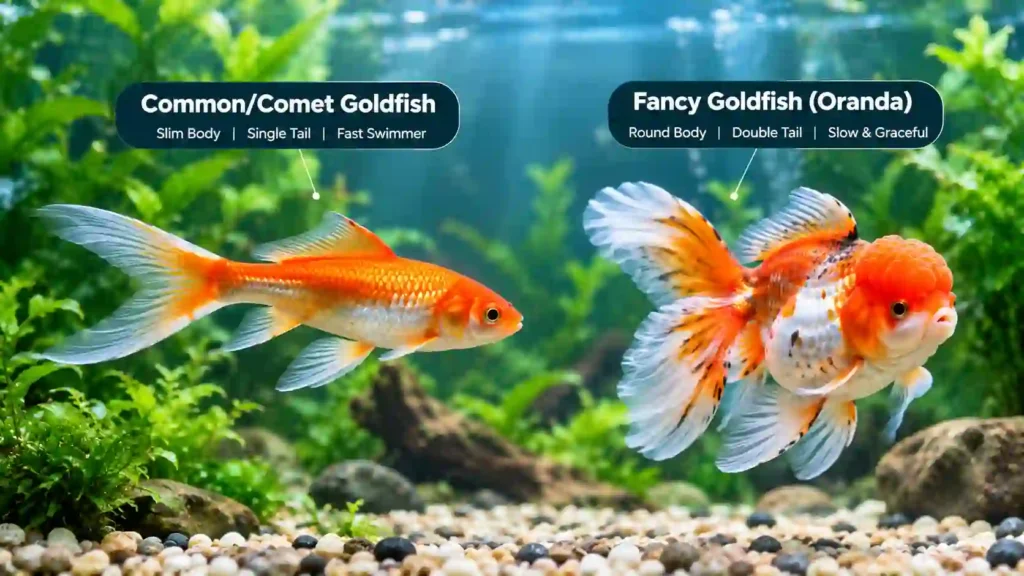
The biggest divide in the goldfish world is body shape, and it changes everything about how you plan your tank. Common goldfish and their close relatives, like comets and shubunkins, have slim, torpedo shaped bodies built for speed. Fancy goldfish, like orandas and ryukins, have rounded bodies and flowing double fins that trade speed for ornamental beauty.
That body shape difference drives tank size directly. Common goldfish can grow past 12 inches and swim energetically, so they need long tanks with open swimming lanes. Fancy goldfish top out closer to 8 inches and swim more slowly, so they do fine in a slightly smaller footprint, though they still need real depth and volume to support their delicate internal organs.
Swimming ability also affects tank mates. Fast, slim bodied common goldfish can easily outcompete slower fancy varieties for food, so mixing the two types in one tank often leaves fancy goldfish underfed and stressed. Most experienced keepers recommend keeping common and fancy goldfish in separate tanks for this reason.
Choosing a breed before buying the tank, rather than the other way around, is the single best way to avoid an expensive upgrade a year or two down the road.
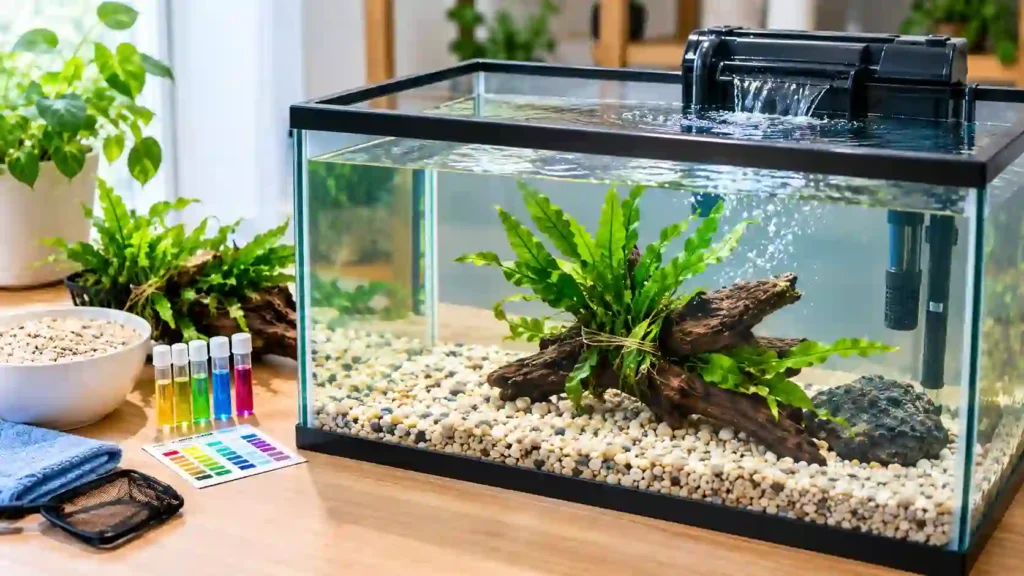
A goldfish tank needs more preparation than most beginners expect, mostly because goldfish produce far more waste than other freshwater fish their size. Getting the setup right from the start prevents the water quality problems that cause most early goldfish deaths.
Choose the right filter. Goldfish need a filter rated for well beyond your tank’s actual volume, since their waste output is unusually high. A good rule of thumb is a filter that turns over 5 to 7 times the tank’s total gallons per hour. Many keepers run two filters at once, both for extra filtration power and so cleaning one never disrupts the whole system.
Cycle the tank before adding fish. New tanks need several weeks to build up the beneficial bacteria that break down ammonia and nitrite into safer nitrate. Adding goldfish to an uncycled tank exposes them to ammonia spikes that can be fatal within days.
Pick goldfish safe substrate and decor. Smooth gravel or sand works best, since goldfish often sift through the substrate while feeding. Avoid sharp rocks or rough decorations that can tear delicate fins, especially on fancy varieties.
Add live or silk plants. Goldfish will eat and uproot soft live plants, so hardy options like anubias or java fern anchored to decor tend to survive better than planted substrate setups.
Skip the heater for most goldfish. Common and fancy goldfish are cold water fish and do well at room temperature between 65 and 72 degrees Fahrenheit. A heater is only necessary if your home runs consistently cold.
Once the tank is cycled and stocked with the right equipment, test the water before adding any fish to confirm ammonia and nitrite both read zero.
Goldfish are omnivores with a big appetite, but overfeeding causes more health problems than underfeeding ever will. A high quality sinking or slow sinking pellet formulated specifically for goldfish is the best staple diet, since it matches their natural bottom feeding behavior and reduces the amount of air they gulp at the surface.
Feed only what your goldfish can finish in about two minutes, once or twice a day. Their digestive tract has no true stomach, so small, frequent meals are easier on their system than one large feeding. Overfeeding is one of the leading causes of swim bladder disease, a condition that leaves goldfish floating sideways or struggling to stay upright.
A balanced goldfish diet includes:
On feeder goldfish: Feeder goldfish are sold cheaply as food for larger predatory fish, not as pets. They are typically bred and raised in crowded, low oxygen conditions with little regard for long term health, which means they often carry disease and rarely reach a normal goldfish lifespan. If you want a pet goldfish, buy from a dedicated aquarium retailer or breeder instead of the feeder tank, since these fish are raised specifically for aquarium life rather than as bulk feed stock.
For a full breakdown of pellets, portions, and feeding schedules, see our Fish Feeding & Food guide.
Yes, goldfish sleep, though it looks different from how most pets rest. Since goldfish have no eyelids, they cannot close their eyes, which makes their resting state easy to miss if you do not know what to look for.
A resting goldfish typically slows down, hovers near the bottom or a quiet corner of the tank, and becomes noticeably less responsive to movement or light. Their fins may droop slightly and their color can appear a bit duller during this time. This usually happens once the tank lights go off and the environment settles into darkness, following a fairly consistent day and night rhythm.
A few signs help distinguish normal rest from illness:
Giving your goldfish a consistent light schedule, ideally 8 to 12 hours of light followed by a dark period, supports this natural rhythm and reduces stress. A stressed or sleep deprived goldfish is more prone to illness, so consistent lighting is a small habit with a real payoff for long term health.
Goldfish lifespan varies widely by breed and, even more, by the quality of care they receive. Common goldfish, the long bodied types like comets and shubunkins, typically live 15 to 30 years, while fancy goldfish like orandas and fantails typically live 10 to 15 years. Some individual fish live even longer than that under ideal conditions.
Tank size plays a direct role in these numbers. Cramped tanks concentrate ammonia and nitrate faster, and that chronic exposure stresses a goldfish’s organs over time. Poor water quality, inadequate nutrition, and cramped spaces can lead to physiological stress that suppresses growth hormone production and causes organ compression, and a fish that appears stunted is actually suffering from chronic stress, spinal deformities, and reduced organ function. In other words, a small tank does not just slow a goldfish’s growth, it actively shortens its life.
At the extreme end, well cared for goldfish can live remarkably long lives. The typical lifespan for goldfish is 20 to 30 years, with an all time record of 41 years, and space and food are the two biggest factors tipping a fish toward that range. A separate record puts the maximum documented lifespan even higher, at 43 years, for a goldfish kept in ideal conditions.
The takeaway is simple: a goldfish is not a short lived starter pet. With adequate tank size, clean water, and proper feeding, most goldfish should comfortably reach a decade or more, and many will live far longer.
Goldfish and koi can share the same water in the right setup, but a standard indoor tank usually is not that setup. Both species come from the same carp family, tolerate similar water temperatures, and eat similar foods, which is why they are often paired in outdoor ponds.
The problem is size. Koi regularly grow to 2 or 3 feet long, dwarfing even the largest goldfish, and that size gap creates real risks. Koi can accidentally injure or outcompete goldfish for food, and a tank sized for goldfish will always be far too small for an adult koi.
When it works
When it does not work
If your setup is an indoor goldfish tank rather than an outdoor pond, the safer choice is to keep koi and goldfish separate. Pairing them works far better as a long term pond project than as a tank combination.
Most goldfish problems trace back to a handful of repeated mistakes, and nearly all of them are easy to avoid once you know what to watch for.
Keeping goldfish in a bowl. Bowls have almost no surface area, no real filtration, and no room for growth. Goldfish kept in bowls consistently live far shorter lives than those in a properly sized tank, regardless of how often the water gets changed.
Overstocking the tank. Adding fish faster than the tank’s gallon capacity supports puts constant strain on the filter and spikes ammonia between water changes. It is tempting to add just one more goldfish, but each addition meaningfully raises the tank’s waste load.
Underpowered filtration. A filter rated for the tank’s exact gallon size is rarely enough for goldfish. Since they produce unusually high waste, filtration needs to run well above standard recommendations, closer to 5 to 7 times the tank volume per hour.
Mixing incompatible tank mates. Fast, slim bodied goldfish like comets will outcompete slower fancy varieties for food, and small tropical fish are often nipped or accidentally injured by boisterous goldfish. Sticking to same type goldfish groupings avoids most compatibility issues.
Skipping the cycling process. Adding fish to a brand new, uncycled tank exposes them to toxic ammonia levels before beneficial bacteria have had a chance to establish. This single mistake causes more early goldfish deaths than almost any other setup error.
Ignoring water testing. Clear water does not mean clean water. Ammonia, nitrite, and nitrate can all reach harmful levels without any visible change in the tank’s appearance.
Avoiding these mistakes from day one does more for your goldfish’s long term health than almost any other single decision you will make as an owner.
Once a goldfish tank is set up and cycled, ongoing maintenance is what keeps water quality stable and fish healthy long term. A consistent routine matters more than any single deep clean.
Weekly tasks
Biweekly to monthly tasks
Ongoing habits
A tank that gets steady, moderate maintenance every week almost always outperforms one that gets a rushed deep clean only when problems appear. Consistency, more than intensity, is what keeps a goldfish tank stable for years.
Choosing the right goldfish tank sets the foundation for everything else, from lifespan to daily health. A properly sized tank, strong filtration, a cycled environment, and a balanced diet together give goldfish the best possible chance to reach their full potential, whether that means a fancy goldfish thriving for 15 years or a comet living well into its 20s.
The mistakes that shorten goldfish lives, small bowls, weak filters, and overstocked tanks, are also the easiest to avoid once you know what to look for. As fishkeeping continues shifting toward larger, better filtered setups in 2026, giving your goldfish tank enough room and consistent care from day one remains the single most reliable way to keep your fish healthy for years to come.
Explore more species profiles and care guides in our Aquarium Fish category.
What is the minimum tank size for one goldfish?
A single fancy goldfish needs at least 20 gallons, while a single common or comet goldfish needs at least 30 gallons. Bigger is always better, since more water volume dilutes waste and supports steadier water quality, giving your goldfish more room to reach its full adult size.
Can goldfish live in a bowl?
No, goldfish should never be kept in a bowl. Bowls lack proper filtration and surface area, which leads to rapid ammonia buildup, stunted growth, and a significantly shortened lifespan. A filtered tank of at least 20 gallons is the minimum appropriate home for a goldfish.
Do goldfish sleep, and how can you tell?
Yes, goldfish sleep, even though they have no eyelids to close. A resting goldfish slows down, hovers near the bottom, and becomes less responsive to light or movement, usually following a consistent day and night rhythm tied to the tank’s lighting schedule.
How long do goldfish live in a home aquarium?
Common goldfish typically live 15 to 30 years, while fancy goldfish typically live 10 to 15 years, when kept in properly sized, well filtered tanks. Poor water quality and cramped tanks are the leading causes of goldfish falling far short of these ranges.
What is the difference between fancy and common goldfish?
Common goldfish have slim, torpedo shaped bodies built for speed and can exceed 12 inches long. Fancy goldfish have rounded bodies and flowing double fins, grow closer to 8 inches, and swim more slowly, which affects both their tank size and compatible tank mates.
Can goldfish and koi live in the same tank?
Goldfish and koi can coexist, but usually only in large outdoor ponds of 1,000 gallons or more. Koi grow to 2 or 3 feet long and quickly outgrow standard indoor tanks, making a shared aquarium impractical for most home goldfish keepers.
What should feeder goldfish never be used for?
Feeder goldfish are bred cheaply as food for predatory fish and are not raised for long term pet health. They are typically kept in crowded, low oxygen conditions and often carry disease, so they should not be purchased as pet goldfish for a home tank.
How often should you clean a goldfish tank?
Change 20 to 30 percent of a goldfish tank’s water weekly, and test ammonia, nitrite, and nitrate on the same schedule. Filter media should be rinsed in removed tank water every two to four weeks to preserve beneficial bacteria while clearing debris.
Why do goldfish need such strong filtration?
Goldfish produce unusually high amounts of waste compared to their size. A filter rated for 5 to 7 times the tank’s total gallons per hour is recommended to keep ammonia and nitrite from building up between regular water changes.
What are the best goldfish breeds for beginners?
Comets and common goldfish are hardy and forgiving for pond setups, while fantails and shubunkins tend to be easier fancy varieties for indoor tanks. Both groups tolerate minor water fluctuations better than more delicate fancy breeds like ranchu or bubble eye goldfish.

Fish Info Guide helps you explore edible, freshwater, saltwater, and aquarium fish – with simple guides on nutrition, care, and species identification for beginners and enthusiasts alike.
Imortant Links
Quick Links
Subscribe Our Newsletter
Get the latest fish care tips, species guides, and nutrition insights delivered straight to your inbox.