

Marlin fish has a reputation as a trophy catch, but few people know whether it belongs on a dinner plate. The short answer: yes, marlin fish is good to eat. It offers a lean, high protein alternative to red meat, along with omega 3 fatty acids that support heart and brain health. This guide breaks down everything you need to know before your next seafood decision, from the different types of marlin and their exact nutrition profiles to the mercury risks that responsible eaters should understand. You will also learn how marlin compares to swordfish and sailfish, the best ways to cook it, and how to buy it fresh. Whether you are curious after seeing it on a restaurant menu or you caught one yourself, this article gives you a complete, evidence based picture of marlin fish as food.
Marlin fish is a large, fast swimming predator that belongs to the family Istiophoridae, commonly known as billfish. It gets its name from its long, spear shaped upper jaw, which resembles a sailor’s marlinspike tool. Marlin live in warm, open ocean waters across the Atlantic, Pacific, and Indian Oceans, and they rank among the largest and most powerful fish in the sea.
There are four widely recognized types of marlin fish: blue marlin, black marlin, striped marlin, and white marlin. Each species differs slightly in size, habitat, and appearance, but all share the same core traits: a streamlined, muscular body, a tall dorsal fin, and a diet built around smaller fish and squid.
Marlin are prized in two very different worlds. Sport fishers chase them for the fight they put up on the line, often practicing catch and release. Home cooks and chefs value marlin for its firm, meaty texture, which holds up well to grilling and searing much like a steak.
In short, marlin fish is both a legendary game fish and a nutritious, edible seafood option, and understanding that dual identity is the first step to appreciating what it offers on your plate.
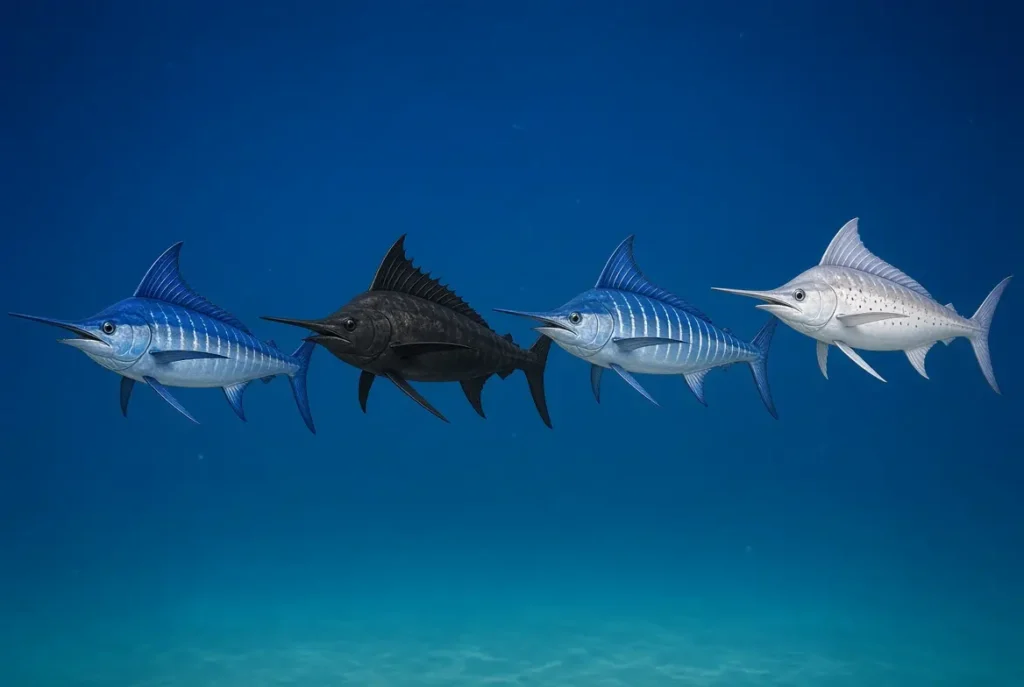
Marlin fish is not a single species. It is a group of four closely related billfish, each with distinct markings and habits that make identification straightforward once you know what to look for.
Blue Marlin
Blue marlin (Makaira nigricans) is the largest and most widely recognized species. It has a cobalt blue back that fades to silvery white underneath, with faint pale stripes that disappear soon after death. Blue marlin can grow beyond 12 feet and weigh over 1,000 pounds, with females significantly larger than males. They roam tropical and subtropical waters across the Atlantic, Pacific, and Indian Oceans, favoring warm surface layers.
Black Marlin
Black marlin (Istiompax indica) lives mainly in the Indo Pacific region and is known for rigid pectoral fins that cannot fold flat against the body, unlike other marlin. It has a shorter bill and body than the blue marlin but is often just as heavy, with some individuals topping 1,500 pounds.
Striped Marlin
Striped marlin (Kajikia audax) is smaller and leaner, typically found in cooler Pacific and Indian Ocean waters. It is famous for its visible pale blue stripes, which remain even after death, and for being one of the fastest fish in the ocean.
White Marlin
White marlin (Kajikia albida) is the smallest of the four, rarely exceeding 220 pounds. It lives in the Atlantic, including the Gulf of Mexico and the Caribbean, and is easy to identify by its rounded dorsal fin and spotted body.
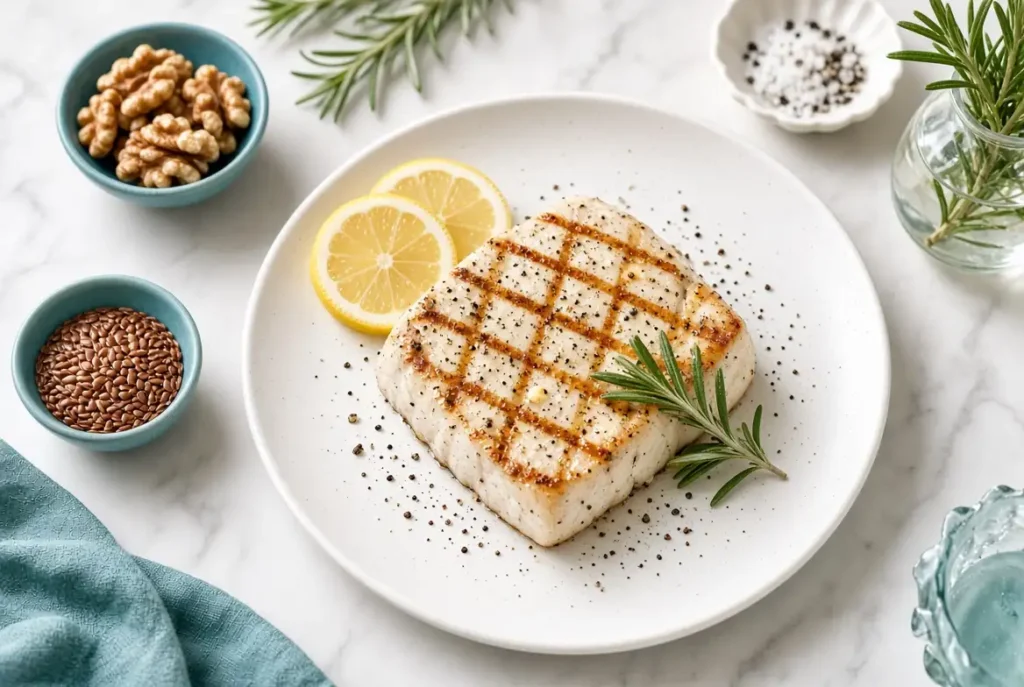
Marlin fish is lean, protein dense, and low in unhealthy fats, which is part of why it has become popular among health conscious seafood eaters. According to seafood profile data published by NOAA Fisheries, a standard 113 gram (roughly 4 ounce) cooked serving of blue marlin provides the following:
Nutrient | Amount per 113g serving |
Calories | 120 |
Protein | 29 g |
Total Fat | 0.5 g |
Saturated Fat | 0 g |
Cholesterol | 35 mg |
Sodium | 45 mg |
Selenium | 110 mcg |
Carbohydrates | 0 g |
What stands out immediately is the protein to calorie ratio. At 29 grams of protein for only 120 calories, marlin fish delivers more usable protein per calorie than most cuts of beef or chicken thigh. It is also nearly fat free, with less than half a gram of total fat and zero saturated fat per serving, making it a lean alternative to red meat.
Marlin is additionally a strong source of selenium, an essential mineral involved in immune function and thyroid health, along with meaningful amounts of vitamin B12, vitamin B6, and phosphorus. This nutrient profile is a major reason marlin fish is often compared favorably to swordfish and tuna in terms of health value.
Beyond its impressive nutrition label, marlin fish delivers several concrete health benefits worth understanding before you add it to your diet.
Supports muscle growth and repair. With 29 grams of high quality, complete protein per serving, marlin fish provides all nine essential amino acids the body needs to build and repair muscle tissue. This makes it a solid option for athletes, older adults managing muscle loss, and anyone recovering from illness or surgery.
Promotes heart health. Marlin contains omega 3 fatty acids, which have been widely studied for their role in lowering triglycerides, reducing blood pressure, and slowing the buildup of arterial plaque. Combined with its near zero saturated fat content, marlin fish fits well into heart healthy eating patterns.
Boosts brain function. The omega 3s in marlin, particularly DHA, are a major structural component of brain cell membranes. Regular intake of DHA rich seafood has been linked in research to better memory and a lower risk of age related cognitive decline.
Strengthens immune function. A single serving of marlin fish provides well over 100 percent of the daily selenium requirement. Selenium plays a key role in immune response and also acts as an antioxidant, helping protect cells from damage.
Supports bone and nerve health. Marlin is a reliable source of vitamin B12 and phosphorus, both of which support nerve signaling, red blood cell production, and bone mineralization.
Marlin fish is safe to eat for most healthy adults when consumed in moderation, but it does carry two risks worth understanding: mercury and, less commonly, ciguatera.
Mercury content. Marlin is a large, long lived predatory fish, and predatory species accumulate more mercury in their tissue over time than smaller fish lower on the food chain. Because of this, marlin is generally grouped with swordfish, shark, and king mackerel as a higher mercury seafood choice rather than a “best choice” like salmon or shrimp.
The FDA and EPA jointly publish fish consumption advisories that guide safe intake levels for different groups. As a general pattern across these guidelines:
Ciguatera risk. In certain tropical and subtropical regions, marlin can carry ciguatoxin, a naturally occurring toxin produced by marine algae that accumulates up the food chain. Ciguatera poisoning is rare but can cause gastrointestinal and neurological symptoms. Buying marlin from reputable, regulated seafood suppliers significantly reduces this risk, since commercial sourcing is monitored for known ciguatera hotspots.
Bottom line: occasional, well sourced marlin fish is a healthy addition to most adult diets, but it is not a fish to eat several times a week, and it should be avoided by pregnant women, nursing mothers, and young children.
Marlin and swordfish are often confused because both are large, spear billed predators with firm, steak like meat, but they belong to different families and have several clear distinctions.
Feature | Marlin | Swordfish |
Scientific family | Istiophoridae | Xiphiidae |
Bill shape | Round, spear like bill | Flat, sword like bill |
Dorsal fin | Tall, sail like first dorsal fin | Small, sickle shaped dorsal fin |
Body color | Blue, black, or striped patterns | Uniform grayish brown to purple |
Scales | Present, though small | Absent in adults |
Meat texture | Firm, meaty, similar to steak | Very firm, denser, slightly milder |
Typical size | Up to 1,800 pounds (blue and black marlin) | Up to 1,400 pounds |
Commercial availability | Limited, often restricted by law | Widely sold in restaurants and markets |
The most reliable way to tell them apart visually is the bill. Marlin have a rounded, spear shaped bill, while swordfish have a flat, blade like bill that looks exactly like its name suggests. Swordfish also lack scales as adults, while marlin retain small, tough scales throughout their life.
From a culinary standpoint, both fish are comparable, offering dense, low fat, high protein meat that works well grilled or seared. Nutritionally they are close, though swordfish tends to carry slightly higher mercury levels on average, making moderation important for both.
One practical difference for U.S. consumers: swordfish is commonly and legally sold in restaurants and grocery stores, while marlin sale is restricted or banned in parts of the United States under billfish conservation regulations, which is why marlin is far less commonly found on menus than swordfish.
Marlin and sailfish are close relatives within the billfish family, which explains why they are frequently mixed up, but a few clear features separate them.
Feature | Marlin | Sailfish |
Scientific family | Istiophoridae | Istiophoridae |
Dorsal fin | Tall but narrower, does not fold flat | Extremely tall, sail like fin that folds into a groove |
Body shape | Thicker, more cylindrical | Slimmer, more streamlined |
Typical size | Up to 1,800 pounds | Rarely over 220 pounds |
Speed | Fast, but generally slower than sailfish | One of the fastest fish in the ocean |
Color | Blue, black, or striped patterns | Blue gray with light vertical bars |
The easiest way to distinguish the two is the dorsal fin. Sailfish have a dramatically oversized, sail like dorsal fin that can be taller than the body itself, which they raise and lower like a flag when hunting or displaying. Marlin have a tall first dorsal fin as well, but it is proportionally smaller and does not have the same sail like fan shape.
Size is another quick indicator. Even the smallest marlin species, the white marlin, typically outweighs a sailfish, and the largest marlin species can weigh eight times more than a sailfish.
From a food perspective, sailfish is edible but even less commonly consumed than marlin, and it is often released by anglers due to conservation concerns and its lower meat yield relative to its size. Marlin remains the more commercially relevant of the two when it comes to seafood markets, particularly in Hawaii and parts of the Pacific.
Marlin fish has a mild to moderately rich flavor with a firm, meaty texture that is frequently compared to a lean beef steak more than to a typical flaky white fish. This steak like quality is exactly why marlin is usually cut into thick fillets or steaks rather than served whole.
The taste profile varies slightly by species and by where the fish was caught. Blue marlin tends to have a richer, more pronounced flavor, while striped marlin and white marlin are generally milder and slightly more delicate. Black marlin sits somewhere in between, with dense flesh and a moderately bold taste.
Texturally, marlin holds together well under high heat, which makes it forgiving for grilling, searing, and baking. Unlike delicate white fish that flakes apart easily, marlin steaks can be handled much like a beef or tuna steak, including being served rare to medium in some preparations when the fish is sushi grade and properly handled.
Marlin is often described as tasting similar to swordfish and yellowfin tuna, sitting in the same category of firm, meaty, mildly oceanic tasting seafood. This makes it a good entry point for people who enjoy steak but want to eat more seafood, since the eating experience feels familiar rather than overtly “fishy.”
One quality indicator worth knowing: fresh marlin should have a clean, mild ocean smell rather than a strong fishy odor. A pronounced fishy smell usually signals the fish is past its prime.
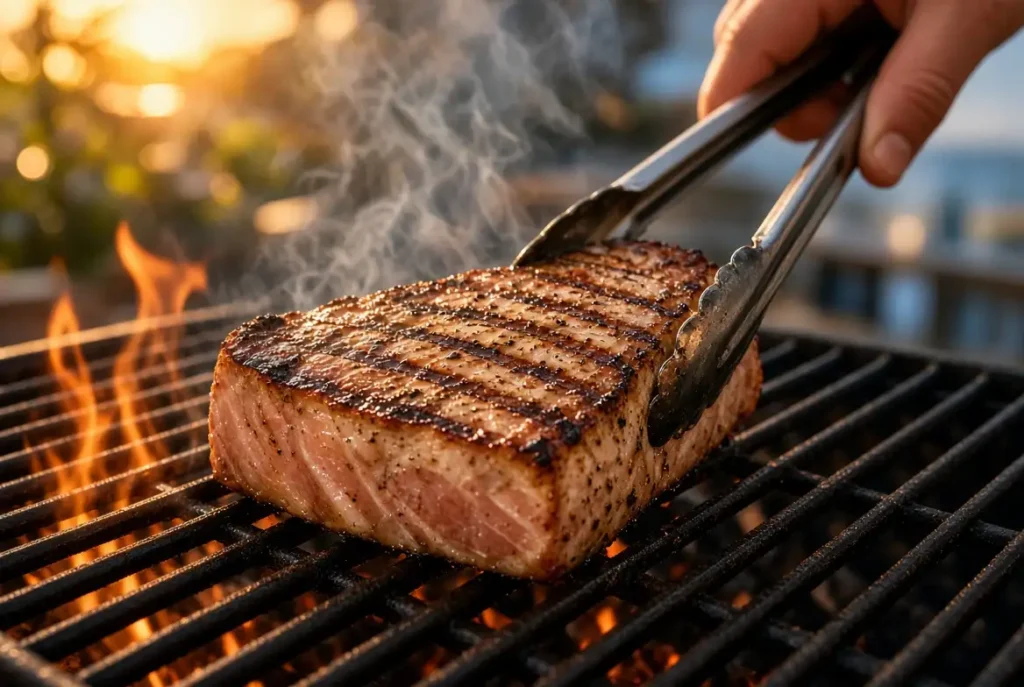
Marlin fish is versatile in the kitchen because its firm, steak like texture holds up to nearly every high heat cooking method without falling apart.
Grilling. Grilling is the most popular way to prepare marlin. Brush steaks with olive oil, season simply with salt, pepper, and citrus, and grill over medium high heat for about 4 to 6 minutes per side depending on thickness. Avoid overcooking, since marlin can dry out quickly once it passes medium doneness.
Searing. A hot pan sear works well for thinner cuts. Sear 2 to 3 minutes per side in a very hot skillet to develop a crust while keeping the center moist. This method pairs well with bold marinades, since marlin absorbs flavor easily.
Baking. For a lower effort method, wrap marlin steaks in foil with herbs, garlic, and lemon, then bake at 350°F (180°C) for 15 to 20 minutes. This traps moisture and works well for milder tasting types like white or striped marlin.
Smoked marlin. Smoking is a traditional preparation, especially in Caribbean and Pacific coastal cuisines. Marlin is typically brined briefly, then cold or hot smoked over wood chips for several hours, producing a firm, savory result often served as an appetizer, flaked into dips, or added to salads. Smoked marlin has a denser, more concentrated flavor than fresh preparations and stores well refrigerated for several days.
Marlin fish is not as widely available as salmon or tuna, but it can be found through specialty fishmongers, seafood markets in coastal regions, and occasionally online seafood retailers. Here is what to look for and how to keep it fresh once you bring it home.
What to look for when buying:
Storage guidelines:
Because U.S. commercial sale of marlin is restricted in many states under billfish conservation law, expect limited availability outside of Hawaii, the Pacific Islands, and specialty importers, and expect a higher price point compared to more common fish like tuna or salmon.
Marlin fish sits at an interesting intersection of conservation success and ongoing concern, and the picture differs by species and region.
Pacific blue marlin. According to NOAA Fisheries’ most recent stock assessment, Pacific blue marlin is not currently overfished and is not subject to overfishing, making U.S. wild caught Pacific blue marlin a relatively sustainable choice. The fishery is managed jointly by NOAA, the Western Pacific Fishery Management Council, and international bodies including the Western and Central Pacific Fisheries Commission, with measures such as limited vessel permits, mandatory logbooks, and observer requirements on longline vessels.
Atlantic blue marlin. The outlook is less favorable in the Atlantic. Atlantic blue marlin has faced intense fishing pressure from longline fisheries, and international conservation bodies, including the IUCN, have expressed concern about population declines, particularly around known spawning grounds. This is part of why regulations require any billfish caught within 200 nautical miles of the U.S. coastline to be released rather than kept.
Bycatch and habitat impact. Most commercial marlin catch happens incidentally, as bycatch in longline fisheries targeting tuna and swordfish, rather than through fisheries that target marlin directly. The fishing gear involved rarely contacts the ocean floor, so direct habitat damage is minimal, though bycatch mortality remains a conservation focus.
What this means for consumers. If sustainability matters to your seafood choices, look specifically for U.S. wild caught Pacific blue marlin, which carries a stronger sustainability record than marlin sourced from less regulated international fisheries. Many conservation groups also encourage supporting catch and release practices in recreational fishing to protect breeding age fish.
Marlin fish sits at an interesting intersection of conservation success and ongoing concern, and the picture differs by species and region.
Pacific blue marlin. According to NOAA Fisheries’ most recent stock assessment, Pacific blue marlin is not currently overfished and is not subject to overfishing, making U.S. wild caught Pacific blue marlin a relatively sustainable choice. The fishery is managed jointly by NOAA, the Western Pacific Fishery Management Council, and international bodies including the Western and Central Pacific Fisheries Commission, with measures such as limited vessel permits, mandatory logbooks, and observer requirements on longline vessels.
Atlantic blue marlin. The outlook is less favorable in the Atlantic. Atlantic blue marlin has faced intense fishing pressure from longline fisheries, and international conservation bodies, including the IUCN, have expressed concern about population declines, particularly around known spawning grounds. This is part of why regulations require any billfish caught within 200 nautical miles of the U.S. coastline to be released rather than kept.
Bycatch and habitat impact. Most commercial marlin catch happens incidentally, as bycatch in longline fisheries targeting tuna and swordfish, rather than through fisheries that target marlin directly. The fishing gear involved rarely contacts the ocean floor, so direct habitat damage is minimal, though bycatch mortality remains a conservation focus.
What this means for consumers. If sustainability matters to your seafood choices, look specifically for U.S. wild caught Pacific blue marlin, which carries a stronger sustainability record than marlin sourced from less regulated international fisheries. Many conservation groups also encourage supporting catch and release practices in recreational fishing to protect breeding age fish.
Marlin fish earns its place as both a legendary game fish and a genuinely healthy food choice. Across its four main types, blue, black, striped, and white, marlin delivers lean, high quality protein, heart supporting omega 3s, and standout levels of selenium and vitamin B12, all backed by real nutrition data rather than guesswork. The main caveat is mercury, which makes moderation essential and rules marlin out entirely for pregnant women and young children. Whether you are comparing it to swordfish and sailfish, choosing how to cook it, or checking its sustainability status before buying, this guide gives you the full picture needed to make an informed decision. As seafood shoppers increasingly look for transparent, well sourced options in 2026, understanding exactly what you are eating, and where it came from, matters more than ever, and marlin fish, chosen wisely, fits that standard.
Is marlin fish good to eat?
Yes, marlin fish is good to eat. It is lean, high in protein, and rich in omega 3 fatty acids, selenium, and vitamin B12. Its firm, steak like texture makes it popular grilled or seared. However, due to higher mercury levels, it should be eaten in moderation rather than as a regular staple.
What does marlin fish taste like?
Marlin fish has a mild to moderately rich flavor with a firm, meaty texture similar to a lean beef steak or swordfish. Blue marlin tends to taste richer, while striped and white marlin are milder. It holds together well under grilling, searing, and baking.
Is marlin fish high in mercury?
Yes, marlin is classified as a higher mercury fish because it is a large, long lived predator. The FDA and EPA generally advise limiting marlin to about one serving per month for healthy adults, and avoiding it entirely during pregnancy, breastfeeding, or early childhood.
Can pregnant women eat marlin fish?
No, pregnant women, women who may become pregnant, and breastfeeding mothers are generally advised to avoid marlin fish entirely due to its mercury content, which can affect fetal and infant neurological development. Lower mercury fish like salmon or shrimp are safer alternatives during this time.
What is the difference between marlin and swordfish?
Marlin has a round, spear shaped bill and small scales, while swordfish has a flat, blade like bill and no scales as adults. Marlin belongs to the family Istiophoridae, while swordfish belongs to Xiphiidae. Both have firm, steak like meat, though swordfish is more commonly sold commercially.
What is the difference between marlin and sailfish?
Sailfish have a dramatically oversized, sail like dorsal fin and are much smaller, rarely exceeding 220 pounds, while marlin have a smaller dorsal fin and can weigh over 1,000 pounds. Both belong to the billfish family, but marlin is more commonly consumed as food.
How many types of marlin fish are there?
There are four widely recognized types of marlin fish: blue marlin, black marlin, striped marlin, and white marlin. Each differs in size, coloration, and habitat, with blue and black marlin being the largest and striped and white marlin being comparatively smaller.
Is marlin fish healthy?
Yes, marlin fish is healthy in moderation. A typical serving provides about 29 grams of protein, minimal fat, and strong amounts of selenium, vitamin B12, and omega 3 fatty acids, supporting heart, brain, and immune health, provided intake stays within mercury safety guidelines.
How do you cook marlin fish?
Marlin fish can be grilled, seared, baked, or smoked. Its firm texture holds up well to high heat, making it ideal for steak style preparations. Brush with oil, season simply, and avoid overcooking, since marlin can dry out quickly once past medium doneness.
Is marlin fish sustainable or endangered?
It depends on the population. U.S. wild caught Pacific blue marlin is not currently overfished, according to NOAA. Atlantic blue marlin faces greater conservation concern due to fishing pressure. Choosing U.S. sourced, regulated marlin supports more sustainable seafood practices.
Marlin fish earns its place as both a legendary game fish and a genuinely healthy food choice. Across its four main types, blue, black, striped, and white, marlin delivers lean, high quality protein, heart supporting omega 3s, and standout levels of selenium and vitamin B12, all backed by real nutrition data rather than guesswork. The main caveat is mercury, which makes moderation essential and rules marlin out entirely for pregnant women and young children. Whether you are comparing it to swordfish and sailfish, choosing how to cook it, or checking its sustainability status before buying, this guide gives you the full picture needed to make an informed decision. As seafood shoppers increasingly look for transparent, well sourced options in 2026, understanding exactly what you are eating, and where it came from, matters more than ever, and marlin fish, chosen wisely, fits that standard.

Fish Info Guide helps you explore edible, freshwater, saltwater, and aquarium fish – with simple guides on nutrition, care, and species identification for beginners and enthusiasts alike.
Imortant Links
Quick Links
Subscribe Our Newsletter
Get the latest fish care tips, species guides, and nutrition insights delivered straight to your inbox.