

Bringing home a few mollies fish is easy. Keeping them healthy for years is where most beginners struggle. Mollies fish are among the most popular freshwater aquarium fish in the world, known for their bold colors, peaceful nature, and easy livebearing reproduction. They belong to the Poecilia genus and originate from the freshwater and brackish habitats of Central America and the southern United States.
This guide covers everything you need to know: the different types of mollies fish, correct tank setup and water temperature, what to feed them, whether they actually need salt in their water, how to tell males from females, and what to expect when they breed. Whether you are picking your first molly or troubleshooting a health issue, this article gives you the complete, practical answer.
In short: mollies fish are hardy, adaptable, social fish that thrive in a properly cycled 20 gallon or larger tank with stable water parameters, a balanced omnivorous diet, and compatible tank mates.
Mollies fish are small to medium sized freshwater livebearers belonging to the genus Poecilia, part of the larger Poeciliidae family that also includes guppies. The name “molly” covers several closely related species, most notably Poecilia sphenops (short fin molly), Poecilia latipinna (sailfin molly), and Poecilia velifera (Yucatan molly). Decades of selective breeding have produced the colorful hybrid varieties sold in pet stores today.
In the wild, mollies are native to freshwater rivers, streams, and coastal brackish lagoons stretching from the southern United States through Mexico and into Central America. This natural flexibility explains why mollies fish tolerate a wide range of water conditions better than most tropical fish.
Quick facts about mollies fish:
What sets mollies fish apart from many other aquarium species is their combination of hardiness and visual variety. A single tank of mollies can display a dozen different color patterns while all sharing the same basic care needs, which is a big part of why they remain a staple in the aquarium hobby.
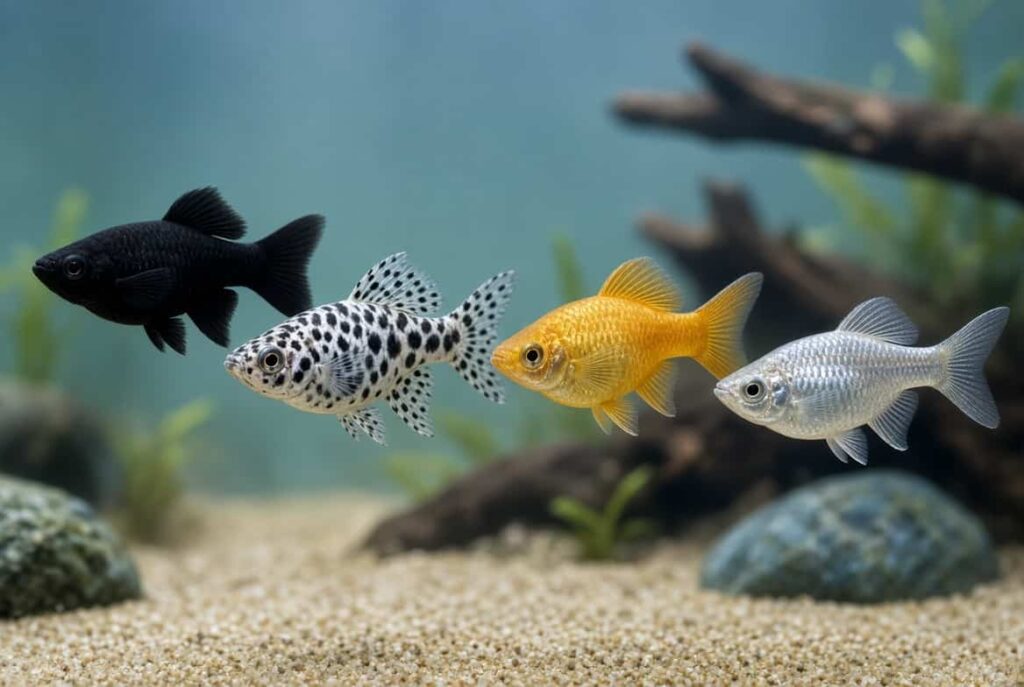
There are over 20 recognized molly species in the wild, but selective breeding has produced far more color and fin variations for the aquarium trade. Below are the most common types of mollies fish you will find at local fish stores and online retailers.
Black Mollies
Black mollies are the most recognizable type, prized for their solid, sleek black coloration from head to tail. They are hardy, peaceful, and one of the easiest mollies for beginners to keep successfully in a community tank.
Dalmatian Mollies
Dalmatian mollies have a white or silvery base covered in irregular black spots, resembling the dog breed they are named after. Their playful pattern makes them a popular centerpiece fish in mixed species aquariums.
Sailfin Mollies
Sailfin mollies, or Poecilia latipinna, are known for their large, fan like dorsal fin. Males display this fin during courtship, and the species grows larger than most other mollies, often reaching 4 to 5 inches.
Lyretail Mollies
Lyretail mollies have an extended, lyre shaped caudal fin that flows elegantly as they swim. They come in gold, black, silver, and dalmatian color combinations and need stable water to keep their long fins healthy.
Balloon Mollies
Balloon mollies have a rounded, compact belly caused by selective breeding for a shortened spine. While charming, this trait can shorten their lifespan and cause swimming or buoyancy difficulties.
Gold Dust Mollies
Gold dust mollies feature a golden yellow body speckled with fine black flecks. They are active swimmers that add a warm splash of color to planted tanks.
Marble Mollies
Marble mollies display a mottled mix of black, white, and gray patches, giving each fish a unique pattern. No two marble mollies look exactly alike.
Panda and Golden Panda Mollies
Panda mollies combine black and white or black and gold patches concentrated around the head and fins, resembling their namesake animal. They are a favorite among collectors seeking distinctive patterns.
Silver Mollies
Silver mollies have a shimmering, metallic silver body that reflects light beautifully under aquarium lighting. They are social and do best in small groups.
Yucatan Mollies
Yucatan mollies, or Poecilia velifera, are a large sailfin type native to Mexico’s Yucatan Peninsula. They need more swimming space and slightly harder water than smaller molly types.
Swordtail Mollies
Sometimes confused with true swordtails, swordtail mollies simply refer to molly hybrids with an elongated lower caudal fin extension, giving a similar sword like appearance without being a separate species.
How big do mollies get? Most mollies fish reach an adult size of 3 to 5 inches (7.5 to 12.5 cm), depending on the species and gender. Sailfin and Yucatan mollies grow largest, sometimes reaching 5 inches, while short fin varieties like black mollies typically stay closer to 3 to 4 inches.
Females are almost always larger and rounder bodied than males, especially once they reach breeding age. Males stay slimmer and are easy to identify by their modified anal fin, which is covered in more detail later in this guide.
Mollies fish lifespan: With proper care, mollies typically live 3 to 5 years in a home aquarium. Several factors directly affect how long a molly lives:
In terms of appearance, mollies fish grow gradually over their first 4 to 6 months, reaching full size and mature coloration by around 8 months to a year. Juvenile mollies often start out with duller, washed out colors that intensify as the fish matures, so a young molly rarely reflects its true adult coloration right away.
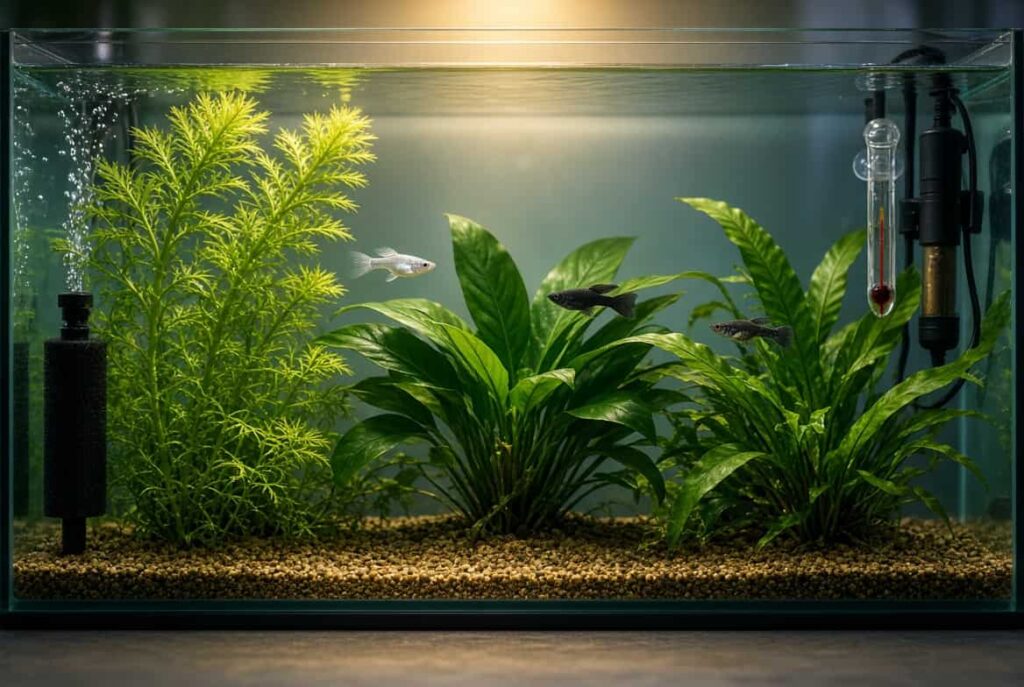
For feeding other species too, see what do fish eat.
| Tank Mate | Why It Works |
| Platies and swordtails | Same family, similar temperament and water needs |
| Corydoras catfish | Peaceful bottom dwellers, rarely interact with mollies |
| Guppies | Similar size, activity level, and care requirements |
| Tetras (neon, black neon, glowlight) | Fast swimmers, peaceful, fill the mid water column |
| Danios and barbs | Active and hardy, match molly energy levels |
| Freshwater snails and shrimp | Help with tank cleanup, low conflict risk |
| Feature | Mollies | Platies | Guppies |
| Adult size | 3 to 5 inches | 2 to 3 inches | 1.5 to 2.4 inches |
| Lifespan | 3 to 5 years | 3 to 5 years | 2 to 3 years |
| Water preference | Alkaline, tolerates brackish | Slightly alkaline, freshwater | Neutral to slightly alkaline |
| Temperament | Peaceful, active | Very peaceful, calm | Peaceful, very active |
| Breeding rate | High | High | Very high |
| Fin variety | Sailfin, lyretail, balloon | Rounded, simple fins | Elaborate tails, most varieties |
| Best for | Intermediate beginners | True beginners | Colorful community tanks |
| Type | Typical Price Range |
| Common black or silver mollies | $3 to $6 each |
| Dalmatian or gold dust mollies | $5 to $8 each |
| Sailfin or Yucatan mollies | $7 to $12 each |
| Lyretail or balloon mollies | $6 to $10 each |
| Rare panda or marble mollies | $10 to $15 each |
For more profiles like this, see our aquarium fish types and care guide.

Fish Info Guide helps you explore edible, freshwater, saltwater, and aquarium fish – with simple guides on nutrition, care, and species identification for beginners and enthusiasts alike.
Important Links
Quick Links
Subscribe Our Newsletter
Get the latest fish care tips, species guides, and nutrition insights delivered straight to your inbox.
Copyright © 2026 Fish Info Guide, All rights reserved.