

Bringing home a new fish only to watch it struggle, or worse, not survive the first month, is a frustrating way to start the hobby. If you want a fish that forgives beginner mistakes while still looking spectacular in the tank, the paradise fish deserves a serious look. This hardy, strikingly colored freshwater species has been kept by aquarists for over 150 years, and for good reason: it tolerates a wide range of temperatures, eats almost anything, and shows off vivid blue and orange stripes that rival far pricier fish.
In short, a paradise fish is a low maintenance, semi aggressive labyrinth fish that thrives in a planted tank of 20 gallons or more, making it one of the most rewarding choices for new and experienced keepers alike. This guide covers everything from tank setup and diet to tank mates and breeding, so you can decide if this fish is right for your home aquarium.
The paradise fish, scientifically named Macropodus opercularis, is a freshwater labyrinth fish native to the streams, ponds, and rice paddies of East Asia, including China, Korea, Taiwan, and Vietnam. It belongs to the Osphronemidae family, the same broad group that includes the betta fish and other gouramis known for their labyrinth organ, a specialized structure that lets them gulp air from the surface and survive in low oxygen water.
This species holds a unique place in aquarium history. Paradise fish were among the very first ornamental fish ever kept by hobbyists outside their native range, arriving in France in 1869, decades before most tropical fish became widely available in the West. That long history in captivity is part of why they adapt so easily to home aquarium conditions today.
A few quick facts worth knowing before you buy:
Because of this combination of hardiness and history, the paradise fish is often the fish that introduces people to the labyrinth fish family altogether.
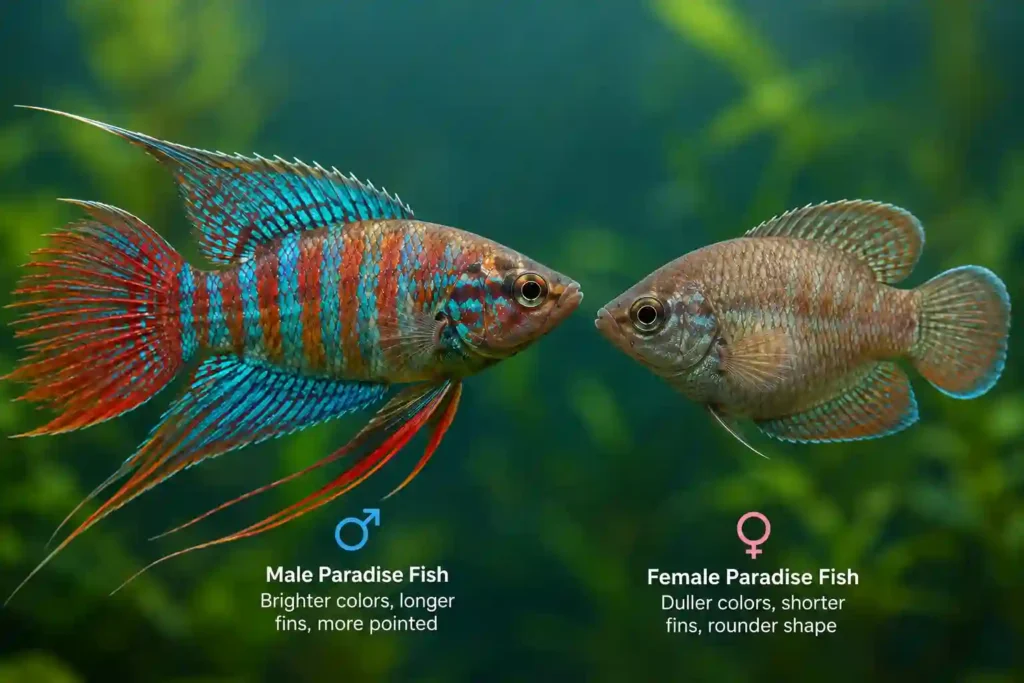
Few beginner friendly fish can match the paradise fish for sheer visual impact. Its body carries alternating stripes of turquoise blue, deep red, and orange that run from head to tail, with the intensity of color often increasing as water temperature rises or during breeding season. Long, flowing fins trail behind the body, giving the fish an elegant, almost ornamental silhouette that easily earns it a spot among the prettiest fish in the freshwater hobby.
In terms of size, paradise fish typically reach about 3 to 4 inches (9 to 10 cm) in a home aquarium, making them a manageable mid sized fish that doesn’t demand an oversized tank on size alone. Growth usually slows around the one year mark, though genetics, diet, and water quality all play a role in final size.
This striking appearance is part of why the species has remained popular for well over a century, even as flashier tropical fish have come and gone in the hobby.
If you’re searching for the easiest fish to take care of, the paradise fish belongs near the top of that list, and for reasons that go beyond simple luck. This species tolerates a wider range of temperatures and water conditions than almost any other tropical aquarium fish, which forgives the small mistakes most beginners make in their first few months.
Direct answer: Paradise fish are considered easy to care for because they accept temperatures between 61°F and 82°F, adapt to a pH range of 6.0 to 8.0, eat nearly any food offered, and can even survive briefly without a heater in a temperate home.
The one area where paradise fish are not the easiest choice is temperament. Their semi aggressive nature means tank mate selection and male to male housing need more thought than, say, a peaceful community fish like a neon tetra. Once that single factor is managed, though, day to day care is genuinely low maintenance.
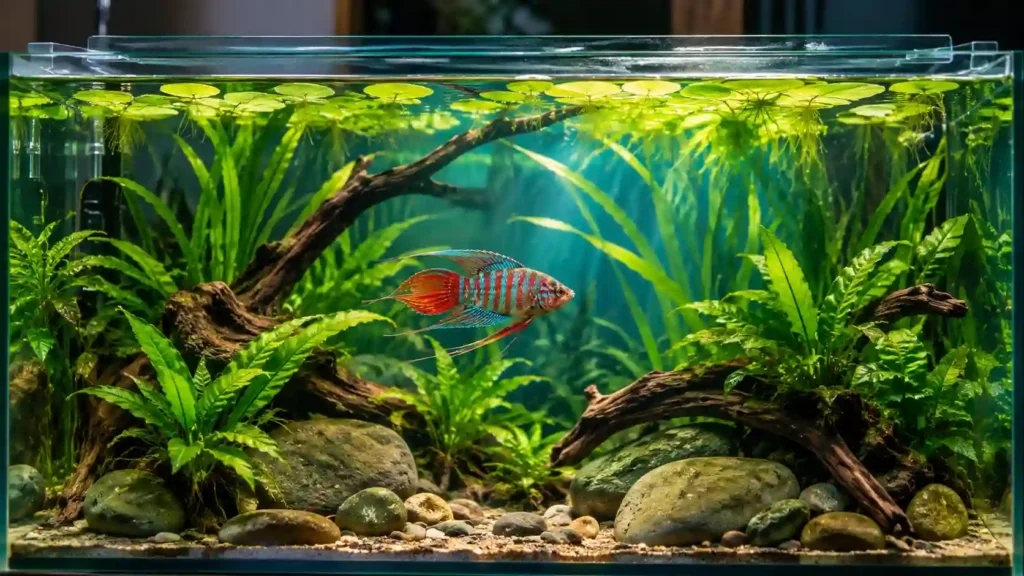
A well planned tank goes a long way toward keeping a paradise fish calm, healthy, and vibrantly colored. The good news is that this species doesn’t require anything exotic, just a setup that mimics the slow moving, heavily vegetated waters it comes from in the wild.
Direct answer: A single paradise fish needs a minimum tank size of 20 gallons, ideally planted heavily with broad leaved or floating plants, kept at a water depth around 12 inches since the species is not a strong vertical swimmer. For help matching tank dimensions to this species, see our Tank Size & Dimensions guide (link to be added once the page is live).
If you’re brainstorming fish tank ideas around this species, consider these approaches:
A tight fitting lid is essential no matter which theme you choose, since labyrinth fish are known jumpers when startled or stressed.
Paradise fish tolerate a wide range, but they do best within the settings below. For full guidance on filters, heaters, and cycling a new tank, see our Aquarium Equipment & Water Setup guide (link to be added once the page is live).
Paradise fish are true omnivores, and their willingness to eat almost anything offered is another reason they land on so many easiest fish to take care of lists. In the wild, they feed on insect larvae, small crustaceans, worms, and bits of plant matter found in shallow, slow moving water, and that varied appetite carries over easily into aquarium life.
Direct answer: Paradise fish should be fed a varied diet of high quality flakes or pellets as a staple, supplemented two to three times per week with protein rich foods like brine shrimp, bloodworms, or daphnia to support color and breeding readiness.
Feed only what the fish can finish within one to two minutes, once or twice a day. Overfeeding is one of the most common beginner mistakes with this species, since paradise fish rarely refuse food even when they’re already full, which can lead to poor water quality and bloating over time.
If you’re hoping to bring out the fish’s most vibrant coloration ahead of breeding, leaning more heavily on protein rich foods in the weeks beforehand tends to make a noticeable difference.
Temperament is the one area where paradise fish require real planning, and skipping this step is the most common reason new keepers run into trouble. Males are territorial and will fight other males, often relentlessly, since paradise fish lack the ability to simply retreat to a low oxygen zone the way many other species can when avoiding conflict.
Direct answer: Paradise fish are semi aggressive and should never be kept as two males in the same tank; they do best as a single male with one or two females, or housed with fast, sturdy fish that can hold their own and avoid competing for territory.
Fish to avoid pairing with paradise fish:
Better tank mate options include:
Crayfish in an aquarium can work with paradise fish, but caution is needed both ways. Crayfish may pinch at fins during the night, while a paradise fish may nip at a molting, soft shelled crayfish. Success depends heavily on tank size, hiding spots, and close observation, so this pairing suits experienced keepers more than beginners.
The mandarin goby is sometimes searched alongside freshwater fish, but it’s actually a marine species requiring saltwater and isn’t compatible with paradise fish at all. It’s worth knowing the distinction if you’re comparing colorful fish across different types of aquariums, since the two are often confused by newcomers browsing for their next colorful addition.
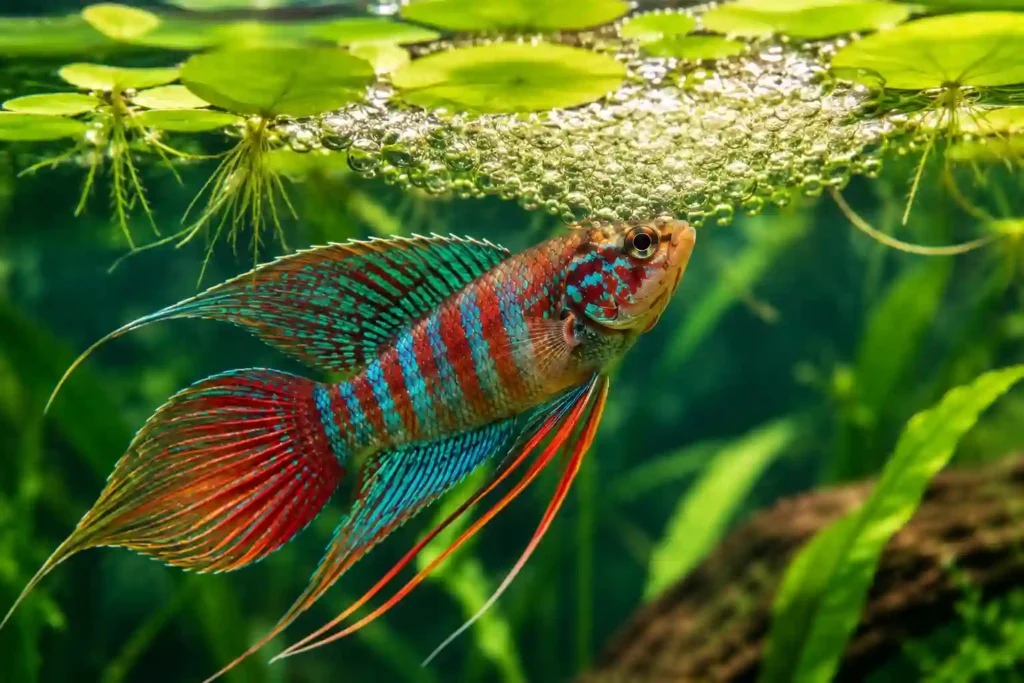
Breeding paradise fish is one of the more rewarding aspects of keeping this species, largely because the process is visible and dramatic compared to many other freshwater fish. Males build bubble nests at the water’s surface using saliva coated air bubbles, then court a female beneath the nest until she releases eggs to be fertilized and tucked into the bubbles for protection.
Direct answer: To breed paradise fish, condition a pair with protein rich foods, provide floating plants for bubble nest support, and separate the female immediately after spawning since the male will guard the nest and may attack her if she lingers nearby.
Fry care requires patience. Several weeks after hatching, young paradise fish begin developing their labyrinth organ, a fragile stage where mortality can reach as high as 80 percent even under ideal conditions. Stable temperature, gentle aeration, and pristine water quality during this window make the biggest difference in how many fry survive to adulthood.
Paradise fish are hardy compared to many tropical species, but they’re not immune to the common ailments that affect freshwater aquariums, especially when water quality slips or stress levels rise from aggressive tank mates.
Direct answer: The most common health issues in paradise fish are ich, fin rot, and stress related illness, all of which are largely preventable through stable water parameters, regular water changes, and careful tank mate selection.
Prevention comes down to a few consistent habits:
Most health problems in this species trace back to water quality or overcrowding rather than the fish itself being fragile, which is part of why it remains such a resilient choice for home aquariums.
Beyond the care basics, paradise fish carry a lot of history and personality that make them a genuinely fun species to own, not just a practical beginner choice.
And since no fish guide is complete without a little humor, here are a few fishing puns worth sharing with fellow hobbyists:
Whether you’re drawn in by the history, the vivid colors, or just the fun of the hobby itself, paradise fish offer a bit of everything for aquarists who want a fish with real character.
The paradise fish earns its reputation as one of the easiest fish to take care of, combining vivid color, low maintenance needs, and a fascinating breeding process into a single hardy package. From tank setup and diet to managing temperament with the right tank mates, this guide has covered everything needed to help your paradise fish thrive for years to come.
If you’re ready to start, focus on a well planted 20 gallon tank, stable water parameters, and a single male paired with calm, appropriately sized companions. As more aquarists turn to online research and AI powered search tools to plan their tanks in 2026, having accurate, experience backed care information matters more than ever, and that’s exactly what will help your paradise fish, and your aquarium, truly flourish. Ready for your next fish? Explore more aquarium fish guides for care tips on other popular species.
What is a paradise fish?
A paradise fish, scientifically named Macropodus opercularis, is a hardy freshwater labyrinth fish native to East Asia. Known for its vivid blue, orange, and red striped body, it belongs to the gourami family and can breathe air at the surface thanks to its specialized labyrinth organ, making it unusually tolerant of varied water conditions.
Are paradise fish easy to take care of?
Yes, paradise fish are considered one of the easiest fish to take care of. They tolerate a wide temperature range, eat almost any food, and require only basic filtration. The main challenge is managing temperament, since males are territorial and need thoughtful tank mate planning.
How big do paradise fish get?
Paradise fish typically grow to about 3 to 4 inches (9 to 10 cm) in a home aquarium. Growth usually slows around the one year mark, though final size can vary slightly based on genetics, diet quality, and overall water conditions throughout the fish’s early life.
Can paradise fish live with other fish?
Yes, but carefully. Paradise fish are semi aggressive and do best with fast, sturdy tank mates like danios or larger tetras. Avoid pairing two males together, and steer clear of long finned, slow moving fish that may get nipped or bullied.
Can paradise fish live with crayfish?
Crayfish in an aquarium can coexist with paradise fish, but it requires caution. Crayfish may pinch fins at night, while paradise fish may target a crayfish during its vulnerable molting stage. This pairing works best in larger tanks with plenty of hiding spots and close monitoring.
What do paradise fish eat?
Paradise fish are omnivores that accept flakes, pellets, and protein rich foods like brine shrimp, bloodworms, and daphnia. A daily base diet of quality flakes, supplemented two to three times weekly with live or frozen protein, supports strong color and overall health.
How long do paradise fish live?
Under typical aquarium conditions, paradise fish live around 2 to 3 years, though some sources report a lifespan of up to 8 years with excellent care. Genetics, water quality, diet, and stress levels all play a significant role in determining longevity.
Why are paradise fish aggressive?
Male paradise fish are territorial by nature and will fight other males, sometimes fatally, since they cannot retreat to low oxygen areas the way many fish can. This instinct is rooted in their wild behavior, where defending territory and nesting sites determines breeding success.
Do paradise fish need a heater?
Not always. Paradise fish tolerate temperatures as low as 61°F and can survive without a heater in temperate homes. That said, keeping the water within their ideal range of 65°F to 82°F supports better health, activity levels, and coloration overall.
How do you breed paradise fish?
Condition a pair with protein rich foods, add floating plants for bubble nest support, and watch for the male building a nest. After spawning, remove the female to avoid aggression, then remove the male once the fry become free swimming a few days later.

Fish Info Guide helps you explore edible, freshwater, saltwater, and aquarium fish – with simple guides on nutrition, care, and species identification for beginners and enthusiasts alike.
Imortant Links
Quick Links
Subscribe Our Newsletter
Get the latest fish care tips, species guides, and nutrition insights delivered straight to your inbox.