

Bringing home a pom pom crab is exciting, until you realize most care guides online barely scratch the surface. These tiny, charismatic crabs need very specific conditions to thrive, and getting it wrong can mean a short, stressful life for your new pet. A pom pom crab is a small aquarium invertebrate known for holding anemones in its claws like fluffy pom poms, using them for defense and feeding. In this guide, you will learn exactly how to set up a tank, what to feed them, which tank mates work best, and how to keep your pom pom crab healthy for years to come. Whether you are a first time invertebrate keeper or expanding your nano tank, this article covers everything you need before your crab even arrives home.
The pom pom crab belongs to the genus Lybia, a small group of crabs found in shallow reef environments across the Indo-Pacific. Its most distinctive trait is right there in the name: this crab carries a tiny sea anemone in each claw, waving them around like pom poms whenever it feels threatened or wants to grab a bite to eat. Some hobbyists also call it the boxer crab, since the waving motion looks a bit like shadowboxing.
Adults typically stay quite small, usually under an inch across the shell, which makes them a popular choice for nano and pico tanks where space is limited. Their bodies are mottled in shades of brown, tan, or cream, giving them natural camouflage among rock and coral rubble.
A few identifying features to look for:
Unlike many aquarium crabs, the pom pom crab is not purely a scavenger. It actually depends on its anemone partners for both defense and, indirectly, for feeding, since the anemones’ stinging tentacles help it capture food particles. This tight partnership is one of the more remarkable examples of symbiosis you will find in a home aquarium.
In the wild, pom pom crabs live on coral reefs, tucked into crevices where they stay mostly hidden from predators. Their entire survival strategy revolves around the anemones they carry. When threatened, the crab thrusts its claws forward, presenting the stinging anemones as a warning to anything trying to eat it. It is a clever defense mechanism that lets a soft-bodied, inch-wide crab hold its own against much larger reef creatures.
Pom pom crabs are almost always nocturnal or crepuscular, meaning they are most active at dawn, dusk, or after the lights go out. During the day, expect yours to stay tucked into rockwork, only venturing out occasionally to forage.
A few notable behavioral traits:
In terms of lifespan, pom pom crabs typically live two to three years in a well maintained aquarium, though this depends heavily on water quality, diet, and stress levels. Their natural history as small reef dwellers with a highly specialized survival strategy makes them fascinating, but it also means their care requirements are quite specific compared to more generalist aquarium invertebrates.
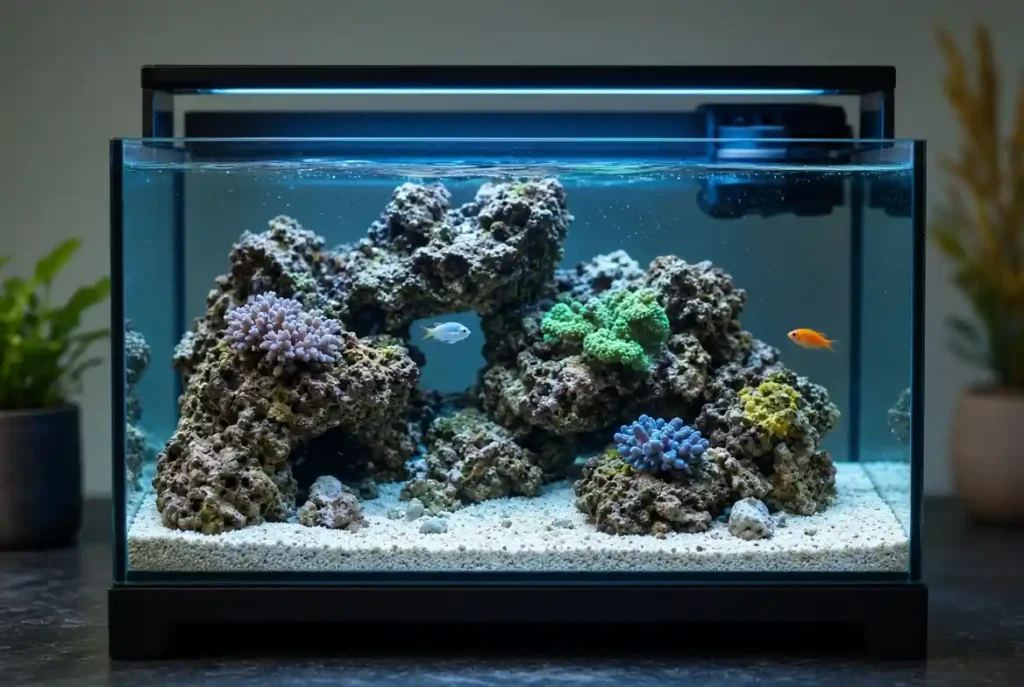
Because pom pom crabs stay so small, they do not need a large aquarium, but they do need stable, well maintained conditions. A 5 to 10 gallon nano tank works well for a single crab or a small group, provided the water parameters stay consistent. These crabs are actually marine species, not freshwater, so they require saltwater conditions rather than a standard freshwater community tank setup.
Ideal water parameters include a temperature between 75 and 82°F, a specific gravity of 1.023 to 1.025, and stable pH around 8.1 to 8.4. Since pom pom crabs are sensitive to fluctuations, a consistent maintenance schedule matters more than any single parameter.
Key setup essentials:
A well established tank with plenty of live rock also tends to grow the small food particles and detritus that pom pom crabs graze on between feedings. Skipping the cycling process or rushing a new tank setup is one of the most common reasons new keepers lose their crabs within the first few weeks.
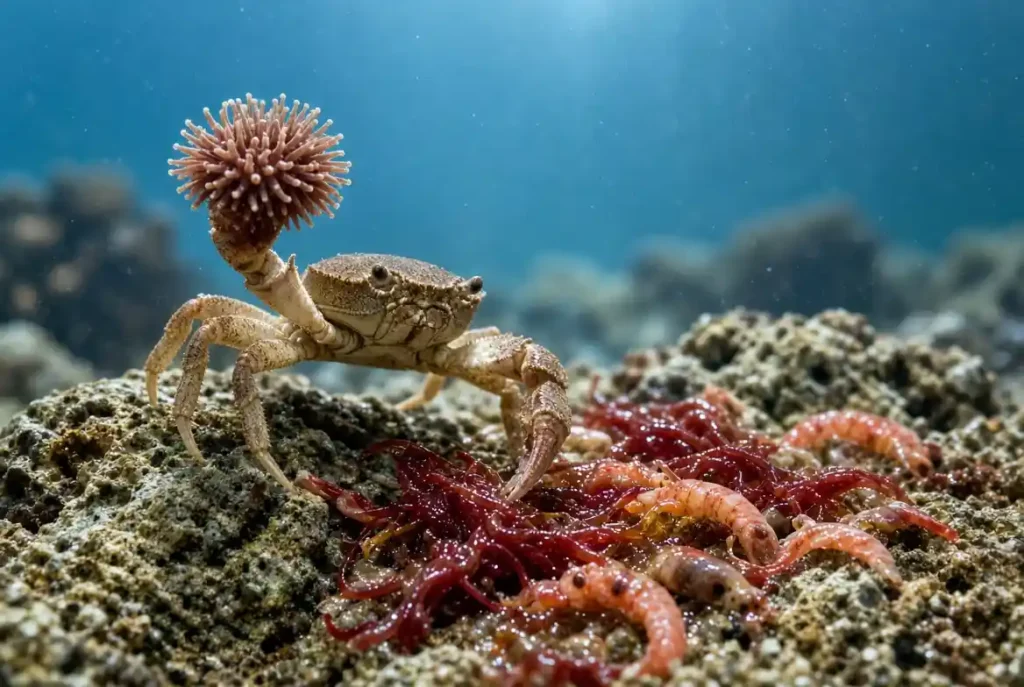
Pom pom crabs are opportunistic omnivores, and their feeding style is closely tied to the anemones they carry. Rather than eating food directly with their mouths in the way most crabs do, they use their anemone covered claws to snag small particles from the water and substrate, then pass that food to their mouthparts.
A varied diet keeps pom pom crabs healthiest. Good options include frozen or live blood worms, finely chopped mysis shrimp, brine shrimp, and high quality sinking pellets crushed into smaller pieces. Blood worm is a particularly good protein source since its size and texture make it easy for the crab’s small claws to handle.
Feeding tips to keep in mind:
Because these crabs rely so heavily on their anemones to actually capture and hold food, healthy anemones are just as important as the food itself. A crab with damaged or stressed anemones may struggle to feed properly, even in a tank with plenty of food available.
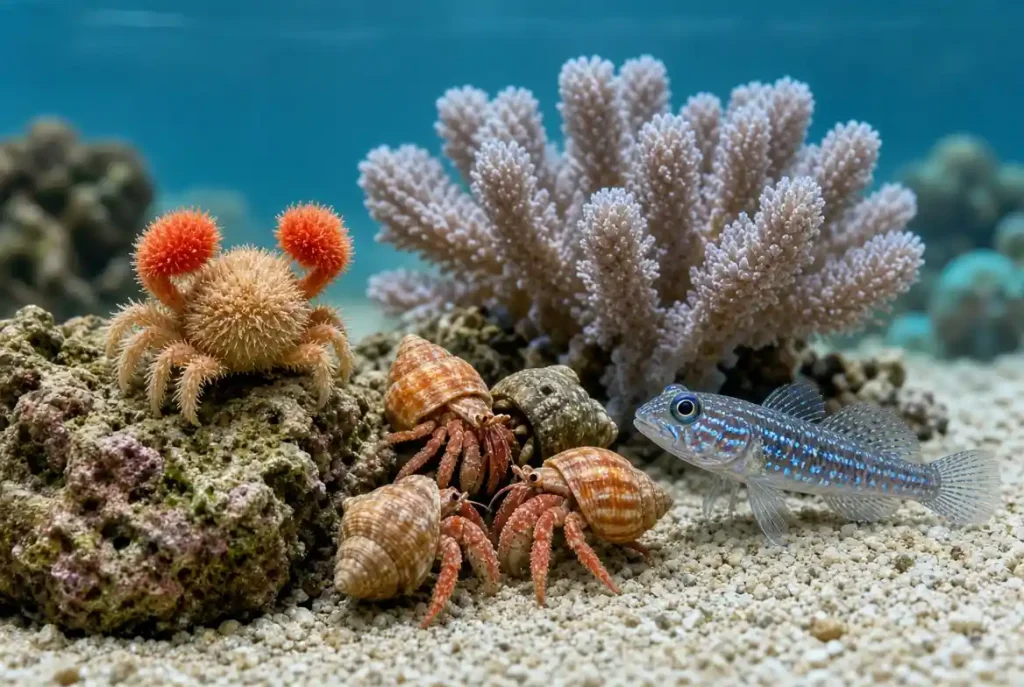
Pom pom crabs are peaceful and easily outcompeted, so tank mate selection matters a lot. They do best with other calm, small species that will not bully them or steal their food during feeding time. Because pom pom crabs are marine animals, freshwater species like amano shrimp are not actually compatible tankmates, despite sometimes appearing on general “aquarium cleanup crew” lists. Amano shrimp need freshwater conditions and would not survive in the same saltwater setup as a pom pom crab.
Better tank mate choices for a marine nano tank include small peaceful gobies, small hermit crabs, and other reef safe invertebrates that will not compete aggressively for food. Avoid larger crabs, aggressive shrimp species, or fast moving fish that could stress or injure a pom pom crab during feeding.
Good tank mate qualities to look for:
A general rule with pom pom crabs is to keep the tank community minimal. Overcrowding a nano tank increases competition for food and territory, which raises stress levels for a crab that already spends much of its time hiding.
Many new aquarium keepers search for a crab that will help clear out a snail problem, and this is worth addressing directly for pom pom crabs. Bladder snails and other freshwater aquarium snails are common hitchhikers in planted freshwater tanks, often arriving on live plants and multiplying quickly. However, since pom pom crabs are strictly marine animals requiring saltwater conditions, they are not a suitable or safe option for controlling a bladder snail population in a freshwater tank. The two simply cannot share the same water chemistry.
If snail control is your actual goal in a freshwater aquarium, better options include:
For a marine tank housing a pom pom crab, the equivalent pest concern is usually Aiptasia, a nuisance anemone rather than a snail. Interestingly, this creates an odd twist: pom pom crabs interact with anemones as partners, not predators, so they will not help control unwanted Aiptasia growth either. Peppermint shrimp remain a better choice for that specific marine pest problem.
Understanding this freshwater versus saltwater distinction early on can save new keepers from a mismatched purchase and a stressed, poorly suited animal.
Like all crustaceans, pom pom crabs molt periodically as they grow, shedding their old exoskeleton and forming a new one underneath. This is one of the most vulnerable times in their life cycle, so understanding what to expect helps prevent unnecessary losses.
Before a molt, a pom pom crab may become less active and spend more time hidden. During the molt itself, the crab is soft bodied and defenseless, since it cannot rely on its anemones as effectively while its claws are still hardening. It is completely normal for the crab to disappear from view for a day or two around this time, so avoid the temptation to search the rockwork for it.
Common health issues to watch for include:
Maintaining stable water parameters is the single best way to prevent molting complications. Sudden swings in salinity, temperature, or pH put unnecessary stress on the crab right when it can least afford it. Regular water testing and small, consistent water changes go a long way toward avoiding these issues altogether.
Breeding pom pom crabs in a home aquarium is possible but genuinely challenging, and most hobbyists who keep them never attempt it. Successful reproduction requires a mature, stable tank and a good deal of patience, since the process from mating to viable offspring involves several delicate stages.
A female carrying eggs is usually easy to spot. She will develop a visible mass of eggs tucked under her abdomen, often orange or reddish in color, which darkens as the eggs near hatching. During this period, she becomes noticeably more reclusive, spending most of her time hidden away from tank mates and bright light.
Challenges that make breeding difficult:
For most keepers, witnessing a female carrying eggs is a rewarding sign of a healthy, well maintained tank on its own, even without pursuing full scale breeding. Those interested in raising larvae should research dedicated marine larviculture techniques before attempting it, since standard nano tank equipment is not built for that stage of the process.
Before adding a pom pom crab to your collection, it helps to weigh what makes them rewarding against what makes them genuinely demanding. They are not a beginner invertebrate, and going in with realistic expectations leads to better outcomes for both the keeper and the crab.
Pros:
Cons:
Overall, pom pom crabs suit intermediate to advanced marine keepers who already have stable tank management skills. Someone jumping straight from a freshwater community tank into pom pom crab care may find the transition to marine parameters steeper than expected.
Pom pom crabs are one of the most unique invertebrates you can add to a marine aquarium, but they reward careful preparation rather than impulse buying. From their anemone carrying defense strategy to their specific saltwater requirements, these small crabs need stable conditions, a varied diet, and thoughtfully chosen tank mates to truly thrive. Getting the basics right, cycled water, appropriate tank size, and calm neighbors, sets your crab up for a long, healthy life in your care.
As more hobbyists move toward specialized nano and pico marine setups in 2026, species like the pom pom crab are likely to grow in popularity among intermediate and advanced aquarists looking for something beyond typical reef fare. If you are ready to take the next step, start by confirming your tank is fully cycled and stable before bringing a pom pom crab home. A little patience upfront makes all the difference in giving this fascinating little crab the environment it needs to flourish.
What is a pom pom crab?
A pom pom crab is a small marine crab from the genus Lybia that carries a sea anemone in each claw for defense and feeding. Native to Indo Pacific reefs, it rarely exceeds an inch across and is popular in nano saltwater aquariums for its unusual, distinctive behavior.
Are pom pom crabs saltwater or freshwater?
Pom pom crabs are strictly saltwater animals. They require stable marine parameters, including proper specific gravity and pH, and cannot survive in freshwater conditions. Keepers sometimes confuse them with freshwater crab species, but true pom pom crabs need a fully cycled marine tank.
What do pom pom crabs eat?
Pom pom crabs eat small meaty foods like blood worms, mysis shrimp, and brine shrimp, captured using their anemone covered claws. Feed small portions two to three times weekly. Their anemones play a direct role in capturing and holding food before it reaches the crab’s mouth.
Do pom pom crabs eat snails?
No, pom pom crabs do not eat snails. As marine animals, they cannot coexist with freshwater bladder snails or other freshwater aquarium snails, since the water chemistry requirements are entirely incompatible. For freshwater snail control, options like assassin snails are more effective.
Can pom pom crabs live with amano shrimp?
No, pom pom crabs cannot live with amano shrimp. Amano shrimp are freshwater invertebrates, while pom pom crabs require saltwater conditions. Housing them together is not possible regardless of tank size, since one species would not survive in the other’s required water chemistry.
How big do pom pom crabs get?
Pom pom crabs stay quite small, typically reaching under one inch across the carapace at full maturity. Their compact size is one reason they are popular choices for nano and pico marine tanks where larger crab species would not be practical or appropriate.
Are pom pom crabs aggressive?
Pom pom crabs are generally peaceful and avoid conflict when possible, relying on their anemones for defense rather than direct aggression. They rarely bother tank mates and tend to retreat into hiding rather than confront other inhabitants, making them suitable for calm community setups.
How long do pom pom crabs live?
In a well maintained aquarium, pom pom crabs typically live two to three years. Lifespan depends heavily on stable water parameters, proper diet, and low stress levels. Poor water quality or molting complications can significantly shorten their expected lifespan in captivity.
Can pom pom crabs live with bladder snails?
Not in the same tank environment. Bladder snails are freshwater animals, while pom pom crabs need saltwater conditions to survive. The two could only coexist if bladder snails were somehow present in a marine setup, which is not their natural or sustainable environment.
What tank size does a pom pom crab need?
A 5 to 10 gallon nano marine tank is generally sufficient for one or a small group of pom pom crabs. What matters more than raw size is water stability, since these crabs are sensitive to fluctuations in temperature, salinity, and pH.

Fish Info Guide helps you explore edible, freshwater, saltwater, and aquarium fish – with simple guides on nutrition, care, and species identification for beginners and enthusiasts alike.
Imortant Links
Quick Links
Subscribe Our Newsletter
Get the latest fish care tips, species guides, and nutrition insights delivered straight to your inbox.