

Snapper fish is one of the most popular saltwater fish in American and Caribbean kitchens, prized for its firm, flaky texture and mild, sweet flavor. Belonging to the Lutjanidae family, snapper includes more than 100 species worldwide, though only a handful show up regularly at the fish counter or on restaurant menus. Whether you are trying to identify the fish you caught, deciding what to order at a seafood restaurant, or looking for the best way to cook snapper fish at home, this guide covers everything: the different types of snapper fish, what snapper fish tastes like, its nutrition facts, mercury levels, how it compares to tilapia, and tried-and-true recipes.
Snapper fish is the common name for members of the Lutjanidae family, a group of saltwater fish found in tropical and subtropical waters around the world, including the Gulf of America, the Atlantic Ocean, and the Caribbean Sea. Most snapper species are reef fish, meaning they live around coral reefs, rocky ledges, and mangrove shorelines where they feed on smaller fish, shrimp, and crustaceans. As a reef-dwelling predator, snapper tends to have lean, dense muscle from constantly swimming against currents, which is part of why the flesh holds together so well when cooked.
The most well-known species is Lutjanus campechanus, commonly called Red Snapper, but the snapper species umbrella covers dozens of look-alikes with their own colors, sizes, and regional names. Because “snapper” is used loosely at fish markets, it’s worth learning to identify the specific type of snapper fish you’re buying — both for flavor expectations and for sustainability reasons, since some species are more heavily regulated than others.
Snapper fish has a mild, sweet flavor with a subtle nutty finish, making it one of the more approachable options for people who don’t usually enjoy “fishy” tasting seafood. The flesh has a firm, flaky texture that holds up well to grilling, frying, baking, and steaming without falling apart. Compared to other white fish like cod or grouper, snapper is slightly firmer and a touch sweeter, while staying leaner than richer fish like salmon.
Because the flavor is delicate rather than bold, snapper pairs naturally with citrus, garlic, herbs, and light sauces that enhance rather than mask its taste. Whole snapper, cooked bone-in, tends to have an even more pronounced sweetness than fillets, which is one reason whole-fish preparations like escovitch snapper fish remain so popular in Caribbean cooking.
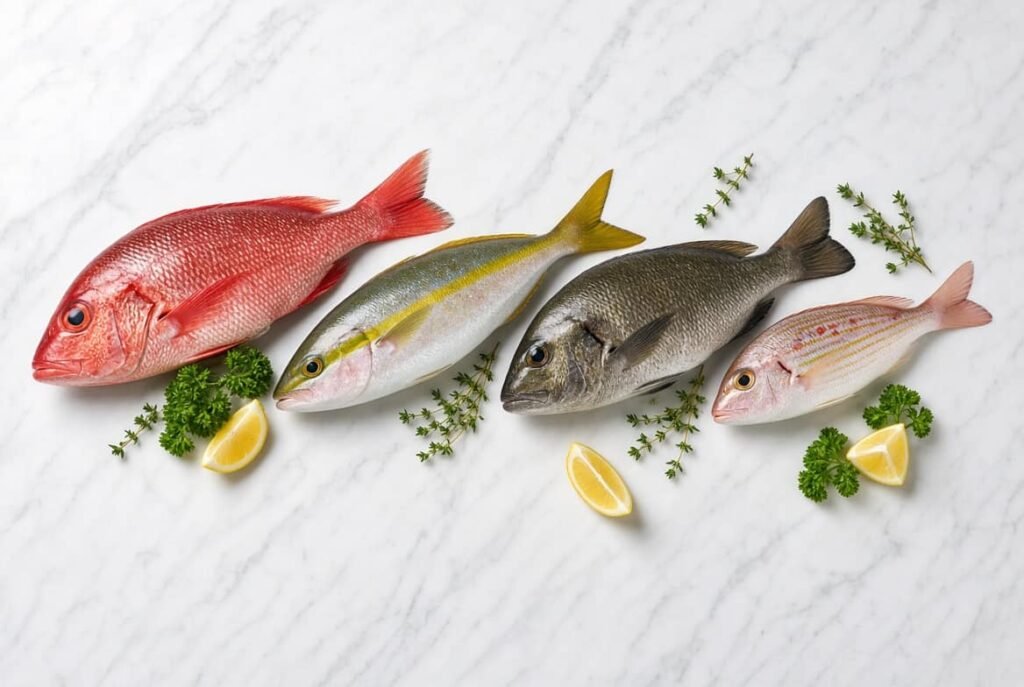
There are dozens of snapper species, but the following eight are the ones you’re most likely to see at the market, on a menu, or on the end of a fishing line. Learning these snapper fish types will help you choose the right fish for your recipe and your budget.
Red Snapper
Where it’s found: Gulf of America and southeastern U.S. Atlantic coast
How to identify it: Reddish-pink body with a white belly and red eyes; grows up to 20 lbs
Flavor notes: Sweet, mild, and firm — considered the benchmark flavor for the whole snapper family.
Yellowtail Snapper
Where it’s found: Florida Keys, Caribbean Sea, Gulf of America
How to identify it: Slender body with a bright yellow stripe running from nose to tail
Flavor notes: Delicate and slightly sweet; a favorite for grilling and pan-frying whole.
Mangrove Snapper (also called Gray Snapper)
Where it’s found: Coastal mangroves, estuaries, and inshore reefs from Florida to Brazil
How to identify it: Grayish-brown coloring that helps it blend into mangrove roots
Flavor notes: Mild and slightly nutty, prized by inshore anglers for its fight and its flavor.
Mutton Snapper
Where it’s found: Caribbean Sea and southern Florida reefs
How to identify it: Olive-green back, reddish fins, and a distinctive black spot near the tail
Flavor notes: Rich and slightly sweet, often compared to Red Snapper but with a firmer bite.
Lane Snapper
Where it’s found: Gulf of America, Caribbean, and South Atlantic
How to identify it: Pinkish body with yellow stripes and a small size, rarely over 2 lbs
Flavor notes: Mild and delicate, ideal for frying whole or as fillets in tacos.
Vermilion Snapper
Where it’s found: Deeper offshore reefs of the Gulf of America and southeastern Atlantic
How to identify it: Bright red-orange body with a small mouth
Flavor notes: Slightly sweet and tender, sold commercially as ‘beeliner’ in some regions.
Cubera Snapper
Where it’s found: Deep reefs and wrecks throughout the Caribbean and Gulf of America
How to identify it: The largest snapper species, capable of exceeding 100 lbs, with a broad head
Flavor notes: Firmer and meatier than smaller species, best suited to grilling or blackening.
Silk Snapper
Where it’s found: Deep offshore waters of the Gulf of America and Caribbean
How to identify it: Reddish-pink body with yellow eyes and silky-smooth skin
Flavor notes: Delicate, moist, and slightly sweet, similar in flavor to Red Snapper.
Beyond these eight, a few other snapper fish varieties are worth knowing by name if you spend time around Gulf or Caribbean waters: Dog Snapper, prized by spearfishers for its wary nature and rich flavor, and Golden Snapper, a deepwater species found mostly in the Indo-Pacific and less common in U.S. markets.
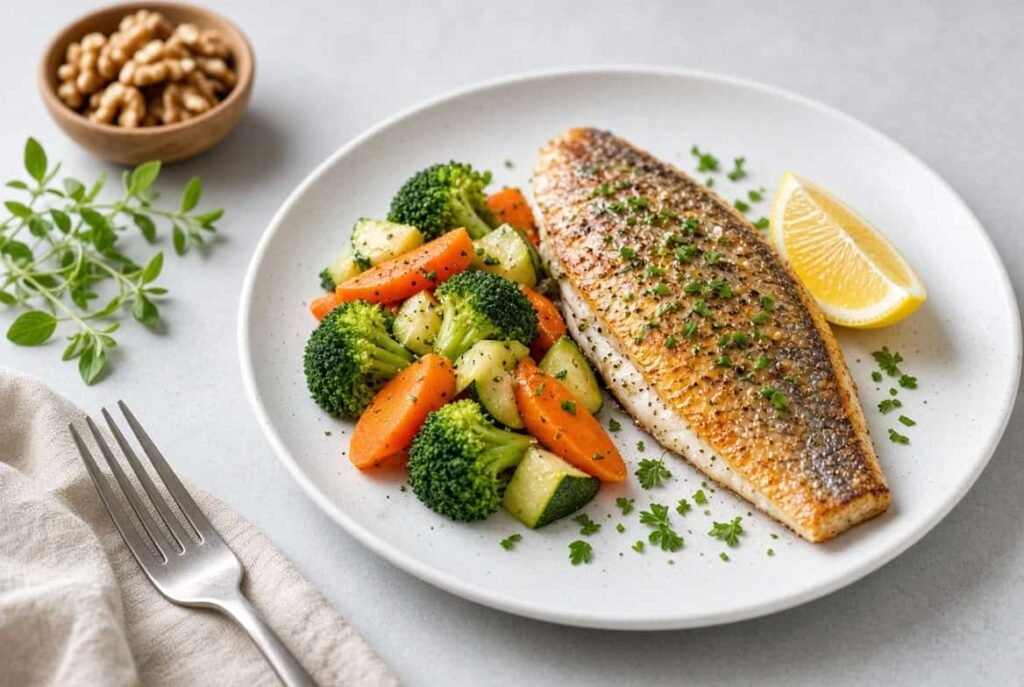
Snapper fish is considered a healthy, lean protein choice. A 100-gram cooked serving delivers roughly 20.5 grams of high-quality protein for only about 100 calories, along with meaningful amounts of selenium, vitamin B12, and potassium. It is naturally low-fat, and the fat it does contain includes heart-healthy omega-3 fatty acids, which support cardiovascular and brain health.
Nutrient (per 100g cooked) | Amount | % Daily Value* |
Calories | 100 kcal | 5% |
Protein | 20.5g | 41% |
Total Fat | 1.3g | 2% |
Cholesterol | 37mg | 12% |
Sodium | 64mg | 3% |
Selenium | 38.2mcg | 69% |
Vitamin B12 | 3.5mcg | 146% |
Potassium | 444mg | 9% |
*Approximate values based on standard USDA and NOAA Fisheries seafood data; actual nutrition can vary slightly by species and preparation method.
The main snapper fish benefits come down to three things: it’s an excellent source of lean protein for muscle maintenance, it supports weight management goals because it’s filling without being calorie-dense, and its selenium and B12 content contribute to metabolic and immune health. For anyone asking “can snapper fish help with weight loss” — yes, when prepared without heavy breading or excess oil, snapper’s high protein-to-calorie ratio makes it a smart choice for a calorie-controlled diet.
Snapper fish carries a moderate mercury level compared to other popular seafood — higher than salmon or tilapia, but lower than large predatory species like swordfish or king mackerel. According to FDA seafood guidance, snapper falls into the “good choice” category for most adults, recommended at one to two servings per week. Pregnant women, nursing mothers, and young children should still keep portions moderate and vary their seafood choices, since mercury levels can climb in larger, older fish.
As for bones, snapper fillets sold at the market are typically pin-boned and safe to cook without much extra care, though a quick check with your fingers before cooking is always a good habit. Whole snapper, on the other hand, retains its full skeleton, including small rib bones, so it’s best eaten slowly and in smaller bites — especially with kids at the table. Many Caribbean and Latin preparations intentionally cook snapper whole and bone-in because the bones add flavor and help keep the flesh moist during cooking.
Snapper and tilapia are both popular white fish, but they come from very different environments and price points. Snapper is a wild-caught, saltwater reef fish with a firmer texture and sweeter flavor, while tilapia is typically a farm-raised freshwater fish with a softer texture and a more neutral taste.
Factor | Snapper Fish | Tilapia |
Habitat | Saltwater, reef-dwelling | Freshwater, farm-raised |
Flavor | Mild, sweet, slightly nutty | Very mild, neutral |
Texture | Firm, flaky | Soft, tender |
Protein (per 100g) | ~20.5g | ~26g |
Omega-3 content | Higher | Lower |
Average price | $12-$18/lb | $4-$8/lb |
Sustainability | Wild-caught, regulated fishery | Mostly farm-raised, variable |
If you’re deciding between the two, tilapia is the budget-friendly, everyday option, while snapper is worth the higher price when you want a more distinct flavor for a special dinner, a whole-fish presentation, or a dish where the fish itself is the star, like escovitch or a simple grilled fillet with lemon.
Buying fresh snapper fish comes down to using your eyes, nose, and hands. Look for clear, bright eyes rather than cloudy or sunken ones, bright red gills rather than brown or gray, and skin that looks moist and slightly shiny rather than dull or dried out. Fresh snapper should smell like clean ocean water — never sour, ammonia-like, or overly “fishy.” When you press the flesh gently, it should spring back rather than leave a dent.
Whole fish generally stays fresher longer than pre-cut fillets, since the skin and bones protect the flesh from oxidation, but fillets are more convenient if you don’t want to deal with scaling and cleaning. Snapper fish price typically runs from about $10 to $12 per pound for whole fish and $16 to $20 per pound for boneless fillets, though prices vary by region, season, and whether the fish is wild-caught or imported.
If you’re searching for “snapper fish near me,” your best bets are dedicated seafood markets, well-reviewed fishmongers, and grocery stores with a high-turnover seafood counter — high turnover is a good proxy for freshness, since snapper that’s been sitting for days loses both flavor and texture.
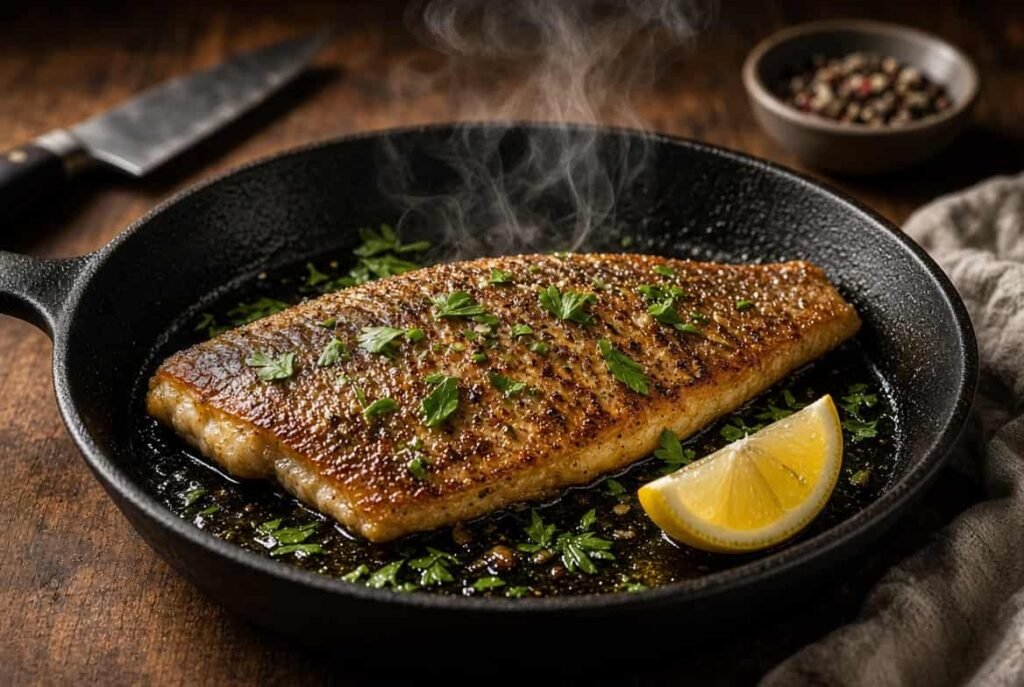
Snapper’s firm, flaky texture makes it one of the more forgiving fish to cook, but each method brings out a slightly different side of its flavor. Here are the five best ways to cook snapper fish.
Frying
Fried snapper fish is a classic preparation, especially for whole, smaller species like Lane Snapper. Score the skin a few times, season generously, dredge lightly in seasoned flour or cornmeal, and fry in hot oil (350-375°F) until the skin is crisp and the flesh flakes easily, about 4-6 minutes per side for a whole fish.
Grilling
Grilled snapper fish works beautifully as fillets or whole fish. Oil the grates well, cook skin-side down first over medium-high heat, and resist the urge to move the fish until it releases naturally, usually after 4-5 minutes. A whole fish typically needs 8-10 minutes per side depending on size.
Baking
Baked snapper fish is the easiest hands-off method. Bake fillets at 400°F for 12-15 minutes, or a whole fish for 20-25 minutes, with lemon slices, garlic, and herbs layered on top to keep the flesh moist.
Steaming
Steamed snapper fish is a lighter option popular in Asian and Caribbean cooking alike. Steam fillets or a whole fish over aromatics like ginger, scallion, and lime for 8-12 minutes until the flesh turns opaque and flakes easily.
Escovitch Style
Escovitch snapper fish is a Jamaican classic where the whole fish is fried until crisp, then topped with a tangy, spicy pickled vegetable sauce made from carrots, bell peppers, onion, scotch bonnet pepper, vinegar, and allspice. It’s traditionally served the next day, once the flavors have had time to soak in.
These four snapper fish recipes cover the most popular ways to serve it at home, from a quick weeknight dinner to a dish worth serving guests.
Simple Grilled Snapper with Lemon and Herbs
Rub whole snapper or fillets with olive oil, salt, pepper, minced garlic, and chopped parsley. Grill over medium-high heat, 4-5 minutes per side for fillets or 8-10 minutes per side for a whole fish, finishing with a squeeze of fresh lemon.
Crispy Pan-Fried Snapper Fillets
Pat fillets dry, season with salt, pepper, and paprika, and dredge in seasoned flour. Pan-fry in a hot skillet with 2-3 tablespoons of oil for about 3-4 minutes per side until golden and crisp.
Baked Snapper with Garlic and Tomatoes
Place fillets in a baking dish with cherry tomatoes, sliced garlic, olive oil, and oregano. Bake at 400°F for 12-15 minutes until the fish flakes easily and the tomatoes have softened into a light sauce.
Blackened Snapper Fish Tacos
Coat fillets in a blackening spice mix and sear in a hot cast-iron pan for 2-3 minutes per side. Flake the fish into warm corn tortillas with shredded cabbage, avocado, and a squeeze of lime for quick fish tacos.
Snapper fish earns its popularity honestly: it’s flavorful without being overpowering, nutritious without being complicated, and versatile enough to work in everything from a simple weeknight grilled fillet to a celebratory whole fried fish topped with escovitch sauce. Whether you’re picking your first snapper fillet at the market or trying to identify the fish on the end of your line, understanding the different snapper species, how to judge freshness, and which cooking method suits your dish will help you get the most out of this reef-dwelling favorite.
What is snapper fish and where does it come from?
Snapper fish refers to members of the Lutjanidae family, a group of saltwater reef fish found in tropical and subtropical waters, including the Gulf of America, the Atlantic Ocean, and the Caribbean Sea.
What does snapper fish taste like?
Snapper fish has a mild, sweet flavor with a firm, flaky texture, making it milder than salmon but slightly firmer and sweeter than tilapia or cod.
Is snapper fish good to eat, and is it healthy?
Yes — snapper fish is a lean, high-protein seafood option that’s low in fat and rich in selenium, vitamin B12, and omega-3 fatty acids.
What are the most common types of snapper fish?
The most common snapper species include Red Snapper, Yellowtail Snapper, Mangrove Snapper, Mutton Snapper, Lane Snapper, Vermilion Snapper, Cubera Snapper, and Silk Snapper.
Does snapper fish have a lot of bones?
Snapper fillets are typically pin-boned and easy to eat, while whole snapper retains its full skeleton, including small rib bones that require some care when eating.
Does snapper fish contain mercury, and is it safe to eat regularly?
Snapper carries a moderate mercury level and is generally considered safe for one to two servings per week for most adults, according to FDA seafood guidance.
What is the best way to cook snapper fish?
Grilling and baking are the most popular methods for preserving snapper’s natural sweetness, though frying and steaming are also excellent depending on the dish.
How is snapper fish different from tilapia?
Snapper is a wild-caught saltwater fish with a firmer texture and sweeter, more distinct flavor, while tilapia is a farm-raised freshwater fish with a softer texture and milder taste.
How much does snapper fish cost, and where can I buy it fresh?
Snapper fish price typically ranges from $10-$12 per pound whole to $16-$20 per pound for fillets, and it’s best purchased from a dedicated seafood market or a grocery store with a high-turnover fish counter.
Can snapper fish help with weight loss?
Yes — snapper’s high protein-to-calorie ratio makes it filling and supportive of weight management goals, especially when grilled, baked, or steamed rather than fried.

Fish Info Guide helps you explore edible, freshwater, saltwater, and aquarium fish – with simple guides on nutrition, care, and species identification for beginners and enthusiasts alike.
Imortant Links
Quick Links
Subscribe Our Newsletter
Get the latest fish care tips, species guides, and nutrition insights delivered straight to your inbox.