

Ever stared at a fish tank or a fishing guide and wondered what actually counts as a freshwater fish? You are not alone. Many beginners assume any fish that is not orange colored like a goldfish must live in the ocean, and that mix up leads to poor tank choices and confused shopping trips.
This guide clears things up. There are more than 18,000 recognized types of freshwater fish worldwide, making up over half of all known fish species on Earth. From food fish like Tilapia and Catfish to aquarium favorites like Betta and Guppy, freshwater species come in an incredible range of shapes, sizes, and roles.
In this article, you will learn the most common types of freshwater fish, their habitats, their uses in food, sport, and aquariums, plus which species are often mistaken as freshwater when they are actually saltwater or migratory.
Freshwater fish are species that spend most or all of their lives in water with very low salt content, such as rivers, lakes, ponds, streams, and wetlands. Unlike saltwater fish, their bodies are adapted to survive in environments where salinity rarely rises above 0.05 percent.
This category also includes fish that need fresh water for a critical part of their life cycle, even if they spend time elsewhere. Salmon, for example, hatch in rivers, migrate to the ocean to grow, then return to fresh water to spawn. Freshwater eels do the reverse, living most of their lives inland before heading to the sea to reproduce.
A few defining traits set freshwater fish apart:
From common Tilapia raised in fish farms to colorful Bettas kept in home aquariums, freshwater fish support food supplies, hobbies, and entire ecosystems around the world.
The numbers here are bigger than most people expect. According to the IUCN/SSC Freshwater Fish Specialist Group, there are currently 18,898 recognized freshwater fish species, accounting for 51 percent of all known fish species and roughly one quarter of all vertebrate species on Earth. That is a staggering level of diversity packed into just 1 percent of the planet’s surface area, since fresh water is that rare.
In North America alone, researchers have documented more than 800 native freshwater fish species, ranging from tiny darters barely a few inches long to sturgeon that can grow over 6 feet.
Almost 90 percent of all freshwater fish species fall into just eight taxonomic orders:
New species are still being discovered every year, particularly in South America, where researchers add over 100 new freshwater species annually. This ongoing discovery rate is one reason scientists consider freshwater ecosystems among the richest biodiversity hotspots on the planet.
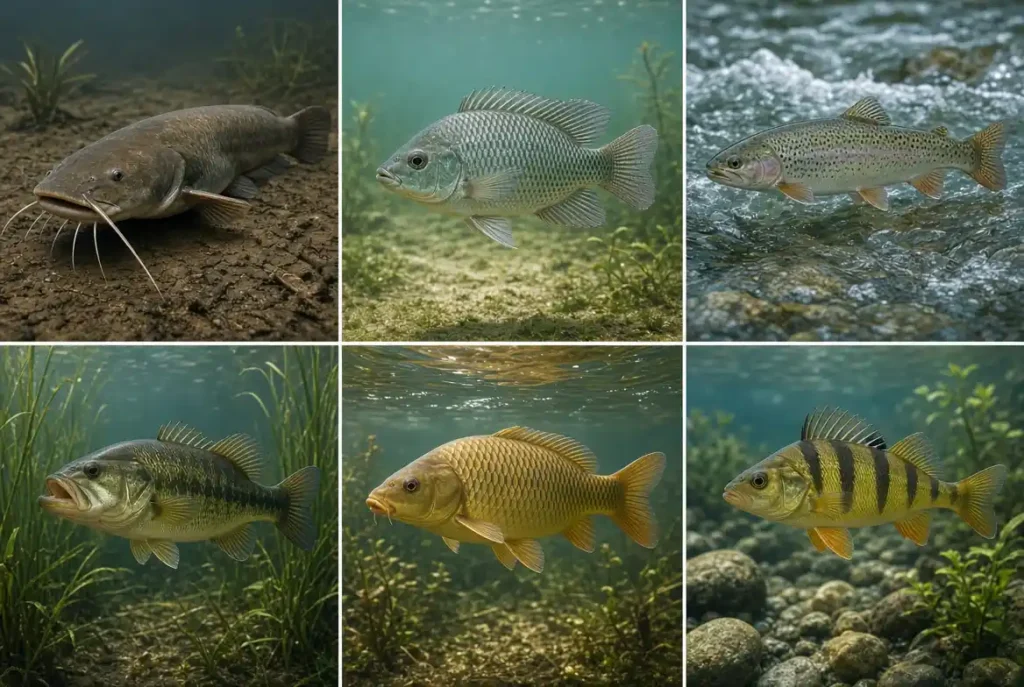
Freshwater fish vary widely depending on whether they are raised for food, caught for sport, or kept for their looks. The table below offers a quick snapshot before we look at each type in detail.
Fish Name | Habitat | Primary Use | Key Trait |
Tilapia | Ponds, lakes, farms | Food, aquaculture | Fast growing, hardy |
Catfish | Rivers, ponds, lakes | Food, sport fishing | Whiskered, bottom feeder |
Trout | Cold streams, rivers | Sport fishing, food | Cold water species |
Bass | Lakes, rivers, reservoirs | Sport fishing | Aggressive predator |
Rohu | Rivers, ponds | Aquaculture, food | Fast growing, adaptable |
Catla | Rivers, reservoirs | Aquaculture, food | Large, surface feeder |
Yellow Perch | Lakes, ponds, rivers | Food, sport fishing | Striped, mild flavor |
Common Carp | Lakes, ponds | Aquaculture, food | Tolerant of poor water |
Sturgeon | Large rivers | Caviar, conservation | Ancient, slow growing |
Bluegill | Ponds, lakes | Sport fishing, food | Small, aggressive |
Goldfish | Ponds, tanks | Ornamental | Hardy, colorful |
Guppy | Streams, tanks | Ornamental | Small, fast breeding |
Betta | Rice paddies, tanks | Ornamental | Territorial, colorful |
Plecostomus | Rivers, aquariums | Ornamental, algae control | Armored, bottom dweller |
Now let’s look closer at each type.
Tilapia
Tilapia is one of the most farmed freshwater fish in the world, prized for its fast growth rate and tolerance for varied water conditions. It thrives in warm ponds and lakes, which makes it a staple in commercial aquaculture across Africa, Asia, and the Americas.
Its mild flavor and affordable price have made it a household name on dinner tables. Farmers favor Tilapia because it reaches market size quickly and requires relatively low maintenance compared to other food fish. If you are researching sustainable freshwater fish farming, Tilapia is usually the first species mentioned.
Catfish
Catfish are easily recognized by their whisker like barbels and preference for murky, bottom dwelling habitats in rivers, ponds, and lakes. There are thousands of catfish species worldwide, ranging from small aquarium varieties to massive wels catfish that can exceed 6 feet in length.
Catfish hold major value as both a food source and a sport fishing target. Their scavenging diet helps keep aquatic ecosystems balanced, since they consume decaying organic matter that other fish avoid.
Trout
Trout prefer cold, oxygen rich streams and rivers, making them a signature species of mountain and northern freshwater ecosystems. Species like rainbow trout and brown trout are prized by anglers for their fighting strength and by chefs for their delicate flavor.
Because trout are sensitive to water temperature and pollution, their populations often serve as an indicator of stream health. A thriving trout population usually signals clean, well oxygenated water.
Bass
Bass, particularly largemouth and smallmouth varieties, are among the most popular sport fish in North American lakes and rivers. Known for their aggressive predatory behavior, bass actively hunt smaller fish, insects, and even frogs.
Their popularity with anglers has made bass fishing a multi billion dollar industry in the United States alone. Bass also play a key ecological role by controlling populations of smaller prey fish in their habitats.
Rohu
Rohu is a fast growing freshwater fish commonly found in rivers and ponds across South Asia. It adapts easily to different water conditions, which makes it a preferred species for inland fisheries and pond based aquaculture.
Rohu is often raised alongside Catla and Mrigal in a practice known as composite fish farming, where different species occupy different feeding zones in the same pond to maximize yield.
Catla
Catla is a large, surface feeding freshwater fish native to rivers and reservoirs. It grows quickly and is one of the primary species used in South Asian aquaculture due to its high yield and adaptability to pond farming systems.
Like Rohu, Catla is valued for its soft meat and nutritional content, and it supports the livelihoods of countless inland fishing communities.
Yellow Perch is easy to identify by its yellow green body and dark vertical stripes. Common in lakes, rivers, and ponds across North America, it is a favorite among both commercial fishers and recreational anglers.
Its mild, sweet flavored white meat makes it a popular food fish, while its abundance and easy catch rate make it ideal for beginner anglers.
Common Carp
Common Carp is a hardy, adaptable freshwater fish that thrives in lakes and ponds, even in lower quality water where many other species struggle. This resilience makes it one of the most widely farmed fish globally, particularly in mixed aquaculture systems.
Beyond food production, ornamental varieties of carp, most notably Koi, are prized for decorative ponds. Common Carp also plays a strong role in polyculture farming, where it is raised alongside species like Rohu and Catla to increase overall pond productivity.
Sturgeon
Sturgeon is an ancient freshwater fish species that has existed since the age of dinosaurs, inhabiting large rivers and lakes. It grows slowly but can live for decades, with some species reaching enormous sizes.
Sturgeon eggs are processed into caviar, one of the most expensive foods in the world, giving this species significant commercial value. Because many sturgeon populations are endangered, they are also a major focus of conservation and research efforts worldwide.
Bluegill
Bluegill is a small, aggressive freshwater fish commonly found in ponds and lakes across North America. Despite its size, it is a favorite target for beginner anglers because it is easy to catch and widely available.
Bluegill also plays an ecological role by controlling insect and small fish populations, helping maintain balance in freshwater ecosystems. Its mild flavor makes it a popular catch for home cooking as well.
Goldfish
Goldfish is one of the most recognizable ornamental freshwater fish, kept in ponds and aquariums worldwide for its bright colors and hardiness. It adapts well to a wide range of water conditions, which makes it especially forgiving for beginner fish keepers.
Beyond decoration, goldfish are widely used to teach new hobbyists the basics of aquarium care, since they tolerate minor mistakes better than more delicate species.
Guppy
Guppy is a small, colorful freshwater fish known for how quickly it reproduces, making it a favorite among beginner aquarium hobbyists. Its ease of care and vibrant colors have made it one of the most popular fish in the aquarium trade.
Guppies also serve a practical purpose outside the tank. In many regions, they are introduced into stagnant water sources because they feed on mosquito larvae, helping control mosquito populations naturally.
Betta
Betta, also known as the Siamese fighting fish, is a strikingly colorful freshwater species native to rice paddies and slow moving waters in Southeast Asia. Males are known for their territorial behavior and elaborate bubble nests built to protect their eggs.
Because Bettas can survive in small volumes of water and do not require a large tank, they are one of the most popular choices for beginner freshwater aquariums.
Plecostomus
Plecostomus, often called a pleco, is an algae eating freshwater fish valued for keeping aquariums clean. Its armored body and bottom dwelling habits make it easy to identify, and it plays a functional role by consuming algae buildup on tank walls and decorations.
In natural river habitats, plecos perform a similar cleaning function, feeding on algae and organic debris to help keep surfaces clear.
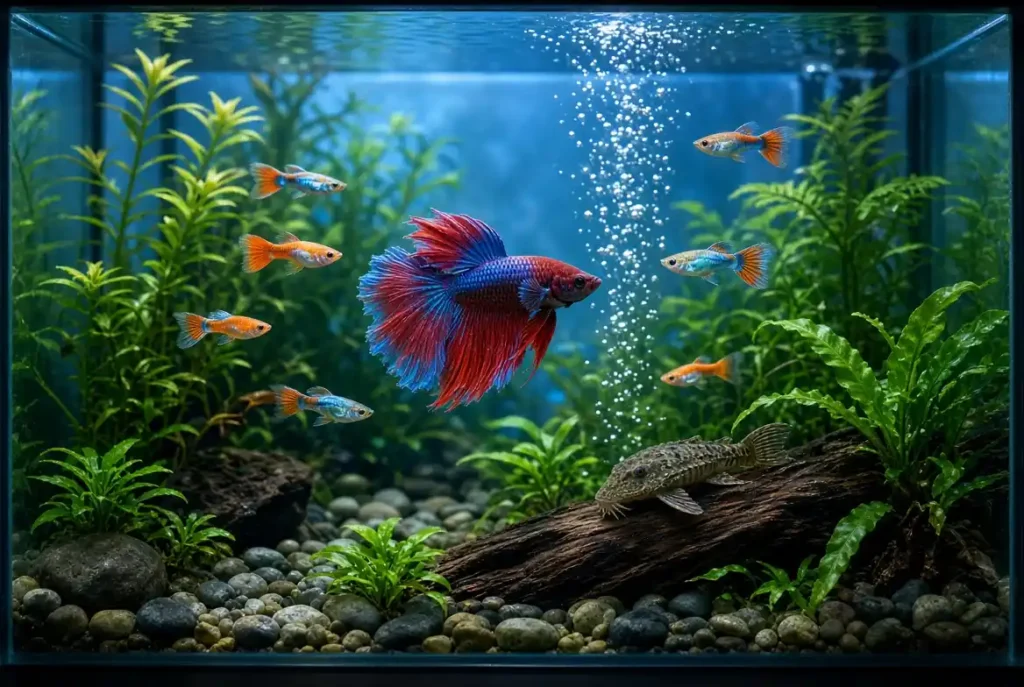
Choosing the right freshwater fish for a home aquarium comes down to three things: hardiness, temperament, and visual appeal. Beginners especially benefit from species that forgive small mistakes in water quality while still delivering that classic vibrant tank look.
For first time fish keepers, a few species consistently top the recommendation list:
If color is the priority, Betta and Guppy varieties offer some of the most vivid patterns in the freshwater hobby, ranging from deep reds and blues to iridescent multicolor combinations. Many hobbyists also favor schooling fish like tetras, since a group swimming together creates a lively, colorful display without demanding advanced care.
Hardiness matters just as much as looks. Species like Goldfish and Common Carp varieties can tolerate temperature swings and imperfect water conditions, making them forgiving choices while a beginner learns the nitrogen cycle and proper tank maintenance. Starting with 2 or 3 hardy, compatible species is usually a smarter first step than building an ambitious mixed tank right away.
Freshwater fish form a major part of global food security, especially in regions where ocean access is limited. Species like Tilapia, Catfish, Rohu, and Catla are farmed at massive scale because they grow quickly, adapt to pond conditions, and provide an affordable source of protein.
Several species stand out for their food value:
Beyond taste, freshwater fish offer strong nutritional value, delivering high quality protein, omega 3 fatty acids, and essential vitamins like B12 and D. This makes them a healthier alternative to heavily processed protein sources in many diets.
Aquaculture has become essential to meeting this demand sustainably. Rivers provide drinking water and support roughly one quarter of the world’s food production, and pond based fish farming reduces pressure on wild freshwater populations that are already declining. Practices like polyculture, where multiple species share a single pond, help farmers maximize yield while keeping the system more balanced and less resource intensive than single species farming.
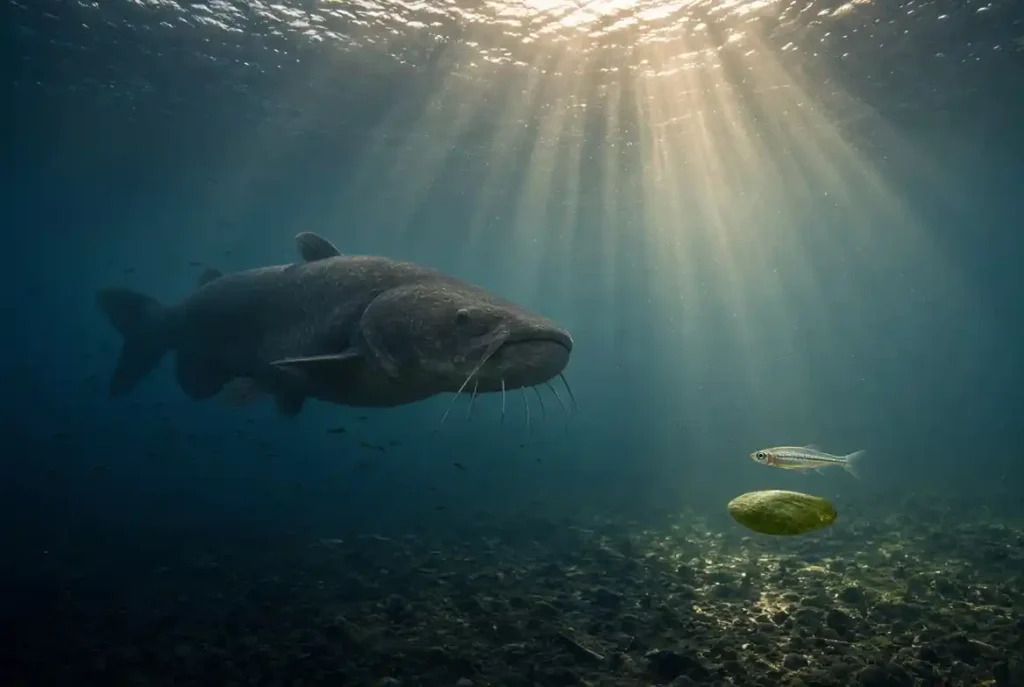
Freshwater fish range from creatures small enough to fit on a fingertip to giants that rival small cars in length. This extreme size range is one of the most searched topics in the freshwater fish world, and the record holders are genuinely astonishing.
The largest freshwater fish in the world is widely recognized as the Mekong giant catfish, which can grow to more than 3 meters in length and weigh over 300 kilograms. Close behind it are two other freshwater giants:
On the opposite end of the spectrum, the smallest known freshwater fish is Paedocypris progenetica, a minnow species discovered in Indonesian peat swamps. It measures just 8mm in length and weighs about 0.004 grams, small enough to sit comfortably on a fingernail.
This massive size range reflects just how diverse freshwater habitats truly are. Large rivers like the Mekong can support giants because of their depth and abundant food supply, while shallow, acidic peat swamps favor tiny, specially adapted species that thrive where larger fish cannot survive.
Not every freshwater fish gets along in the same tank, and understanding temperament is one of the most important steps before mixing species. Aggression levels vary widely, and putting the wrong combination together often ends badly for the smaller or more passive fish.
Aggressive freshwater fish tend to be territorial, predatory, or both. Common examples include:
Peaceful, community friendly freshwater fish, on the other hand, tend to school together and avoid conflict:
The general rule for aquarium hobbyists is to research individual species compatibility before combining them, since even peaceful fish can turn aggressive under overcrowded conditions or insufficient hiding spaces. Matching similar temperaments and swimming levels within a tank significantly reduces stress and injury for all the fish involved.
Not every fish people assume is freshwater actually qualifies as one, and getting this distinction right matters for both hobbyists and anglers. The key difference comes down to salinity tolerance and where a species spends its life cycle.
True freshwater fish, like Tilapia, Catfish, Bass, and Goldfish, spend their entire lives in low salinity environments such as rivers, lakes, and ponds. Their bodies are specifically adapted to retain salt rather than expel it, the opposite of what marine fish require.
Anadromous species complicate the picture. Salmon is the clearest example: it hatches in freshwater rivers, migrates to the ocean to mature, then returns to fresh water to spawn. This makes Salmon a freshwater fish for part of its life cycle, even though it spends most of its growth phase at sea. Freshwater eels do the reverse, called catadromous, living inland before returning to the ocean to reproduce.
Tuna, Cod, and Mackerel, however, are true saltwater fish. They spend their entire life cycle in ocean environments and lack the biological adaptations needed to survive in fresh water. They are sometimes mistakenly grouped with freshwater fish in casual conversation, but biologically they belong entirely to marine ecosystems.
Knowing this distinction helps avoid confusion when researching fish for cooking, fishing licenses, or tank stocking, since freshwater and saltwater species require very different handling, regulations, and care.
Freshwater fish influence far more than dinner plates and home aquariums. Their populations directly reflect the health of entire river systems, lakes, and wetlands, making them one of the clearest indicators of environmental stability.
Ecologically, freshwater fish support broader food webs and nutrient cycles. In Alaska, salmon runs fatten bears before hibernation and carry ocean derived nutrients into forest ecosystems. In the Amazon, fish help disperse seeds of floodplain trees, directly shaping vegetation patterns along riverbanks.
Economically, the numbers are substantial. In the United States alone, freshwater fisheries generate around 38 billion dollars in revenue, while recreational fishing contributes another 100 billion dollars annually. Globally, roughly 60 million people, more than half of them women, depend directly on freshwater fish for their livelihoods, and at least 200 million people rely on them as a primary protein source.
Unfortunately, this importance comes with mounting risk. Nearly one third of all freshwater fish species are currently threatened with extinction, and migratory freshwater fish populations have declined by 76 percent since 1970. Habitat loss, pollution, dam construction, and invasive species are the leading causes.
Protecting freshwater fish populations is not just about biodiversity. It directly supports drinking water supplies, food security, and the livelihoods of tens of millions of people worldwide.
Freshwater fish are far more diverse and important than most people realize, spanning nearly 19,000 species across rivers, lakes, ponds, and wetlands worldwide. From food staples like Tilapia and Catfish to aquarium favorites like Betta and Guppy, understanding the different types of freshwater fish helps you make smarter choices, whether you are stocking a tank, planning a meal, or simply satisfying your curiosity about aquatic life.
These species also carry weight far beyond their tanks and dinner plates. They support livelihoods, sustain ecosystems, and serve as an early warning sign for the health of our rivers and lakes. As freshwater habitats face growing pressure from pollution and habitat loss, knowing which species need protection becomes increasingly relevant for anyone who cares about biodiversity.
As search behavior shifts toward AI powered answers in 2026, content that clearly explains species facts, habitats, and practical use cases will remain the most valuable resource for readers and search engines alike.
What are freshwater fish?
Freshwater fish are species that live in water with very low salt content, such as rivers, lakes, ponds, and wetlands. Their bodies are adapted to retain salt rather than expel it, the opposite of saltwater fish.
What is the difference between freshwater fish and saltwater fish?
Freshwater fish live in low salinity environments and absorb salt through their gills, while saltwater fish live in oceans and must expel excess salt. Their internal biology is essentially reversed to survive in opposite conditions.
What is the largest freshwater fish in the world?
The Mekong giant catfish holds this title, growing over 3 meters long and weighing more than 300 kilograms. The beluga sturgeon is a close competitor, reaching similar lengths in the Caspian and Black Sea basins.
Are goldfish freshwater fish?
Yes, goldfish are true freshwater fish. They live naturally in ponds and slow moving freshwater habitats and are kept worldwide in tanks and outdoor ponds.
Is catfish a freshwater fish?
Most catfish species are freshwater fish, found in rivers, ponds, and lakes worldwide. A smaller number of catfish species do live in brackish or marine environments.
What is the best beginner freshwater fish for a home aquarium?
Betta, Guppy, and Goldfish are commonly recommended for beginners because they are hardy, tolerate minor water quality mistakes, and require minimal specialized equipment.
How many freshwater fish species exist worldwide?
There are 18,898 recognized freshwater fish species, representing 51 percent of all known fish species and about one quarter of all vertebrate species on Earth.
Can freshwater fish live in saltwater?
Most freshwater fish cannot survive in saltwater, since their bodies are not adapted to expel excess salt. A few species, like certain mollies, tolerate brackish conditions but are exceptions.
What is the most aggressive freshwater fish?
Bass and certain cichlid species are among the most aggressive freshwater fish, known for territorial behavior and predatory hunting instincts toward smaller tank mates or prey.
Is salmon a freshwater or saltwater fish?
Salmon is anadromous, meaning it hatches in fresh water, migrates to the ocean to mature, then returns to fresh water to spawn. It is technically both, depending on its life stage.

Fish Info Guide helps you explore edible, freshwater, saltwater, and aquarium fish – with simple guides on nutrition, care, and species identification for beginners and enthusiasts alike.
Imortant Links
Quick Links
Subscribe Our Newsletter
Get the latest fish care tips, species guides, and nutrition insights delivered straight to your inbox.