

Standing in front of a fish tank with a can of flakes in hand, most new owners freeze. Feed too little and fish go hungry. Feed too much and the water turns cloudy within days. So what do fish eat, really? The short answer: most fish eat a mix of plant matter and small animal protein, whether that comes from insects and algae in a river or flakes and pellets in a home aquarium. Fish fall into three broad diet groups, herbivore, carnivore, and omnivore, and each one needs a different feeding approach to stay healthy. This guide walks through exactly what fish eat in the wild and at home, which foods work best for popular species like koi and betta fish, how starfish differ from fish entirely, and how often to feed so your tank stays clean and your fish stay thriving.
Most fish eat a combination of plant matter and animal protein, though the exact ratio depends on the species. Fish are grouped into three main diet types.
In a home aquarium, this translates into flakes, pellets, algae wafers, frozen or live foods, and fresh vegetables, matched to whichever diet type a fish naturally follows. Getting this match right is the single biggest factor in fish health, more important than the tank size or the filter you choose.
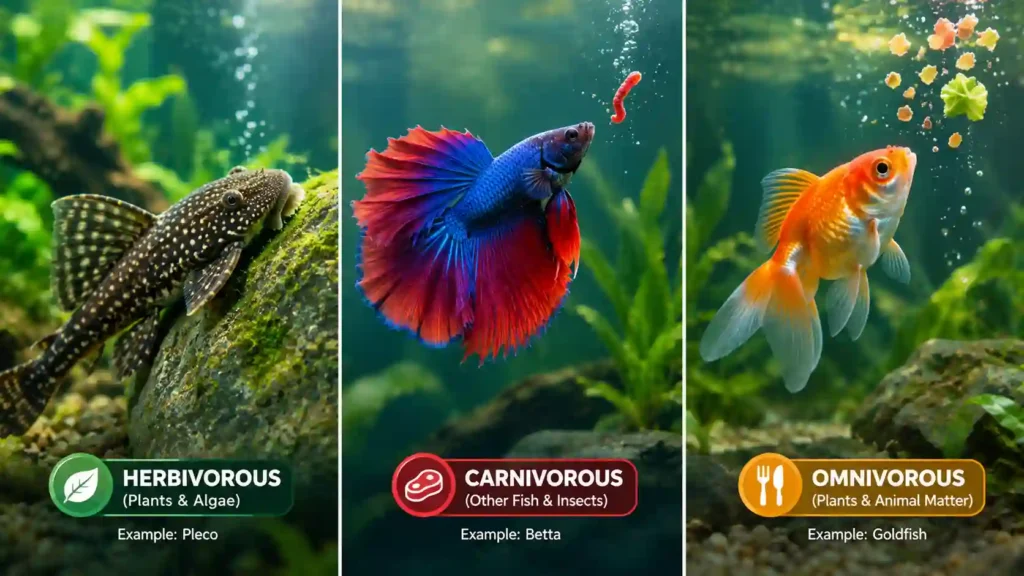
Every fish species fits somewhere on a spectrum between plant eater and meat eater, and knowing where your fish sits is the starting point for feeding it correctly.
Herbivorous fish rely on plant based foods. In the wild they graze on algae, plankton, and soft aquatic vegetation. In a tank they do best with algae wafers, blanched vegetables, and spirulina based flakes. Plecos, mollies, and some surgeonfish fall into this group, and offering them meat heavy foods regularly can actually cause digestive problems.
Carnivorous fish need meat as the core of their diet. Bettas, cichlids, and many predatory species hunt insects, crustaceans, and smaller fish in nature. At home, high protein pellets, bloodworms, and brine shrimp replicate that diet closely.
Omnivorous fish, which make up the majority of popular aquarium species, need both. Goldfish, guppies, and tetras thrive on a rotation of flakes, pellets, and occasional fresh or frozen protein. According to the Merck Veterinary Manual, offering a wide variety of food types is the most reliable way to meet a fish’s nutritional needs, since the specific nutrient requirements for most species are not fully mapped out.
Before commercial fish food existed, fish had already spent millions of years figuring out how to eat, and their tank diets today are really just an attempt to copy that natural menu.
In rivers, lakes, and oceans, wild fish rely entirely on whatever their ecosystem provides. Small fish and fry often start life feeding on zooplankton and phytoplankton, the microscopic organisms that form the base of the aquatic food chain. As fish grow, many shift toward insects and their larvae, especially mosquito larvae, mayfly larvae, and daphnia, which supply a dense source of protein.
Plant focused species graze on algae growing over rocks and submerged surfaces, along with soft vegetation like duckweed. Predatory fish take a more active role, hunting smaller fish, tadpoles, and invertebrates such as snails and worms.
A few patterns worth noting:
Understanding this natural baseline matters because it explains why variety, not a single food type, produces the healthiest aquarium fish.
Once fish move from a natural habitat into a home tank, feeding becomes the owner’s responsibility entirely, and the market reflects that with a wide range of food formats built for different species and feeding styles.
Dried foods are the most common starting point for most hobbyists. Flakes float at the surface, making them ideal for fish that feed near the top of the water column, while pellets, available in both floating and sinking varieties, suit a wider range of species including bottom dwellers. Algae wafers are formulated specifically for herbivores and typically sink so grazing species like plecos can reach them.
Beyond dried food, three other categories fill out a balanced feeding routine.
Most successful aquarists rotate between two or three of these categories rather than relying on a single food type. A tank fed only flakes for months often shows duller color and slower growth compared to one fed a varied diet, since no single dried product perfectly replicates natural nutrition.
Flakes and pellets look interchangeable on a store shelf, but the difference between them affects where in the tank your fish actually gets fed.
Flake food is thin and lightweight, so it floats at the surface for several seconds before slowly sinking and breaking apart. This makes it a natural fit for surface feeding species like guppies, tetras, and most goldfish, which are used to grabbing food near the top of the water in the wild. The downside is that flakes lose nutrients faster once the container is opened, since the thin structure exposes more surface area to air and moisture.
Pellets are denser and hold their shape longer, which makes them better suited to species with specific feeding zones.
A simple rule that experienced fishkeepers use: match the food’s buoyancy to where the fish naturally spends its time. A bottom dwelling fish given only floating flakes may go underfed, even in a tank with plenty of food visibly present.
Dried food covers daily nutrition well, but live and frozen foods bring something flakes and pellets cannot, the movement and texture that trigger a fish’s natural hunting instinct.
Frozen foods are the safer and more practical of the two for most home aquariums. Bloodworms, brine shrimp, and mysis shrimp are flash frozen shortly after harvest, which preserves much of their nutritional value while eliminating most of the disease risk that comes with live food. They typically come in cube trays, making portioning simple, and a quick thaw in tank water is all that is needed before feeding.
Live foods offer the strongest feeding response, particularly for shy, sick, or picky fish that refuse dried food. Brine shrimp, daphnia, and feeder fish are the most common options.
For most community tanks, frozen food delivers nearly the same nutritional and behavioral benefits as live food with a fraction of the risk, which is why many aquarium professionals recommend it as the default protein boost rather than live feeder fish.
Herbivorous and omnivorous fish need more plant matter than most beginners realize, and fresh vegetables are one of the easiest ways to provide it without relying entirely on commercial products.
Zucchini, spinach, peas, and cucumber are among the most commonly used options, and each needs a bit of preparation before it goes into the tank. Blanching vegetables, briefly boiling or steaming them, softens the texture enough for fish to bite and digest easily. Peas should also be shelled and split in half, since the outer skin is difficult for smaller fish to break through.
A few practical guidelines make this feeding method work well:
Plecos, mollies, and many goldfish varieties respond particularly well to a regular vegetable rotation, often showing brighter color and more consistent grazing behavior within a few weeks. Vegetables work best as a supplement alongside algae wafers or flakes rather than a complete replacement, since fresh produce alone rarely covers every nutrient a fish needs.
Betta fish are often sold alongside generic community fish flakes, but that food type is a poor match for what a betta actually needs to thrive.
In the wild, bettas are primarily carnivorous, hunting insects, insect larvae, and small crustaceans in shallow rice paddies and slow moving water across Southeast Asia. That hunting background is why bettas respond so well to protein heavy foods and often show little interest in plant based flakes.
The most reliable betta diet includes:
Bettas have small, upward angled mouths built for surface feeding, so pellets or flakes that float briefly before sinking suit them best. Overfeeding is a common mistake with this species specifically, since a betta’s stomach is roughly the size of its eye. Two to four pellets once or twice a day is typically enough for an adult betta, and any food left uneaten after two minutes should be removed.
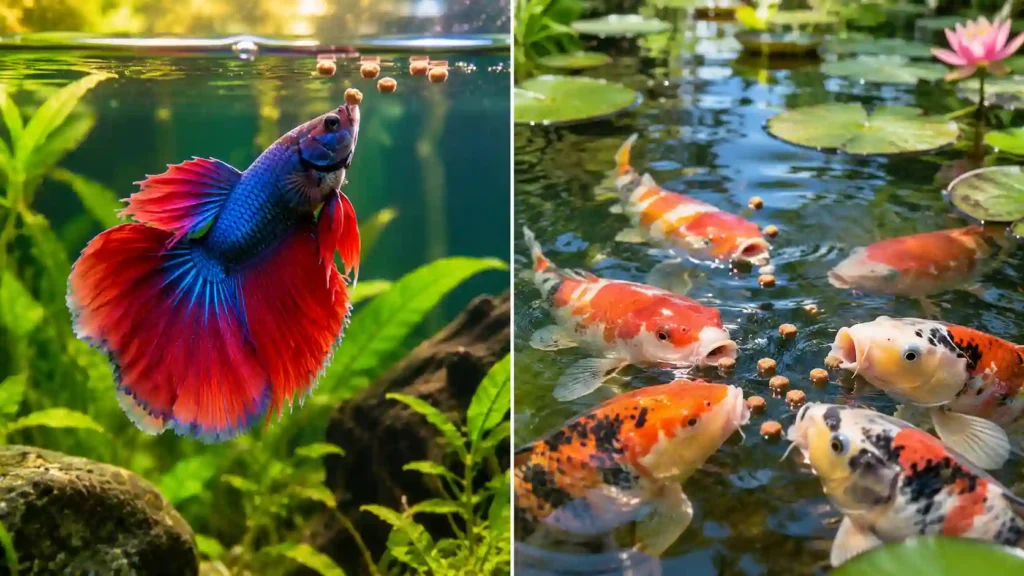
Koi are pond fish, not tank fish, and that outdoor environment changes their feeding needs in ways that catch a lot of new pond owners off guard. Koi are close relatives of the common carp, which explains their hardiness and adaptable, omnivorous appetite.
Koi are omnivorous and need a diet that balances protein for growth with carbohydrates for energy. Commercial koi pellets, sold in floating and sinking varieties, form the core of most feeding routines, and many owners supplement with fresh vegetables like lettuce, peas, and watermelon during warmer months.
Water temperature is the single biggest factor in koi feeding, far more than it is for most indoor aquarium fish.
This temperature sensitivity is unique to pond fish exposed to seasonal outdoor conditions, unlike most indoor aquarium species kept at a stable temperature year round. Skipping the seasonal adjustment is one of the most common mistakes new koi keepers make, and it can lead to serious digestive illness heading into winter
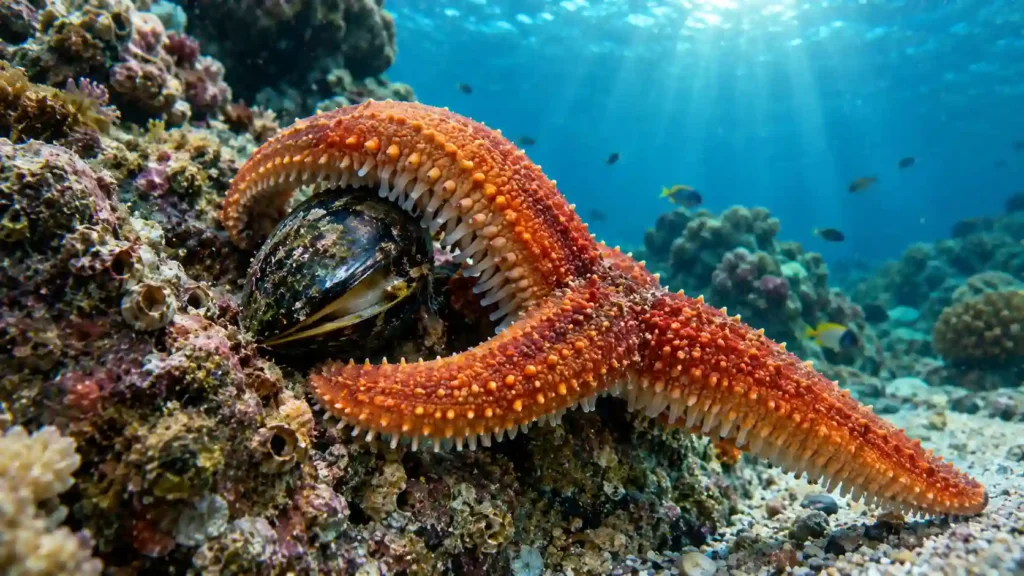
Starfish show up constantly in searches related to fish diet, but they are not fish at all, and their feeding process is strange enough that it is worth understanding on its own terms.
Starfish, more accurately called sea stars by marine biologists, belong to a group called echinoderms, animals with spiny skin and no backbone at all. That places them in an entirely different category from fish, which are vertebrates. Most sea stars are carnivores or scavengers, feeding on slow moving prey like mussels, clams, oysters, and snails.
Their feeding method is where things get genuinely unusual. A sea star has no teeth, so instead it pushes its own stomach out through its mouth and wraps it directly around its prey. Once in position, the stomach releases digestive enzymes that break down the food externally, and the sea star effectively digests its meal outside its body before drawing the stomach back in. Thousands of tiny tube feet on its underside act like suction cups, letting it pry open shells that would otherwise be impossible to crack.
Diet varies noticeably by species:
For reef aquarium owners, this matters practically as well, since certain species like the crown of thorns starfish feed almost exclusively on coral and can damage a reef tank quickly if kept without the right setup.
Getting the food right matters less if the feeding schedule is off, and frequency is one of the areas where new fishkeepers most often go wrong in either direction.
Feeding frequency depends mainly on diet type, size, and life stage, not just personal habit. As a general guideline:
A useful benchmark across nearly every species is the two to three minute rule, offer only as much food as fish can fully consume in that window. Anything left floating or sinking after that point is more than the tank needs.
Water temperature also plays a role, since cold blooded fish digest food more slowly in cooler water. Some experienced keepers fast their fish one day a week, which mimics natural feeding gaps in the wild and gives the digestive system a brief rest without causing any harm.
Most fish health problems trace back to feeding habits rather than equipment failure, and the mistakes tend to repeat themselves across new fishkeepers.
Overfeeding is by far the most common issue. Excess food that goes uneaten sinks, breaks down, and releases ammonia into the water, which stresses fish and can trigger illness over time. A tank that looks cloudy or smells off within a day or two of feeding is often showing early signs of overfeeding.
Feeding the wrong food type is a close second. Offering meat heavy pellets to a herbivorous species, or plant based flakes as the sole diet for a carnivore like a betta, leads to poor growth and dull coloring even when the fish is technically being fed daily.
A few other mistakes worth watching for:
The fix for nearly all of these issues is the same: feed a measured, varied diet matched to the species, and remove anything uneaten after a few minutes. Consistency, more than any single food product, is what keeps a tank healthy long term.
Feeding fish well comes down to one core idea, match the food to the species. Whether you are caring for a betta that needs high protein pellets, a koi pond that shifts diet with the seasons, or a community tank of omnivores thriving on flakes and vegetables, understanding what fish eat is what separates a healthy tank from a struggling one. Starfish, while often searched alongside fish, follow a completely different feeding process worth knowing if you keep a reef tank. The details covered here, diet types, food formats, feeding frequency, and common mistakes, give you everything needed to build a feeding routine that supports real fish health rather than guesswork. As fishkeeping resources move further into AI powered search and quick answer formats in 2026, having a clear, accurate grasp of your fish’s actual dietary needs will matter more than ever, both for your tank and for finding trustworthy information fast.
For more in depth species guides and fish care resources, Fish Info Guide
What do fish eat if you do not have fish food?
In an emergency, fish can eat small amounts of cooked, unseasoned vegetables like peas or zucchini, or plain boiled rice. These should only be used short term, since they lack the balanced nutrition of proper fish food and should never replace it long term.
What do fish eat in a pond naturally?
Pond fish eat algae, insects, insect larvae, zooplankton, and small invertebrates that occur naturally in the water. Koi and goldfish in outdoor ponds often supplement this natural grazing with commercial pellets, especially in warmer months.
What do baby fish (fry) eat?
Fry typically eat infusoria, baby brine shrimp, and finely crushed flakes, since their mouths are too small for standard adult food. Most species need three to five small feedings a day due to their rapid growth and tiny stomach size.
What do starfish eat and are they dangerous to other fish?
Starfish, or sea stars, mainly eat mollusks like clams, mussels, and snails, using an external digestion process. Most reef safe species pose little risk to fish, though a few, like the crown of thorns, can seriously damage coral in a reef tank.
How often should you feed aquarium fish?
Most adult fish do well with one to two feedings a day, offering only what they can eat within two to three minutes. Fry need more frequent feeding, while carnivorous species can often go every other day.
What do koi fish eat in winter?
Koi should be fed very little or not at all once water temperature drops below 50°F, since their metabolism slows dramatically and undigested food can cause illness. A lower protein, wheat germ based food works best in the cooler shoulder months.
Can fish eat human food like bread or rice?
Plain boiled rice in small amounts is generally safe as an occasional supplement, but bread should be avoided entirely, since it expands in water, offers little nutrition, and can contribute to digestive issues and poor water quality.
What eats algae in a fish tank?
Plecos, mollies, otocinclus catfish, and certain shrimp species are known algae eaters, along with herbivorous fish that graze on algae wafers and biofilm. Algae also forms a natural food source in most established tanks without any extra effort.
What do betta fish eat besides pellets?
Bettas also eat frozen or freeze dried bloodworms and brine shrimp, which closely match their natural insect based diet. These should be offered as occasional treats rather than a daily replacement for pellets.
Is it bad to overfeed fish?
Yes, overfeeding is one of the most common causes of poor water quality and fish illness. Excess food breaks down and releases ammonia, which stresses fish and can lead to disease, so feeding only what fish can finish in a few minutes is important.
.

Fish Info Guide helps you explore edible, freshwater, saltwater, and aquarium fish – with simple guides on nutrition, care, and species identification for beginners and enthusiasts alike.
Imortant Links
Quick Links
Subscribe Our Newsletter
Get the latest fish care tips, species guides, and nutrition insights delivered straight to your inbox.