

Picking the right saltwater fish for your tank can feel overwhelming when a single store aisle offers hundreds of species with no clear starting point. One wrong choice can mean a stressed fish, a damaged reef, or a costly loss within days of bringing it home.
This guide breaks down the main types of saltwater fish so you can choose with real confidence. In short, saltwater fish fall into distinct groups such as reef safe grazers, beginner friendly community fish, small nano species, and larger predatory fish, each suited to different tank sizes and experience levels.
Below you will find more than 35 species organized by category, along with care levels, tank requirements, and answers to the questions aquarists ask most, from what makes a fish reef safe to whether saltwater fish can survive in freshwater.
A saltwater fish is any fish species that lives its entire life cycle in ocean or sea water, where salinity levels average around 3.5 percent. Unlike freshwater fish, saltwater fish have specialized gills and kidneys that constantly push excess salt out of their bodies while pulling in water, a process called osmoregulation. This biological adaptation is why most saltwater fish cannot simply be moved into a freshwater tank without going into shock.
Saltwater fish are found across three main environments: coral reefs, open ocean, and coastal waters. Reef dwelling species like clownfish and tangs tend to be smaller and more colorful, since bright patterns help them blend into coral or signal territory to rivals. Open ocean species such as tuna and mackerel are built for speed and long distance swimming, with streamlined bodies and less vivid coloring.
In short, a saltwater fish is defined by its need for high salinity water and its physical adaptations for surviving in it, not by where it is sold or kept. This distinction matters for aquarium hobbyists, since it explains why saltwater tanks require far more precise water chemistry than freshwater setups.
Quick fact: Marine biologists estimate that saltwater fish make up roughly 60 percent of all known fish species worldwide, with the majority living around coral reefs despite reefs covering less than one percent of the ocean floor.
Scientists have identified more than 15,000 species of saltwater fish across the world’s oceans, and new species are still being discovered every year, particularly in deep sea and reef environments that remain largely unexplored. This number covers everything from tiny gobies less than an inch long to massive predators like the blue marlin.
For aquarium hobbyists, the practical number is much smaller. Around 2,000 species of saltwater fish are regularly imported into the United States for the home aquarium trade, according to marine trade data. The United States imports more saltwater fish for aquariums than any other country, with an estimated 10 million marine fish entering the country each year to stock home tanks.
This gap between total ocean biodiversity and aquarium availability exists for good reason. Many saltwater species are difficult to feed in captivity, grow too large for home tanks, or simply have not been successfully bred or collected sustainably. Species that do make it into the trade are typically hardy, visually striking, or relatively easy to feed, which is why the same 40 to 50 species appear again and again on beginner recommendation lists.
Quick fact: Despite thousands of ocean species existing, fewer than 50 saltwater fish species account for the majority of home aquarium sales worldwide.
Not all saltwater fish belong in the same tank, and grouping them by category makes it far easier to choose species that match your experience level, tank size, and goals. Home aquarium fish generally fall into a handful of practical groups: beginner friendly fish, reef safe fish, small or nano fish, colorful display fish, large predatory fish, and fish with unusual body shapes.
These categories often overlap. A clownfish, for example, is both beginner friendly and reef safe, while a lionfish is colorful but far from beginner friendly due to its venomous spines and predatory feeding habits. Understanding which boxes a fish checks helps prevent common mistakes, like adding an aggressive species too early or overcrowding a small tank with fish that outgrow it.
Below, each type of saltwater fish is broken down with real species examples, so you can see exactly what belongs in each category before deciding what fits your tank.
Quick fact: Most successful saltwater tanks are stocked using a “least aggressive first” rule, where peaceful and reef safe fish are added before territorial or predatory species to reduce stress and fighting.
Beginner friendly saltwater fish are species that tolerate minor water quality swings, eat readily available foods, and stay peaceful enough to avoid stressing a newly established tank. These traits matter most in the first few months of fishkeeping, when water parameters are still stabilizing and mistakes are more likely.
The most recommended beginner saltwater fish include:
These species share one more advantage: they are widely captive bred rather than wild caught. Captive bred fish are generally hardier, already accustomed to prepared foods, and less prone to disease than wild caught specimens, which makes them a safer starting point for anyone new to the hobby.
Quick fact: Veterinary aquatic specialists commonly recommend choosing captive bred over wild caught fish whenever possible, since captive bred stock adapts to aquarium conditions and commercial food far more reliably.
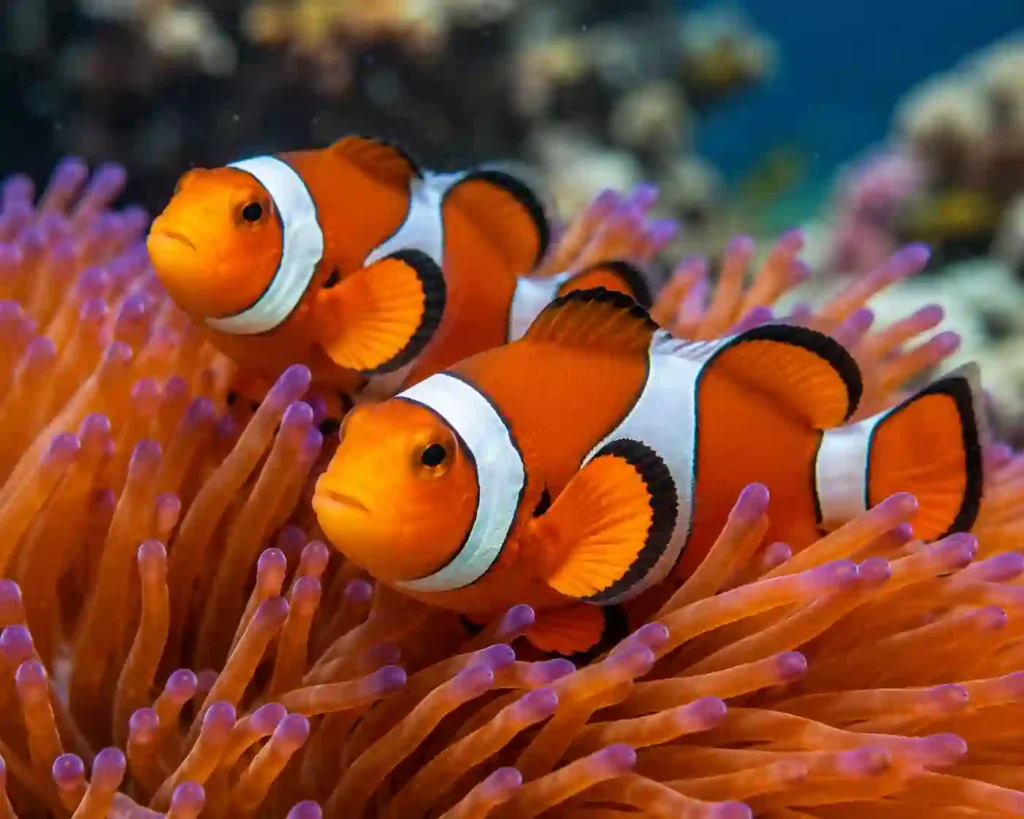
Reef safe saltwater fish are species that generally leave coral polyps and invertebrates alone, making them suitable for tanks built around live coral. It is worth noting upfront that no fish is completely reef safe. The label simply means a species does not typically eat coral or small invertebrates, not that it never will under any circumstance.
Commonly recommended reef safe fish include:
Clownfish: Reef safe with one exception, the maroon clownfish, which can become territorial and aggressive as it matures. (Note: this link currently points to the Goatfish page since a dedicated Clownfish page URL was not provided — please confirm the correct link.)
Even fish widely sold as reef safe can behave unpredictably. Tangs, for example, are considered reef safe by most standards, yet some individuals will eat crustaceans opportunistically once they molt. This is why experienced aquarists recommend researching individual fish personality and observing behavior after introduction, rather than assuming a reef safe label guarantees zero risk to coral or invertebrates.
Quick fact: Even large predatory fish like eels and pufferfish can adapt well to reef tanks, as long as tank mates are too large to be eaten and no crustaceans are present.
Small and nano saltwater fish are species that stay under 3 inches as adults, making them suitable for tanks as small as 8 to 20 gallons. Nano tanks have become increasingly popular among hobbyists with limited space, but they require fish that produce a low bioload and tolerate tighter water parameter swings than larger systems allow.
Well suited nano and small saltwater fish include:
Nano tanks demand more precise maintenance than their size suggests. Because water volume is small, temperature, salinity, and ammonia levels shift faster than in a 75 gallon tank, so filtration and water changes need closer attention. Choosing fish that naturally stay small reduces the risk of a species outgrowing its home and suffering from cramped, stressful conditions.
Quick fact: A general rule among reef keepers is one inch of adult fish per five gallons of water in nano tanks, which is more conservative than the rule typically used for standard sized aquariums.
Colorful saltwater fish are among the biggest reasons hobbyists choose marine tanks over freshwater setups, since coral reef species have evolved some of the most vivid coloring in the animal kingdom. This coloring typically serves a purpose in the wild, whether it is camouflage against coral, a warning to predators, or a signal to rivals of the same species.
Some of the most sought after colorful saltwater fish include:
Bright coloring in saltwater fish is not purely decorative. In species like the Mandarin Dragonet, researchers believe the vivid blue and orange pattern works alongside a protective slime coat to warn predators the fish is unpleasant to eat, a defense strategy similar to that seen in poison dart frogs.
Quick fact: True blue pigmentation is rare in vertebrates, and the Mandarin Dragonet is one of only a small number of species known to produce it naturally rather than through light refraction.
Large and predatory saltwater fish require significantly more space, stronger filtration, and more experienced handling than beginner community species. These fish are best suited to tanks of 75 gallons or more, and many cannot be safely housed with smaller fish that they may see as food.
Notable large and predatory saltwater fish include:
Beyond the aquarium trade, several large saltwater species are best known as prized ocean predators rather than tank residents. The Sailfish is famous for being one of the fastest fish in the sea, prized by sport anglers for its speed and dramatic leaps, while the Marlin is another powerful big game fish sought after for its strength and size in offshore fishing. Sharks, Tarpon, and Ribbonfish round out this group of large open water species, each adapted for hunting or long distance swimming rather than life in a home tank.
Predatory saltwater fish are not automatically incompatible with reef tanks. Species like lionfish and pufferfish often do well in reef environments as long as tank mates are sized appropriately and no crustaceans are present to trigger predatory feeding instincts. The bigger challenge is usually long term size, since fish like groupers and large triggerfish can outgrow even a 180 gallon tank within a few years.
Quick fact: Undulate triggerfish are considered one of the most aggressive species in the aquarium trade and are generally recommended only for experienced keepers with large, fish only tanks.
Unique bodied saltwater fish stand out for shapes and movement patterns unlike typical fish, often making them conversation pieces in home aquariums. These species tend to require more specific care than standard reef fish, since their unusual anatomy often comes with specialized feeding or habitat needs.
Notable unique bodied saltwater fish include:
A less common but equally distinctive example is the Goatfish, easily identified by the two long barbels under its chin that it uses to dig through sand in search of food, a feeding style that also helps aerate the seafloor.
Similarly, the Butterflyfish is prized for its thin, disk shaped body and striking patterns that resemble butterfly wings, though it needs careful tank mate selection since some species nip at coral. (Note: no dedicated Butterflyfish page URL was found on your site, so this mention is plain text; add the link once you confirm the URL.)
These fish often challenge new aquarists because their care requirements differ from typical reef species. Seahorses, for example, are frequently kept in species only tanks since fast swimming fish outcompete them for food, and pipefish often refuse standard flake or pellet food entirely, requiring live brine shrimp or specially cultured foods instead.
Quick fact: Seahorses are one of the only fish families where males carry and give birth to offspring, making them a frequent reference point in marine biology education.
While home aquariums focus on ornamental species, most people encounter saltwater fish at the dinner table rather than in a tank. Commercial saltwater fish are typically wild caught or farmed specifically for food, and they represent an entirely different segment of the industry from aquarium species.
Some of the most widely eaten saltwater fish include:
Sport and food fish also overlap in coastal fisheries. The Marlin is occasionally eaten for its firm, rich meat, though it is far more commonly pursued for sport than for the table, while species like Grouper and Ribbonfish are widely valued as food fish in seafood markets around the world.
Salmon deserves special mention because it does not fit neatly into either category. It spends most of its adult life in saltwater but requires freshwater for reproduction, making it one of the clearest real world examples of a fish that depends on both environments at different life stages. This life cycle pattern is called anadromy, and it also applies to some trout species.
Quick fact: Atlantic cod populations collapsed so severely from overfishing in the early 1990s that Canada imposed a moratorium on cod fishing in 1992, one of the largest industrial closures in fishing history.
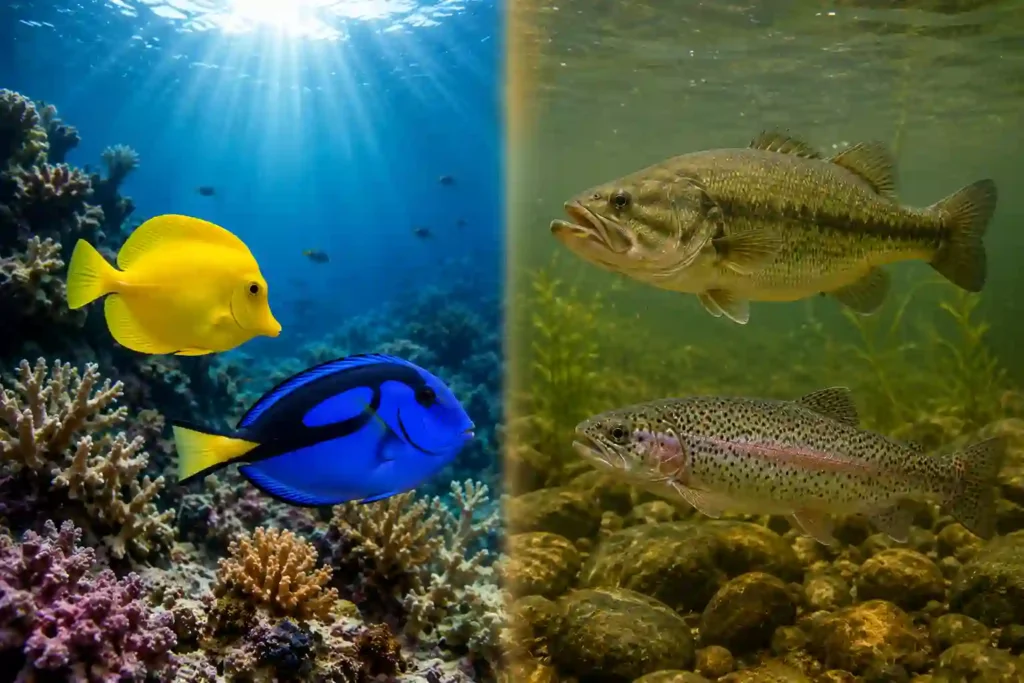
The core difference between saltwater and freshwater fish comes down to salinity and the biological systems each type has evolved to manage it. Saltwater fish constantly lose water to their surrounding environment through osmosis and must drink seawater while excreting concentrated salt through their gills and kidneys. Freshwater fish face the opposite problem, absorbing too much water and needing to excrete large amounts of dilute urine while actively retaining salt.
Factor | Saltwater Fish | Freshwater Fish |
Salinity tolerance | High, around 3.5 percent salt | Low, near 0 percent salt |
Osmoregulation | Excretes salt, drinks water | Retains salt, excretes water |
Typical habitat | Oceans, seas, coral reefs | Rivers, lakes, ponds |
Tank setup cost | Higher, needs salt mix and testing | Lower, simpler water chemistry |
Common examples | Clownfish, Tuna, Yellow Tang | Tilapia, Catfish, Bass, Trout |
This difference directly affects aquarium setup. A saltwater fish tank requires mixing marine salt to the correct specific gravity, monitoring parameters like calcium and alkalinity for reef tanks, and often installing a protein skimmer to manage waste. A freshwater fish tank generally needs only dechlorinated tap water and standard filtration, which is why freshwater setups remain more common among first time fishkeepers.
Quick fact: Saltwater fish tanks typically cost 30 to 50 percent more to set up than freshwater tanks of the same size, largely due to salt mix, specialized testing kits, and reef specific equipment like protein skimmers.
No, most saltwater fish cannot survive in freshwater because their bodies are built to excrete salt, not retain it, and a sudden drop in salinity causes cells to absorb too much water and rupture. This is why moving a typical saltwater fish directly into a freshwater tank is usually fatal within hours.
There are exceptions. Fish classified as euryhaline can tolerate a wide range of salinities, while stenohaline fish can only survive within a narrow salinity range. Species like certain gobies, some pufferfish, and juvenile bull sharks fall into the euryhaline category and can move between saltwater, brackish, and freshwater environments during their life cycle. Most reef fish, including clownfish, tangs, and angelfish, are strictly stenohaline and stay in saltwater their entire lives.
Research into gradual acclimation has shown that some saltwater fish can be slowly adapted to lower salinity water over time, but this process is delicate. It typically involves reducing salt content in small increments over several weeks rather than a single abrupt change, and it only works for certain adaptable species rather than saltwater fish as a whole.
Quick fact: Brackish water, which falls between freshwater and full strength seawater, is the natural habitat for fish that have partially adapted to tolerate both extremes, including species like the figure 8 puffer and certain mollies.
Several popular food fish get mistakenly labeled as saltwater species, usually because they are sold alongside ocean fish at the same seafood counter. Understanding which fish actually live in freshwater helps clear up common search confusion around species like tilapia and catfish.
The confusion around these species usually comes down to naming overlap rather than biology. Striped bass, for instance, shares a common name with freshwater bass species despite belonging to a completely different family and living in saltwater coastal environments. Checking the scientific name is the most reliable way to confirm whether a specific fish is truly a freshwater or saltwater species.
Quick fact: Tilapia is one of the most farmed fish in the world, with global aquaculture production exceeding 6 million metric tons annually, and virtually all of it comes from freshwater or brackish water farming operations.
Identifying a saltwater fish accurately comes down to checking a handful of physical traits rather than relying on color alone, since many species share similar patterns. Body shape, fin structure, and habitat context together give a much more reliable identification than coloring by itself.
Key identification cues include:
Field guides and identification apps typically combine several of these traits rather than relying on a single feature, since coloring can vary between juvenile and adult stages of the same species. The emperor angelfish, for example, looks almost completely different as a juvenile compared to its adult form, which can confuse even experienced hobbyists.
Quick fact: Many reef fish undergo dramatic color changes between juvenile and adult stages, a process that helps young fish avoid territorial aggression from adults of the same species while they are still vulnerable.
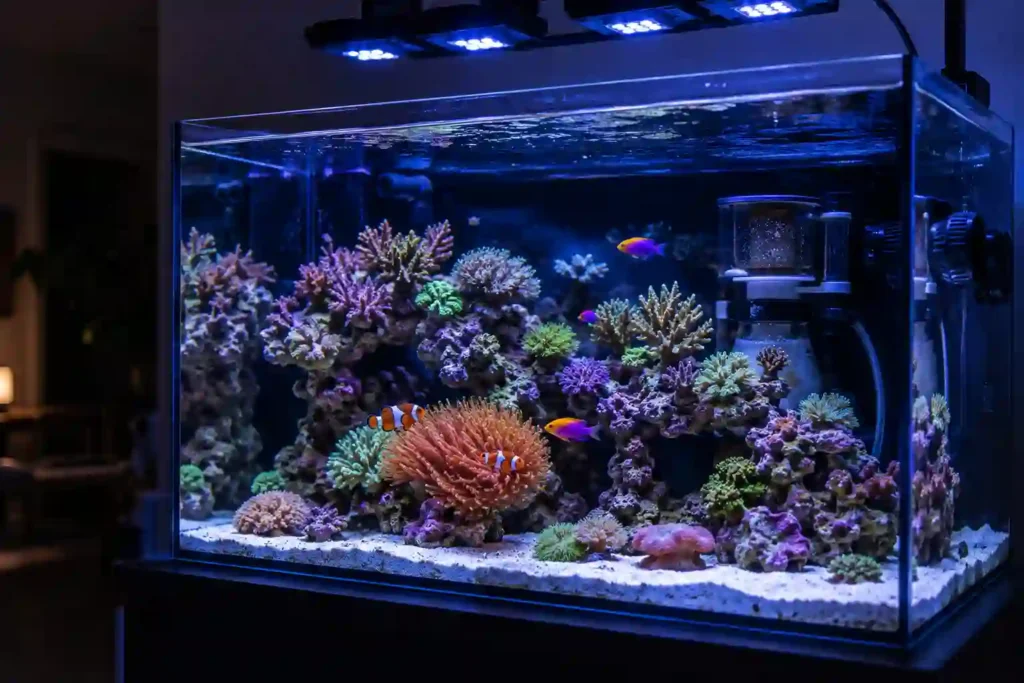
Adding a new saltwater fish to an established tank requires more preparation than simply releasing it into the water. Skipping proper setup and acclimation steps is one of the leading causes of new fish deaths in the first week after purchase.
Before introducing any saltwater fish, the tank should already be fully cycled, meaning beneficial bacteria have established themselves to process ammonia and nitrite safely. Key basics to confirm include:
Quarantine remains one of the most skipped steps among new hobbyists, largely because it requires a second tank and extra patience. Experienced aquarists consistently point to quarantine as one of the most effective ways to prevent disease outbreaks that can wipe out an entire established tank from a single new, unquarantined fish.
Quick fact: All live organisms and invertebrates should be established in a tank before fish are introduced, since adding fish to an uncycled tank is one of the most common reasons new saltwater aquariums fail within the first month.
Choosing among the many types of saltwater fish becomes far easier once you understand how each species fits into a category, whether that means beginner friendly, reef safe, nano sized, or simply built for a life at sea rather than a tank. From hardy clownfish to fast swimming tuna, every saltwater fish has evolved specific traits suited to its environment, and matching those traits to your tank size and experience level is the real key to long term success.
Whether you are setting up your first nano tank or simply trying to identify a fish you saw while diving, the categories and species covered here give you a practical starting point. As reef conservation and captive breeding continue to shape the aquarium trade through 2026, choosing well researched, sustainably sourced saltwater fish remains the best way to enjoy this hobby responsibly for years to come.
What are the most common types of saltwater fish?
The most common types of saltwater fish in home aquariums include clownfish, tangs, gobies, wrasses, and damselfish. In the wild and commercial fishing, tuna, cod, mackerel, and salmon rank among the most widely caught saltwater species, together representing a large share of global seafood consumption.
Which saltwater fish are best for beginners?
Ocellaris clownfish, blue green chromis, and yellow watchman gobies are widely considered the best saltwater fish for beginners. These species tolerate minor water quality fluctuations, eat readily available prepared foods, and stay peaceful, making them forgiving choices while a new tank stabilizes.
Can saltwater fish live in freshwater?
No, most saltwater fish cannot survive in freshwater since their bodies are adapted to excrete salt rather than retain it. Sudden exposure to freshwater causes cell rupture from excess water absorption. Only euryhaline species, such as certain gobies and pufferfish, tolerate wide salinity ranges.
What is the difference between saltwater fish and freshwater fish?
Saltwater fish live in high salinity ocean water and excrete excess salt through their gills, while freshwater fish live in near zero salinity water and must retain salt while excreting excess water. This core biological difference also makes saltwater aquariums more expensive and complex to maintain.
Is tilapia a freshwater or saltwater fish?
Tilapia is entirely a freshwater fish, native to rivers and lakes in Africa and the Middle East. It has no natural saltwater population and is farmed globally in freshwater aquaculture systems, making it one of the most produced freshwater food fish in the world.
Are salmon freshwater or saltwater fish?
Salmon are anadromous, meaning they live in both environments during different life stages. They hatch in freshwater rivers, migrate to the ocean to mature, then return to freshwater to spawn, so they cannot be classified as purely freshwater or purely saltwater fish.
What is the most colorful saltwater fish?
The Mandarin Dragonet is often cited as one of the most colorful saltwater fish, featuring a blue body with an orange swirled pattern. Other top contenders include the Yellow Tang, Regal Blue Tang, and Flame Angelfish, all popular for their vivid, reef ready coloring.
Which saltwater fish are reef safe?
Reef safe saltwater fish include most tangs, anthias, basslets, and clownfish, aside from the maroon clownfish. These species generally avoid eating coral polyps and invertebrates, though no fish is guaranteed completely reef safe, since individual behavior can vary within any species.
How many species of saltwater fish exist worldwide?
More than 15,000 species of saltwater fish have been identified worldwide, with new species still being discovered in deep sea and reef environments. Only around 2,000 of these species are regularly available through the home aquarium trade in the United States.
What is the best saltwater fish for a small or nano tank?
Clown gobies, sharknose gobies, and royal grammas are among the best saltwater fish for small or nano tanks. These species stay under 3 inches, produce a low bioload, and remain peaceful, making them suitable for tanks as small as 8 to 10 gallons.

Fish Info Guide helps you explore edible, freshwater, saltwater, and aquarium fish – with simple guides on nutrition, care, and species identification for beginners and enthusiasts alike.
Imortant Links
Quick Links
Subscribe Our Newsletter
Get the latest fish care tips, species guides, and nutrition insights delivered straight to your inbox.