

Choosing the right goldfish type can make or break your aquarium experience. With over 200 recognized goldfish types, from streamlined single tail comets to round bodied fancy varieties like the oranda and ranchu, picking the wrong fish for your tank setup often leads to stunted growth, poor health, or an overcrowded pond within months.
This guide breaks down every major goldfish type, including fancy goldfish, common goldfish, and rare varieties like bubble eye and pearlscale, so you can match the right fish to your space, budget, and experience level.
Quick answer: Goldfish types fall into two broad categories: single tail (common, comet, shubunkin) and fancy (oranda, ranchu, telescope, and similar double tailed varieties). Single tail types are hardier, faster swimmers suited to ponds, while fancy types need warmer, calmer tanks and closer monitoring.
By the end, you will know exactly which goldfish type fits your setup, how big a tank you actually need, and how to keep your fish healthy for 10 to 20 years or more.
Goldfish (Carassius auratus) are a domesticated form of carp, not a distinct wild species invented for aquariums. They belong to the Cyprinidae family, the same group that includes common carp and koi, and originated from a wild carp species native to East Asia.
Domestication began in China over 1,000 years ago, during the Song and Tang dynasties, when selective breeding of a naturally occurring gold color mutation produced the first ornamental goldfish. These early goldfish were prized by royalty and kept in ornamental ponds long before they reached everyday households.
Goldfish spread to Europe in the 1600s and arrived in North America by the 1800s, eventually becoming one of the most widely kept pet fish in the world. Centuries of selective breeding since then have produced today’s huge range of goldfish types, from the simple, hardy common goldfish to elaborate fancy varieties with flowing fins and unusual body shapes.
Quick facts:
The most important distinction in the goldfish world is between single tail (common) types and double tail (fancy) types. This single difference determines almost everything about how you should house and care for your fish.
Common goldfish types, such as the comet and shubunkin, keep the streamlined, torpedo shaped body of their wild carp ancestors. They swim fast, tolerate a wide range of temperatures, and thrive in ponds or large tanks. Fancy goldfish types, like the oranda and ranchu, were bred for ornamental body shapes rather than speed, which makes them slower swimmers that need calmer, warmer water and more careful tank setups.
Feature | Common Goldfish | Fancy Goldfish |
Body shape | Slim, torpedo shaped | Round, egg shaped |
Tail type | Single tail | Double tail (usually) |
Swimming speed | Fast, strong swimmer | Slow, gentle swimmer |
Best habitat | Pond or large tank | Indoor aquarium |
Hardiness | Very hardy | Moderate, more sensitive |
Ideal temperature | 60 to 70°F | 68 to 74°F |
Beginner friendly | Yes | Mostly, with care |
Example types | Comet, shubunkin | Oranda, ranchu, telescope |
Quick answer: Choose common goldfish for outdoor ponds and low maintenance setups, and choose fancy goldfish if you want a dedicated indoor aquarium with warmer, more stable water conditions.
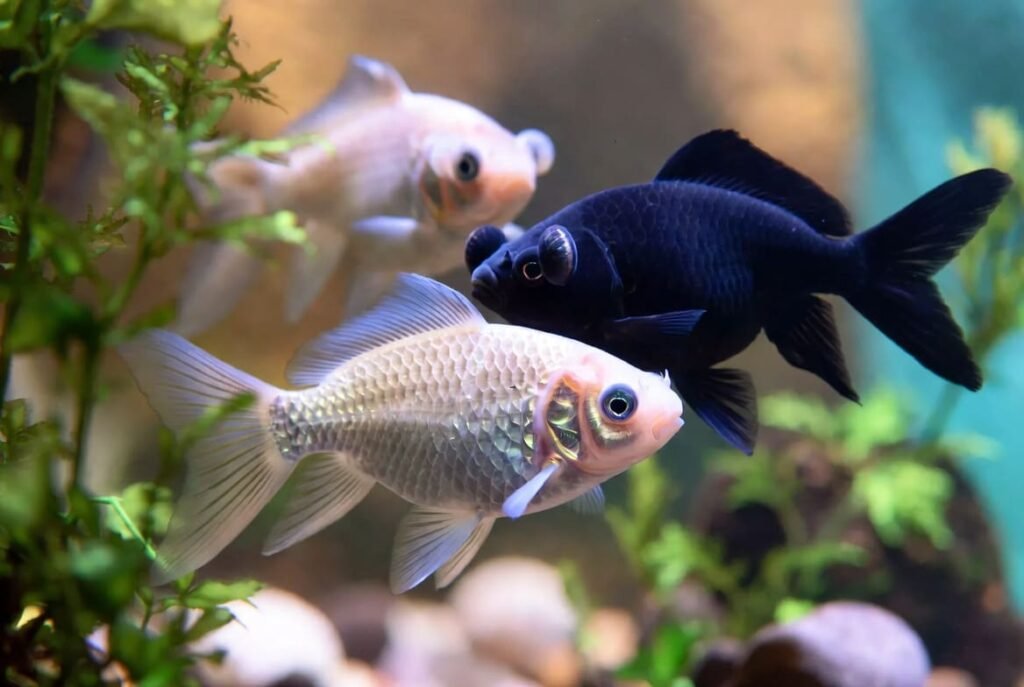
Goldfish come in more than 200 recognized varieties, but most fall into a manageable set of well known types. Below is a detailed look at the goldfish types most searched by hobbyists, starting with the hardiest single tail varieties.
Common Goldfish
The common goldfish is the closest living type to the original domesticated carp, and remains the most widely available goldfish in pet stores. It has a slim, torpedo shaped body, a single tail fin, and typically appears in orange, red, or a mix of orange and white.
Common goldfish are exceptionally hardy and can tolerate a wide temperature range, making them a strong choice for outdoor ponds. They grow quickly and can reach 12 inches or more in a large pond, so they need significantly more space than most beginners expect.
Expert tip: Do not judge a common goldfish’s adult size by its appearance in the pet store. A one inch juvenile can outgrow a 20 gallon tank within a year and needs a pond or a tank of 55 gallons or more as it matures.
Comet Goldfish
The comet goldfish looks similar to the common goldfish but has longer, more flowing fins and a slightly slimmer body. It is one of the fastest swimming goldfish types, and its active, darting movement makes it a favorite for outdoor ponds and large community tanks.
Comets are extremely hardy and adapt well to fluctuating pond temperatures, which is why they are the most common goldfish type found in outdoor water gardens across the United States. They come in orange, red, white, and calico color patterns.
Care note: Comets need open swimming space. Avoid heavily decorated tanks, since their long fins and speed make them prone to fin damage around sharp decor.
Shubunkin Goldfish
The shubunkin is a single tail goldfish known for its calico coloring, a striking mix of blue, red, orange, black, and white on a nacreous (semi transparent) scale type. No two shubunkins look exactly alike, which adds to their popularity among collectors.
Like comets, shubunkins are fast, hardy swimmers well suited to ponds and large aquariums. Their nacreous scales make their true colors easier to see in outdoor ponds under natural sunlight compared to indoor tank lighting.
Quick answer: Shubunkins are a good choice if you want the hardiness of a common goldfish with more dramatic, varied coloring.
Fantail Goldfish
The fantail is often the entry point into fancy goldfish keeping. It has a rounder body than single tail types but is generally hardier than more exotic fancy varieties like the oranda or ranchu, making it a popular choice for beginners who want a fancy look without extra care demands.
Fantails have a double tail fin that fans out symmetrically, giving them their name. They come in a wide range of colors and typically grow to 6 to 8 inches, smaller than most single tail types, which makes them a reasonable fit for larger indoor aquariums rather than ponds.
Expert tip: Fantails are a good bridge fish for keepers moving from common goldfish to more delicate fancy types like the oranda or ranchu.
Ryukin Goldfish
The ryukin is a fancy goldfish type recognized by its distinctive humped back, which sits noticeably higher than the head, giving the fish a short, rounded profile. It has a deep body and long, flowing double tail fins that trail gracefully as it swims.
Ryukins are moderately hardy for a fancy variety and can tolerate slightly cooler water than more delicate types like the oranda, though they still do best in stable indoor tank conditions. They commonly appear in red and white, solid orange, or calico patterns, and typically grow to 6 to 8 inches.
Care note: The pronounced hump on a ryukin’s back makes it more buoyant, so avoid overfeeding, since excess weight can worsen swim bladder issues in this body type.
Oranda Goldfish
The oranda is one of the most searched and recognized fancy goldfish types, easily identified by the raspberry like growth on its head called a wen, or hood. This growth typically starts appearing around 6 to 12 months of age and continues developing for several years, eventually covering much of the head in mature fish.
Beneath the wen, orandas have a round, egg shaped body and a flowing double tail similar to the veiltail. They need warmer, more stable water than single tail types, generally between 68 and 74°F, and are more sensitive to sudden temperature or water quality changes.
Expert tip: Keep the wen clean by maintaining excellent water quality. A poorly maintained tank is the leading cause of wen infections, which appear as red or white patches on the head growth.
Ranchu Goldfish
The ranchu is the single most searched goldfish type among hobbyists, often called the “king of goldfish” in Japan, where it was originally developed. It has an egg shaped body, no dorsal fin, and a curved back that arches down to a tail set at a steep angle, giving it a distinctive rounded silhouette when viewed from above.
Like the oranda, ranchus develop a wen on the head, though typically smaller and more compact. Because they lack a dorsal fin and have a shorter, rounder body, ranchus are slower and less agile swimmers than most other fancy types, so they do best in calm tanks with minimal current and no sharp decor that could injure their delicate fins.
Ranchus require close attention to water quality and temperature stability, ideally between 68 and 74°F, and are considered a fish for intermediate to experienced keepers rather than true beginners.
Quick answer: Choose a ranchu if you want a show quality fancy goldfish and are prepared to provide a calm, well filtered tank with minimal current, since their body shape makes them poor swimmers in turbulent water.
Lionhead Goldfish
The lionhead shares many traits with the ranchu, including the absence of a dorsal fin and a similar egg shaped body, but it typically has a straighter back rather than the ranchu’s pronounced curve. Its head growth, or wen, tends to be fuller and more mane like, which is how the breed got its name.
Lionheads are slow, gentle swimmers that need calm water and plenty of space to move without exertion. They are prone to the same buoyancy and wen infection risks as ranchus and orandas, so consistent water quality is essential.
Care note: Because lionheads and ranchus look similar, check the back profile to tell them apart. A ranchu’s back curves down sharply to the tail, while a lionhead’s back is flatter and straighter.
Bubble Eye Goldfish
The bubble eye is one of the most unusual goldfish types, identified by two large, fluid filled sacs beneath its eyes that grow larger as the fish matures. It has no dorsal fin, an upward angled body posture, and a double tail, giving it a distinctive silhouette that stands apart from any other fancy variety.
Because the eye sacs are fragile and easily torn on sharp decor, gravel, or filter intakes, bubble eyes need a bare bottom tank or smooth sand substrate with no rough decorations. They are also weak swimmers due to their body shape and should never be kept with faster, more competitive tank mates that could outcompete them for food.
Expert tip: Avoid strong water current in a bubble eye tank. Constant swimming against flow can damage the delicate eye sacs over time and increases stress on this already fragile body type.
Black Moor Goldfish
The black moor is a velvety black variety of the telescope goldfish, easily recognized by its deep, dull black coloring and prominent, outward protruding eyes. Unlike most goldfish types that display orange or red pigmentation, black moors keep their dark color for life in most cases, though some individuals lighten slightly with age or bright lighting.
Their telescope eyes make black moors more vulnerable to injury and vision impairment than other fancy types, so tanks should avoid sharp decorations and bright, direct lighting that can stress their sensitive eyes. They are peaceful, slow swimmers best paired with similarly gentle tank mates.
Quick answer: Black moors need dim to moderate lighting and smooth decor, since their bulging eyes reduce both their vision and their ability to detect and avoid hazards.
Telescope Goldfish
The telescope goldfish, sometimes called the dragon eye goldfish, is defined by its large, outward protruding eyes set on short stalks. It comes in a wide range of colors beyond the classic black moor, including red, orange, calico, and white, and typically has a double tail similar to the veiltail.
Telescope goldfish have significantly reduced vision compared to other goldfish types, since their protruding eyes limit both forward focus and depth perception. This makes them slower feeders that can struggle to compete with faster, sharper sighted tank mates for food.
Care note: Keep telescope goldfish with other slow, gentle swimmers of similar vision ability, ideally other telescope or bubble eye types, to prevent competition at feeding time.
Pearlscale Goldfish
The pearlscale gets its name from its distinctive scales, each one domed and beadlike, giving the fish a textured, golf ball type appearance across its round body. It has a double tail and comes in orange, red, calico, and red and white patterns.
Pearlscales are considered one of the more delicate fancy goldfish types, prone to swim bladder issues due to their extremely round body shape. Overfeeding worsens this risk significantly, so controlled, measured feeding is especially important for this type.
Expert tip: Soak pellets in water for a few minutes before feeding a pearlscale. This reduces the air the fish swallows while eating, which lowers the risk of swim bladder complications tied to their round body shape.
Veiltail Goldfish
The veiltail is known for its dramatically long, flowing double tail fin that can trail well behind its round body, along with equally long dorsal and anal fins. It is one of the most delicate looking fancy goldfish types, prized for its elegant, almost ribbon like movement through the water.
Because of its exceptionally long, thin fins, the veiltail is more prone to fin tears and fin rot than sturdier fancy types, so smooth decor and stable water quality are essential. It also swims more slowly than most goldfish types, since its oversized fins create drag, and does best in a calm tank without strong current or aggressive tank mates.
Care note: Watch for ragged or discolored fin edges, an early sign of fin rot. Veiltails need pristine water quality far more than hardier types like the comet or shubunkin.
Panda Goldfish
The panda goldfish is not a distinct breed on its own but a color variety, most often seen in oranda or telescope body types, featuring a striking black and white pattern reminiscent of its namesake animal. This coloring is genetically unstable and tends to fade or shift toward solid orange or black as the fish matures, so a young panda goldfish rarely keeps its two tone pattern for life.
Because panda goldfish are typically oranda or telescope varieties underneath the coloring, their care requirements match whichever body type they belong to, including calm water, careful feeding, and protection from sharp decor.
Quick answer: If you want a goldfish that keeps a black and white pattern permanently, look for a panda variety in young fish, but expect the coloring to change with age since it rarely stays this way long term.
Picking a goldfish type comes down to three practical questions: where will you keep it, how experienced are you, and how much space can you realistically provide. Getting this match right from the start prevents the most common goldfish keeping mistakes.
If you have an outdoor pond: Choose hardy single tail types like the common goldfish, comet, or shubunkin. These varieties tolerate temperature swings, need less intervention, and can grow to their full size without the space limits of an indoor tank.
If you are a beginner with an indoor tank: Start with a fantail. It offers the rounder, fancy look many keepers want while remaining more forgiving of minor water quality mistakes than types like the ranchu or bubble eye.
If you are an experienced keeper wanting a show quality fish: Consider a ranchu, oranda, or lionhead. These types reward careful, consistent care with striking appearance but demand stable water temperature and pristine water quality.
If you want a fish with a truly unique look: The bubble eye, black moor, or telescope goldfish stand out visually, but require gentler tank mates and injury proof decor due to their fragile eyes.
Quick answer: Match hardiness to your setup, not appearance alone. A stunning fancy goldfish in the wrong tank conditions will struggle far more than a plain comet in a well maintained pond.
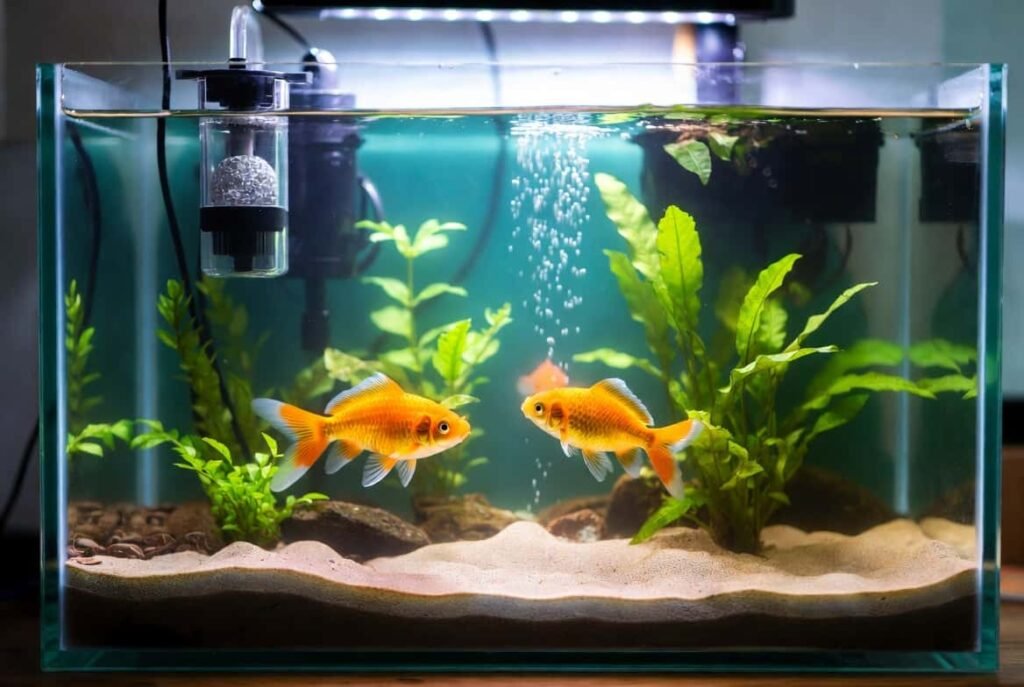
Tank size is the single most common mistake new goldfish keepers make. Goldfish produce a large amount of waste and grow far bigger than their appearance in a pet store suggests, so undersizing the tank leads to poor water quality and stunted growth almost immediately.
General rule: Provide at least 20 gallons for the first goldfish, plus 10 additional gallons for each fancy goldfish or 20 additional gallons for each single tail goldfish added after that. A goldfish 20 gallon tank works for one juvenile fancy goldfish short term, but most fancy types eventually need 30 gallons or more as adults.
By goldfish type:
Filtration: Choose a filter rated to turn over the tank volume at least five times per hour. A 20 gallon tank needs a filter rated for roughly 100 gallons per hour, since goldfish generate significantly more bioload than most other freshwater fish their size.
Quick answer: There is no single ideal goldfish tank size. Match tank size to goldfish type and adult size, not the fish’s size at purchase, and always plan for growth rather than the fish’s current dimensions.
Goldfish are a coldwater species, which means they do not need a heated tank like tropical fish, but they still require a stable, specific temperature range to stay healthy. Sudden temperature swings are one of the most common causes of stress related illness in goldfish.
Ideal temperature by type:
Fancy goldfish generally need slightly warmer, more stable water than hardier single tail types, since their rounder bodies and reduced fins make them less tolerant of cold stress.
Water quality parameters to maintain:
Goldfish tolerate a wider pH range than many freshwater fish, but ammonia and nitrite must stay at zero. These compounds come from fish waste and uneaten food, and even small amounts damage gill tissue and weaken the immune system over time.
Expert tip: Test your water weekly with a liquid test kit rather than test strips, which are less accurate for ammonia and nitrite readings that matter most for goldfish health.
Quick answer: Goldfish do not need warm water like tropical fish, but they do need consistently zero ammonia and nitrite, since their high waste output makes water quality more critical than temperature alone.
Goldfish are omnivores, eating a mix of plant matter and small organisms in the wild. In captivity, their diet should mimic this balance rather than relying on a single food type, since goldfish food quality directly affects their color, growth, and lifespan.
Core diet:
Why sinking food matters: Floating flakes encourage goldfish to gulp air while feeding at the surface, which can lead to buoyancy problems, sometimes called swim bladder disorder. Sinking pellets let goldfish feed more naturally near the substrate, reducing this risk significantly.
Feeding frequency: Feed adult goldfish once or twice daily, offering only what they can finish in 30 to 60 seconds per feeding. Overfeeding is the leading cause of poor water quality in goldfish tanks, since excess food breaks down and spikes ammonia levels.
Expert tip: Peas are a well known natural remedy hobbyists use to help goldfish with mild digestive issues or early buoyancy problems, since their fiber content supports healthy digestion.
Quick answer: Feed goldfish a sinking pellet based diet with occasional vegetables, once or twice daily, in amounts they can finish within a minute, since overfeeding causes more health problems in goldfish than any single food type.
Quick answer: Goldfish typically live 10 to 15 years in a well maintained tank, up to 20 years or more in a properly sized pond, and wild or feral goldfish have been documented living over 40 years in ideal conditions.
Goldfish lifespan varies dramatically based on environment, not genetics alone. A goldfish kept in a small bowl with poor filtration often lives only a few years, while the same fish in a spacious, well filtered pond can live decades. This gap explains why goldfish have an unfair reputation as short lived pets, when in reality, most early deaths trace back to inadequate tank size or water quality.
Factors that affect goldfish lifespan:
• Tank or pond size relative to adult body size
• Water quality and consistency of maintenance
• Diet quality and feeding habits
• Goldfish type, since fragile fancy varieties like bubble eye or telescope face higher injury and infection risk than hardy single tail types
• Genetics and breeding quality of the individual fish
Notable record: According to Guinness World Records, the longest documented pet goldfish reached 18.7 inches, owned by a keeper in the Netherlands, illustrating how much size and lifespan potential goldfish have when given proper long term care.
Expert tip: If longevity is your priority, choose a hardy single tail type like the comet or shubunkin and house it in an outdoor pond, since these conditions most closely match the size and stability that support a goldfish’s natural, decades long lifespan.
Goldfish are peaceful, but their coldwater temperature needs and large appetites rule out most common tropical tank mates. The right goldfish tank mates share similar temperature tolerance, water quality needs, and are not fast enough or fin nipping enough to stress a slower fancy goldfish.
Good goldfish tank mates:
Poor goldfish tank mates:
Special consideration for fancy types: Slow swimming, fragile eyed types like the bubble eye, telescope, and black moor should generally be paired only with other similarly slow fancy goldfish, since faster tank mates will consistently outcompete them for food.
Quick answer: The safest goldfish tank mates are other goldfish. When mixing types, match single tail with single tail and fancy with fancy, since mismatched swimming speeds create constant competition at feeding time.
Outdoor ponds are the natural long term home for hardy single tail goldfish types like the common, comet, and shubunkin, giving them room to reach their full adult size while providing more stable, diluted water conditions than most indoor tanks.
Pond depth and size:
Predator protection: Outdoor pond goldfish face real threats from birds, raccoons, and cats. Netting, overhangs, and dense marginal plants near the pond edge give fish cover and reduce predation risk significantly.
Winter care: In regions with freezing winters, pond depth becomes critical, since goldfish survive cold by moving to deeper, unfrozen water and slowing their metabolism. A pond that freezes solid at typical depths will kill overwintering fish, so depth below the local frost line is essential for year round outdoor goldfish keeping.
Aquatic plants: Plants such as water lilies and hornwort help maintain pond water quality by absorbing excess nutrients, while also providing shade and hiding spots that reduce stress for pond goldfish.
Quick answer: A goldfish pond needs at least 24 to 30 inches of depth, predator protection, and aquatic plant cover to support hardy single tail types like comets and shubunkins through all four seasons.
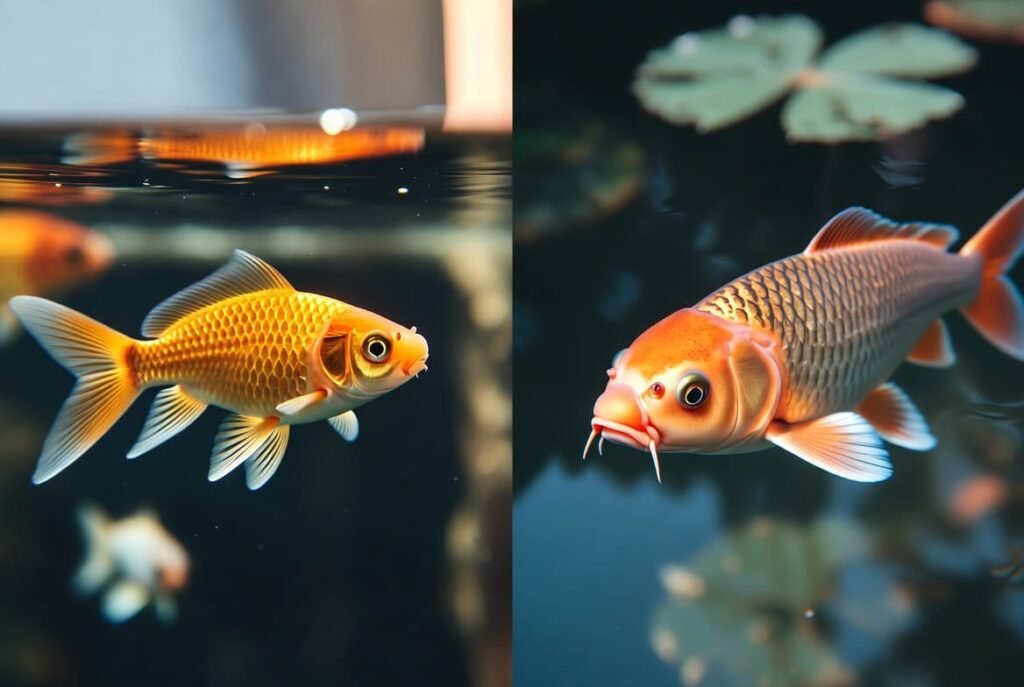
Goldfish and koi are frequently confused since both are ornamental carp species often kept in similar pond settings, but they are genetically distinct fish with different origins, care needs, and adult sizes.
Key differences:
Feature | Goldfish | Koi |
Scientific name | Carassius auratus | Cyprinus carpio |
Barbels (whiskers) | None | Two pairs near the mouth |
Adult size | 4 to 18 inches, depending on type | 12 to 36 inches or more |
Lifespan | 10 to 20 years, longer in ponds | 25 to 35 years, sometimes 50 plus |
Body shape | Varies widely by type | Consistently elongated, streamlined |
Best habitat | Tank or pond, depending on type | Large outdoor pond only |
The easiest identification method: Check for barbels, the small whisker like sensory organs near the mouth. Koi always have two pairs of barbels, while goldfish have none. This single feature reliably distinguishes the two species even when body shape and coloring look similar.
Why this matters for keepers: Koi eventually require a significantly larger pond than most goldfish types, often several hundred gallons at minimum, and live considerably longer. Choosing between them should depend on long term space availability, not just initial appearance.
Quick answer: Goldfish and koi are different species. Koi have barbels near their mouth and goldfish do not, and koi also grow larger and live longer, generally requiring a bigger, more permanent pond commitment.
Goldfish carry more misinformation than almost any other pet fish, largely because they are often kept casually in bowls or classroom tanks without much research. These three myths are the most persistent, and understanding the truth behind them directly affects how well a goldfish is cared for.
Do Goldfish Sleep?
Quick answer: Yes, goldfish sleep, though not the way mammals do. Since they lack eyelids, goldfish cannot close their eyes, but they enter a restful, low activity state, typically during darker periods, where movement slows and they hover near the tank bottom or a sheltered spot.
Goldfish sleep is easy to miss because it looks like simple stillness rather than the closed eye rest most people associate with sleep. A consistent light and dark cycle, roughly 10 to 12 hours of light daily, helps regulate this natural rest pattern and reduces stress.
Do Goldfish Have Good Memory?
Quick answer: No, the popular claim that goldfish have only a three second memory is false. Research on goldfish cognition has repeatedly shown they can retain learned information for months, not seconds.
In controlled studies, goldfish have been trained to navigate mazes, recognize their keepers, and even distinguish between different types of music, such as classical pieces by different composers, retaining these learned responses well beyond a few seconds. This three second memory idea appears to have originated as a casual saying rather than any scientific finding, yet it persists widely in popular culture.
Expert insight: Goldfish memory research actually supports the opposite of the myth. Their ability to recognize feeding routines, tank layouts, and even individual people demonstrates memory retention lasting weeks to months under the right conditions.
Do Goldfish Grow to the Size of Their Tank?
Quick answer: No, goldfish do not magically grow to match their tank size. What actually happens is that undersized tanks stunt goldfish growth through poor water quality and limited space, which is not healthy growth control but a sign of chronic stress.
A goldfish kept in a small bowl often appears to “stay small,” but this is typically the result of restricted growth caused by accumulated waste, hormonal buildup, and inadequate oxygen levels, not a natural size adjustment. The same goldfish moved to a properly sized, well filtered tank will often resume normal growth toward its genetic potential.
Quick answer: Tank size does not control goldfish size safely. It only appears to because undersized tanks stunt growth through poor conditions, which shortens lifespan rather than producing a healthy, permanently smaller fish.
Goldfish size surprises most new keepers, since pet store goldfish are almost always juveniles far smaller than their adult potential. Given enough space, food, and time, goldfish can grow dramatically beyond typical tank sized expectations.
World record: According to Guinness World Records, the longest documented pet goldfish measured 18.7 inches, owned by a keeper in the Netherlands, achieved through years of care in spacious conditions rather than any special breeding.
Wild and feral goldfish growth: Released pet goldfish that establish themselves in lakes and rivers often grow far larger than captive fish, since natural bodies of water provide essentially unlimited space and food compared to a home aquarium. Notable documented cases include:
Why released goldfish grow so large: In the wild, goldfish are not limited by tank size or feeding schedules. Combined with a naturally long lifespan of up to 40 years, this unrestricted environment allows some individuals to reach sizes rarely seen in captivity, often five pounds or more.
Quick answer: The largest documented pet goldfish reached 18.7 inches, but feral goldfish released into lakes and rivers have grown even larger, since natural habitats remove the space and food limits found in home aquariums.
Quick answer: Technically yes, goldfish are not toxic and are edible in the same sense as other carp species, but eating a pet or ornamental goldfish is strongly discouraged and not recommended.
Ornamental goldfish are bred and raised for the pet trade, not food safety standards. They are typically kept in decorative, untreated water conditions and are not monitored for the same food safety practices applied to fish raised specifically for human consumption, such as farmed tilapia or carp raised in controlled aquaculture systems.
Why pet goldfish are not a food source:
Goldfish are a distinct case from edible carp species farmed specifically for food, which undergo different raising standards entirely. The goldfish sold in pet stores and kept in home aquariums should be treated strictly as ornamental companion animals, not a food source.
Quick answer: While goldfish are not poisonous, pet and ornamental goldfish are not raised under food safety standards and should not be eaten, unlike carp species specifically farmed for consumption.
Goldfish types range from hardy, fast-swimming comets suited to outdoor ponds to delicate fancy varieties like the ranchu and bubble eye that need calm, carefully maintained indoor tanks. The right choice depends less on which fish looks most striking and more on matching its care needs to your space, experience level, and long term commitment.
Getting the fundamentals right, proper tank size, stable water temperature, quality food, and compatible tank mates, matters far more to a goldfish’s health and lifespan than any single feature of its type. A well matched, well cared for goldfish, whether a simple common goldfish or an elaborate oranda, can live for well over a decade.
As more hobbyists move toward pond and tank setups built around a specific goldfish type rather than general “goldfish care,” understanding these differences will only become more important for keeping healthy, long lived fish through 2026 and beyond.
What is the difference between fancy goldfish and common goldfish?
Common goldfish have slim, torpedo shaped bodies, single tails, and are fast swimmers suited to ponds. Fancy goldfish have round, egg shaped bodies, usually double tails, and are slower swimmers bred for ornamental appearance rather than speed.
How big of a tank does a goldfish need?
Provide at least 20 gallons for the first goldfish, plus 10 gallons per additional fancy goldfish or 20 gallons per additional single tail goldfish. Adult single tail types generally do best in a pond rather than an indoor tank.
How long do goldfish live?
Goldfish typically live 10 to 15 years in a well maintained tank and up to 20 years or more in a properly sized pond. Wild or feral goldfish have been documented living over 40 years under ideal conditions.
Do goldfish sleep?
Yes, goldfish sleep, though they cannot close their eyes since they lack eyelids. They enter a restful, low activity state during darker periods, typically hovering near the tank bottom or a sheltered area.
Do goldfish really only have a three second memory?
No, this is a myth. Research shows goldfish can retain learned information for months, including recognizing their keepers and remembering trained behaviors well beyond a few seconds.
What is the difference between goldfish and koi?
Koi have two pairs of barbels near their mouth, while goldfish have none. Koi also grow larger, typically 12 to 36 inches, and live longer, often 25 to 35 years, compared to goldfish.
What is the biggest goldfish ever recorded?
The longest documented pet goldfish measured 18.7 inches according to Guinness World Records. Feral goldfish released into lakes and rivers have grown even larger due to unlimited space and food.
Can you eat goldfish?
Technically yes, goldfish are not toxic, but pet and ornamental goldfish are not raised under food safety standards and should not be eaten, unlike carp species specifically farmed for consumption.
What do goldfish eat in the wild versus in a tank?
In the wild, goldfish eat algae, insect larvae, small crustaceans, and plant matter. In a tank, their diet should include sinking pellets, occasional flakes, blanched vegetables, and treats like brine shrimp or daphnia.
Can goldfish live in an outdoor pond year round?
Yes, hardy single tail types like the common, comet, and shubunkin can live outdoors year round in most climates, provided the pond is at least 24 to 30 inches deep to prevent freezing at the bottom during winter.

Fish Info Guide helps you explore edible, freshwater, saltwater, and aquarium fish – with simple guides on nutrition, care, and species identification for beginners and enthusiasts alike.
Imortant Links
Quick Links
Subscribe Our Newsletter
Get the latest fish care tips, species guides, and nutrition insights delivered straight to your inbox.